
 Need help?
Do you have a question about the TP-Link UE200 V2 and is the answer not in the manual?
Guidance on safely shutting off the product, avoiding self-repair, and keeping the device away from hazardous environments.
Information regarding the WEEE directive and proper recycling of electrical equipment.
Instructions for installing drivers for UE300C, UE330, UE300, UE200, and UE306 models.
Details on using the adapter with a Nintendo Switch, supported by UE306.
Explanation of LED colors and their meanings for different adapter models indicating connectivity and data transfer.
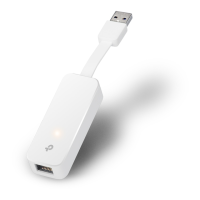
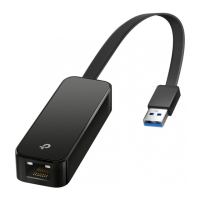
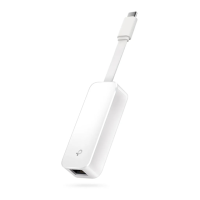
This document describes a USB to Ethernet Adapter, designed to provide a wired network connection and potentially expand USB connectivity for various devices. The adapter is generally plug-and-play, making it easy to use across different operating systems and devices.
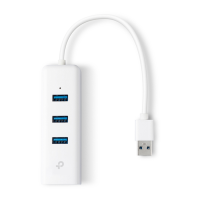
The primary function of this device is to convert a USB port into an Ethernet port, allowing devices that lack a built-in Ethernet port (such as many modern laptops or tablets) to connect to a wired network. This can provide a more stable and faster internet connection compared to Wi-Fi, especially in environments with high wireless interference or when maximum network speed is desired. Some models of the adapter also function as a USB hub, expanding the number of available USB ports on the host device, which is particularly useful for devices with limited USB connectivity.
The adapter supports various operating systems, including Windows (7/8/8.1), Mac OS X (10.8 and older versions), and potentially others. For certain models and operating systems, a driver installation might be required, which can typically be downloaded from the manufacturer's official website. The installation process is generally straightforward, often involving a simple click to install if prompted, or a download and manual installation for specific cases.
A notable feature is the support for Nintendo Switch with specific models (e.g., UE306). This allows Nintendo Switch users to enjoy a wired internet connection, which can enhance online gaming stability and download speeds, providing a more reliable experience than relying solely on the console's built-in Wi-Fi.
The device is designed for ease of use, often featuring a plug-and-play capability where it becomes ready for use within seconds of being connected. This minimizes setup time and allows users to quickly establish a wired network connection.
The adapter's usage is indicated by LED lights, which provide immediate feedback on its operational status. For models like the UE330, a white LED indicates that the adapter is properly connected and the hub is ready for use. A yellow LED signifies that the Ethernet cable is properly connected, ensuring a physical link to the network. A green flashing LED indicates that network data is actively being transferred, confirming that the device is communicating over the network.
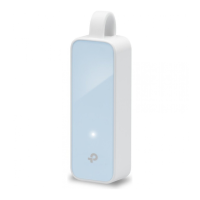
For other models (UE300C, UE300, UE200, UE306), a white LED that is continuously on signifies that both the adapter and the Ethernet cable are properly connected, indicating readiness for network activity. A flashing white LED on these models also indicates active network data transfer. These LED indicators are crucial for troubleshooting and confirming the device's operational status at a glance.
Connecting the adapter typically involves plugging its USB connector into a free USB port on the host device (e.g., computer, Nintendo Switch). Then, an Ethernet cable is connected from the adapter's RJ45 port to a network router or switch. For models with USB hub functionality, additional USB devices can be plugged into the adapter's available USB ports.
The adapter is designed to be compact and portable, making it convenient for users who need to establish a wired connection on the go, whether for travel, work, or gaming. Its simple design and minimal setup requirements contribute to a user-friendly experience.
The manual emphasizes several key maintenance and safety guidelines to ensure the longevity and proper functioning of the device, as well as user safety.
Firstly, users are advised against disassembling the product or attempting repairs themselves. This is crucial for two main reasons: to prevent the risk of electric shock and to avoid voiding the limited warranty. In case of any issues or the need for service, users are instructed to contact the manufacturer's support channels.
Secondly, environmental considerations are highlighted. The device should be kept away from water, fire, humidity, or hot environments. Exposure to these elements can damage the internal components, lead to malfunctions, or pose safety risks. Adhering to these environmental guidelines helps preserve the device's operational integrity.
The manual also addresses the proper way to power off the product. If the product has a power button, that is the primary method for shutting it down. However, if there is no power button, the only way to completely cut off power is to disconnect the product itself or its power adapter from the power source. This is an important safety measure, especially for devices that might draw power even when not actively in use.
Furthermore, the document outlines the product's compliance with Waste Electrical and Electronic Equipment (WEEE) directives. This indicates that the product bears a selective sorting symbol, meaning it must be handled according to European directive 2012/19/EU for recycling or dismantling. This initiative aims to minimize the environmental impact of electronic waste. Users are encouraged to dispose of the product through competent recycling organizations or by returning it to the retailer when purchasing new electrical or electronic equipment. This commitment to responsible recycling underscores the manufacturer's environmental consciousness.
For ongoing support and communication, the manufacturer provides various resources. Users can visit the TP-Link Community to interact with other users and engineers, which can be helpful for sharing experiences, asking questions, and finding solutions. Technical support, replacement services, user guides, and more information are available on the official support website, which can also be accessed by scanning a QR code. Additionally, users are welcome to provide suggestions or feedback regarding product guides via email, indicating an open channel for continuous improvement based on user input. These support mechanisms ensure that users have access to assistance and information throughout the product's lifecycle.
 General
| Type | USB to Ethernet Adapter |
|---|---|
| Model | UE200 V2 |
| Category | Adapter |
| Interface | USB 2.0 |
| Data Rate | 10/100Mbps |
| Ethernet Port | 1 x RJ45 |
| Compatibility | Windows, macOS, Linux |
| Ethernet Standard | IEEE 802.3, IEEE 802.3u |
| Chipset | RTL8152B |
| Driver Installation | Plug and Play |


 To Next Page