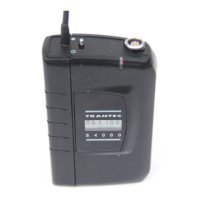
The Trantec S3.2 Diversity Radio Microphone System is a wireless audio solution designed to improve the quality of life through reliable sound transmission. It comprises a diversity receiver, and either a handheld or beltpack transmitter, offering flexibility for various applications.
Function Description:
The system facilitates wireless audio transmission, allowing for freedom of movement without compromising sound quality. The diversity receiver utilizes two antennas (A and B) to minimize dropouts and ensure a stable signal, automatically switching to the stronger signal. The transmitters convert audio input into a radio frequency signal, which is then sent to the receiver. The system is designed for ease of use, with clear indicators for signal strength, battery status, and audio levels. It is suitable for professional use where reliable and clear audio is paramount.
Important Technical Specifications:
RF Frequency:
The system operates on a single fixed frequency between 165 and 230MHz, with a 25kHz spacing. This range allows for selection of appropriate frequencies to avoid interference, especially when multiple systems are in use.
Transmitter (Handheld and Beltpack):
- RF Output Impedance: 50Ω, ensuring efficient power transfer to the antenna.
- Modulation: Direct FM, a robust modulation scheme for audio transmission.
- Beltpack Audio Input: Features a 4 Pin Lemo Connector. Pin 1 is Ground, Pin 2 is +9v, Pin 3 is Audio/+9v, and Pin 4 is Audio. The input level is adjustable via a user gain control, allowing for fine-tuning based on the microphone and sound source.
- Handheld Head Type: Dynamic, indicating a robust and versatile microphone capsule suitable for various vocal and instrument applications.
- Battery: Both transmitters use a 9v PP3 Alkaline battery. The expected life expectancy is greater than 10 hours, providing extended usage time.
Receiver:
- RF Sensitivity: Less than 1µV for 12dB/Sinad, indicating high sensitivity to weak signals, which helps maintain signal integrity over distance.
- IF Bandwidth: 100kHz (IF 10.7MHz), providing good selectivity and rejection of unwanted signals.
- Audio Output: Unbalanced on a 0.25" Jack. The output level is variable from -∞ to -4dBm, with an impedance of 10KΩ. This allows for flexible connection to various audio equipment like mixers or PA systems.
- Power Supply: 12-18v DC, 250mA, supplied via an external AC power adaptor.
Usage Features:
General Operating Guidelines:
- Receiver Placement: Always try to locate the receiver as close as possible to the transmitter to minimize dropouts. A line of sight signal path between the transmitter and receiver is recommended, as obstacles like walls can significantly reduce signal strength.
- Multiple Systems: If using more than one system simultaneously, ensure each is on a different frequency to prevent interference.
- Interference Avoidance: Avoid placing the receiver near computers or mobile telephone equipment, as these can generate unwanted radio interference.
- Antenna Setup: Fully extend the two attached antennas on the receiver. For optimal performance, set them with an angle of 90 degrees between them, giving an angle of 45 degrees between each antenna and the horizontal.
- Walk Test: Always perform a 'walk test' in the actual usage location. This involves walking around the area with the transmitter to identify any problem spots and adjust receiver location or antenna alignment as needed. The typical transmitter range is around 100m.
Handheld Transmitter Setup:
- Battery Insertion: Slide the microphone's collar around and slide down the body to reveal the battery compartment. Insert the 9v PP3 Alkaline battery, observing correct polarity.
- Switching On: Use the switch on the base of the microphone. The LED will light up if the battery is good. The LED will extinguish when the battery needs replacing.
Beltpack Transmitter Setup:
- Attachments: Attach the external antenna and lapel microphone to the top of the beltpack.
- Battery Insertion: Slide the side of the beltpack up and place the 9v PP3 Alkaline battery in the compartment, observing correct polarity.
- Switching On: Use the switch on the top of the beltpack. The LED will light up if the battery is good. The LED will extinguish when the battery needs replacing.
- Audio Gain Adjustment: Slide down the side of the beltpack to locate the audio gain control. Adjust this as required, using the AF PEAK indicator on the receiver as a guide.
Receiver Front Panel Explanation:
- POWER LED: Lights up when the receiver is powered on.
- RF LEVEL LEDs (4 LEDs): Indicate the strength of the received RF signal.
- A LED: Lights up when the receiver is using antenna A to receive.
- B LED: Lights up when the receiver is using antenna B to receive.
- AF PEAK LED: Lights up to indicate that the level of the received audio signal is above +3dB, signaling potential distortion if not adjusted.
Setting The Mute Level:
- The mute level can be adjusted to filter out unwanted radio signals (intermodulation and other FM signals).
- To adjust, switch off the transmitter. The receiver should now be muted. If not, slowly adjust the MUTE LEVEL control until all unwanted signals are muted.
- Once adjusted, switch the transmitter back on and check its operation.
Optimising the Gain of your system:
- Transmitter Gain (Beltpack): Adjust the transmitter gain so that the AF PEAK LED on the receiver just illuminates for the loudest signal expected. Then, decrease the gain slightly so the LED never lights during normal operation to avoid distortion. The optimum setting varies based on the microphone and its proximity to the sound source. The handheld transmitter's gain is factory optimized.
- Receiver Output Gain: Once transmitter gain is optimized, match the receiver's output gain to your mixing desk or PA system using the GAIN control. Adjust to the optimum level for your system, avoiding excessive gain that could cause distortion.
Maintenance Features:
Battery Replacement:
- The LED on both the handheld and beltpack transmitters will extinguish when the battery needs replacing. This clear indicator helps users know when to change batteries to ensure uninterrupted operation.
Guarantee:
- All Trantec products are guaranteed for one year from the date of purchase against defects in materials and workmanship.
- In the event of a claim, the system should be returned to the dealer in its original packaging with proof of purchase.
- The guarantee does not cover defects caused by modification, misuse, or accident.
Ongoing Development:
- Trantec maintains a continual policy of research and development, reserving the right to alter specifications without prior notice. This ensures that the product evolves with technological advancements.

 Need help?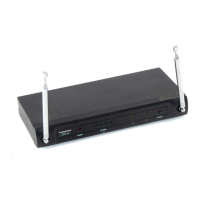

 To Next Page
 General