The provided document is an owner's manual for the Traxxas Bigfoot Monster Truck, model 36034-1.
Function Description:
The Traxxas Bigfoot Monster Truck is an officially licensed replica designed for high-speed action and all-terrain fun. It is a radio-controlled (R/C) model that captures the aggressive stance and tall, drive-over-anything ground clearance of its full-size counterpart. The model is based on the best-selling Stampede and features a powerful Titan 12T 550 motor, waterproof electronics, long-travel suspension, and a smooth XL-5 electronic speed control. It comes with new wheels and tires featuring realistic tread patterns and rubber compounds for long life and superb driving. Innovative technology, such as the patent-pending Torque-Control™ slipper, is also incorporated. The model is controlled by a TQ 2.4GHz radio system, which automatically locates and locks onto an available frequency, allowing multiple models to be raced together without frequency conflicts.
Important Technical Specifications:
- Model: 36034-1
- Motor: Titan 12T 550 (brushed)
- Electronic Speed Control (ESC): XL-5 (waterproof)
- Input Voltage: 4-7 cells NiMH; 2S LiPo
- Case Size: 1.23"W x 2.18"L x 0.75"H
- Weight: 2.0 ounces / 57 grams
- Motor Limit: 15-turns (540 Size) / 12-turns (550 Size)
- On Resistance Forward: 0.005 Ohms
- On Resistance Reverse: 0.014 Ohms
- Peak Current - Forward: 100A
- Peak Current - Reverse: 60A
- Braking Current: 60A
- Continuous Current: 15A
- BEC Voltage: 6.0 VDC
- BEC Current: 1A
- Power Wire: 14 Gauge / 5"
- Input Harness Wire: 26 Gauge / 9"
- Transistor Type: MOSFET
- PWM Frequency: 1700 Hz
- Thermal Protection: Thermal Shutdown (automatic shutdown to prevent damage)
- Single Button Setup: Yes
- Low-Voltage Detection: Yes (User Enabled, for LiPo batteries)
- Radio System: Traxxas TQ 2.4GHz (2-channel, direct-sequence spread spectrum)
- Transmitter Batteries: 4 AA alkaline or rechargeable batteries (sold separately)
- Operation Frequency: 2406~2453 MHz
- Maximum Radio Frequency Power: -1 dBm
- Traxxas High-Current Connector: Gold-plated terminals for positive current flow with least resistance. Operation Frequency: 13.56 MHz, Maximum Radio Frequency Power: -29.27 dBuA/m @ 10m.
- Battery Compatibility: NiMH (4-7 cells) and LiPo (2S) only. Traxxas iD batteries are recommended for automatic charger recognition and optimized settings.
- Skill Level: 1 (No previous experience with R/C models required; minimal setup, maintenance, or support equipment needed).
Usage Features:
The manual provides a Quick Start guide for getting the model running quickly, covering steps like charging the battery, installing transmitter batteries, installing the battery pack in the model, antenna installation, turning on the radio system, checking servo operation, range testing, detailing the model, and driving.
The TQ 2.4GHz transmitter features a steering wheel, throttle trigger, steering trim knob, and a SET button for adjustments. The receiver has three output channels for steering servo, speed control, and an unused channel.
The XL-5 ESC offers three drive profiles:
- Sport Mode (Profile #1): 100% Forward, 100% Brakes, 100% Reverse (default setting).
- Race Mode (Profile #2): 100% Forward, 100% Brakes, No Reverse.
- Training Mode (Profile #3): 50% Forward, 100% Brakes, 50% Reverse (reduces power output for beginning drivers).
The ESC also includes Low-Voltage Detection for LiPo batteries, which limits power output and eventually shuts down the motor to prevent over-discharge. This feature is disabled by default for NiMH batteries. Thermal Shutdown Protection is built into the ESC to prevent damage from overheating.
The model is designed with water-resistant features for electronics, allowing operation in wet conditions like puddles, wet grass, and snow. However, it is not fully submersible, and additional care and maintenance are required after wet use.
The slipper clutch is adjustable to regulate power to the rear wheels, preventing tire spin. It can be adjusted by tightening or loosening the adjusting nut.
Gearing can be adjusted using different pinion and spur gears to optimize for acceleration, top speed, or specific driving conditions. The manual provides a gearing compatibility chart.
Suspension can be fine-tuned by adjusting shock pre-load spacers to change ride height, and by experimenting with different shock oils and pistons.
Steering trim on the transmitter allows for fine-tuning the neutral position of the steering servo to ensure the model drives straight. Channel reversing is available for troubleshooting servo direction.
Maintenance Features:
The manual outlines critical maintenance procedures to ensure top running condition and longevity:
- Post-Run Inspection: Check for cracked, bent, or damaged parts; binding in wheels/steering; shock absorber operation; frayed wires/loose connections; mounting of receiver/servos/speed control; wheel nut tightness; radio system battery condition; loose chassis screws; and steering servo saver wear.
- Slipper Clutch: Inspect friction pads for wear; replace if thickness is 1.8mm or less.
- Chassis: Keep clean of dirt and grime; periodically inspect for damage.
- Steering System: Replace worn servo saver and tie rod ends as needed to restore factory tolerances.
- Motor: Every 10-15 runs, remove, clean with electric motor cleaning spray, and lubricate bushings with light-weight electric motor oil.
- Shocks: Keep oil level full with 100% pure silicone shock oil; inspect bladder for damage/distortion; rebuild if leaking (Traxxas rebuild kit #2362).
- Suspension: Periodically inspect for bent/dirty suspension pins, bent turnbuckles, loose screws, and signs of stress/bending. Replace components as needed.
- Driveline: Inspect for worn drive yokes, dirty axle half shafts, unusual noise/binding; replace U-joint parts if they pop apart; inspect spur gear for wear; check tightness of pinion gear set screws.
- Wet Conditions Maintenance: After running in wet conditions, drain tires, remove batteries, rinse off dirt/mud with low-pressure water, blow off with compressed air (optional), remove wheels, spray bearings/drivetrain/fasteners with WD-40® or similar water-displacing oil, and allow to dry.
- Receiver Box: Instructions for removing and installing the receiver while maintaining its watertight seal, including proper antenna wire installation and O-ring seating.
- Battery Recycling: Traxxas encourages recycling of Power Cell NiMH batteries at the end of their useful life, indicated by the RBRC icon.
Safety Precautions:
The manual emphasizes operating the model sensibly and with care to prevent property damage and serious injury. Key precautions include:
- Not for use on public roads or congested areas.
- Never operate in crowds.
- Be aware of radio interference and maintain a safety margin.
- Motor, battery, and speed control can become hot; avoid burns.
- Do not operate at night or with obstructed line of sight.
- Use good common sense.
- Speed Control Precautions: Adhere to motor limits (15-turn 540, 12-turn 550), insulate exposed wires, turn transmitter on first, use neutrally timed motors, adhere to voltage limits (4-7 NiMH cells or 2 LiPo cells only), use factory-installed connectors, avoid reverse polarity, and install motor capacitors. Do not use Schottky diodes.
- Battery Warnings (especially LiPo): Charging/discharging has fire/explosion risk. Read all manufacturer instructions. LiPo batteries are for advanced users only, not recommended for those under 18 without supervision. Never charge LiPo packs in series/parallel. Inspect LiPo batteries before charging. Do not store/charge LiPo batteries with other batteries. Store/transport in cool, dry place (below 140°F/60°C). Do not disassemble LiPo batteries or build packs from loose cells.
- General Charging Precautions: Confirm charger settings match battery type, do not exceed recommended charge rate, do not charge non-rechargeable batteries, use Traxxas iD charger for Traxxas iD batteries, avoid exposed battery contacts, charge in fire retardant/proof container on non-flammable surface, do not charge in/while driving an automobile, charge in well-ventilated area, remove flammable items from charging area, do not leave charger/battery unattended, do not operate charger in cluttered space, do not charge/discharge/use damaged batteries, keep a Class D fire extinguisher nearby.
- Transmitter Batteries: Use new alkaline or fully charged rechargeable AA batteries. Stop immediately if transmitter batteries are weak (flashing red light) to avoid losing control.
- Antenna Installation: Do not kink, cut, bend, or shorten the receiver antenna wire or metal tip, as this will reduce range. Ensure the antenna wire is fully extended into the antenna tube.

 Need help?
 General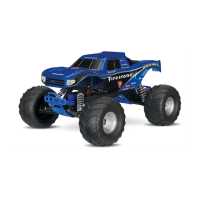



 To Next Page