When the water and back ll levels are close to reaching any of the pool inlets, stop the lling and back lling
process and run the plumbing pipes along the excavation cavity and route them to the equipment site. After the plumb-
ing is installed, complete the lling and back lling process.
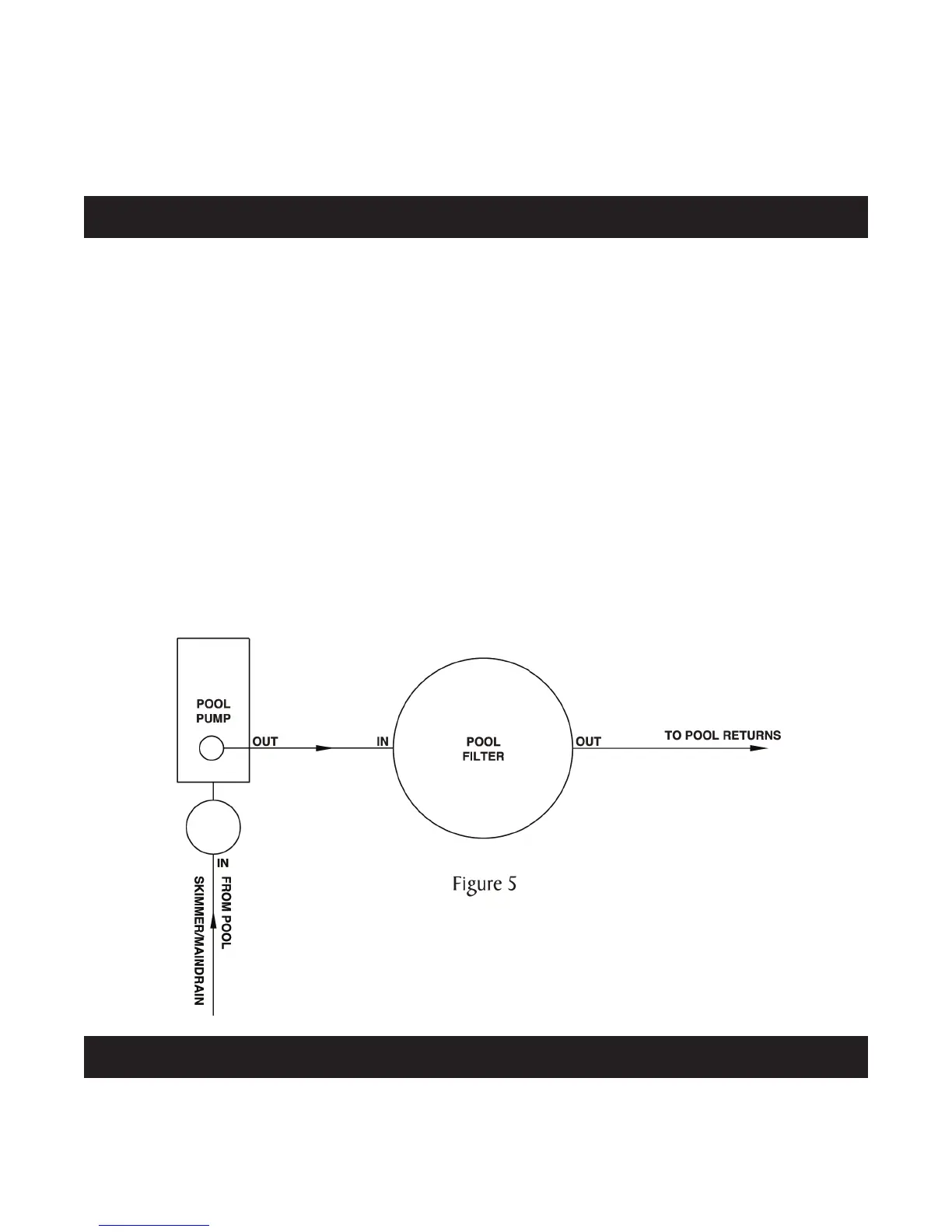
A basic swimming pool circulation system is relatively simple in operation. Water in the pool is drawn through
the main drain and skimmer to the pump, which pushes it through the lter back to the pool via the returns. Refer to
Figure 5 for a basic ltering system diagram. See your contractor for more advanced ltering systems that may include
sanitizers, jets, blowers, automatic pool cleaners, etc. Trilogy recommends the use of schedule 40, 2” plumbing on most
pools. Visually inspect all plumbing installed at the factory upon the delivery of the pool and during the back ll process.
To prevent accidentally draining the pool, Trilogy suggests placing the equipment at or slightly above the eleva-
tion of the pool and plumbing the pool so that the water leaves the pool via the skimmer and not the main drain. You
should not place the equipment higher than 6” above pool level. The equipment becomes less ef cient the greater
the distance away from the pool. If the equipment is placed below the water level, shut off valves must be installed to
prevent accidental siphoning of the pool. Pipes may now be glued at the equipment pad and circulation of the ltering
system may begin. Check all connections for leaks and proper circulation before covering them. Local building codes
may require pressure testing of the plumbing system before the installation is complete.
If the installer or homeowner is not quali ed to do electrical work, an electrician should be hired and a building
of cial should inspect the work. All electrical work should be done to National Electric Code speci cations and any local
codes. Trilogy Pools will not be held responsible for any electrical work.
Step 8.
PLUMBING
Step 9.
ELECTRICAL
if too much back ll has preceded the water in the pool, or outward if too much water precedes the back ll. If bulging
does occur during the installation, the only remedy is to dig that area out and proceed correctly. Slight bulging has only
visual effects, while not affecting the structure of the pool. A string line is very useful in determining the straightness of
the pool walls during the back lling process.



 To Next Page
 Loading...