EasyManua.ls Logo

Troy-Bilt 5000 Watt - User Manual

Troy-Bilt 5000 Watt
52 pages
Print Icon
To Next Page IconTo Next Page
Loading...
Printed in U.S.A. Manual No. 203727GS Revision - (04/12/2007)
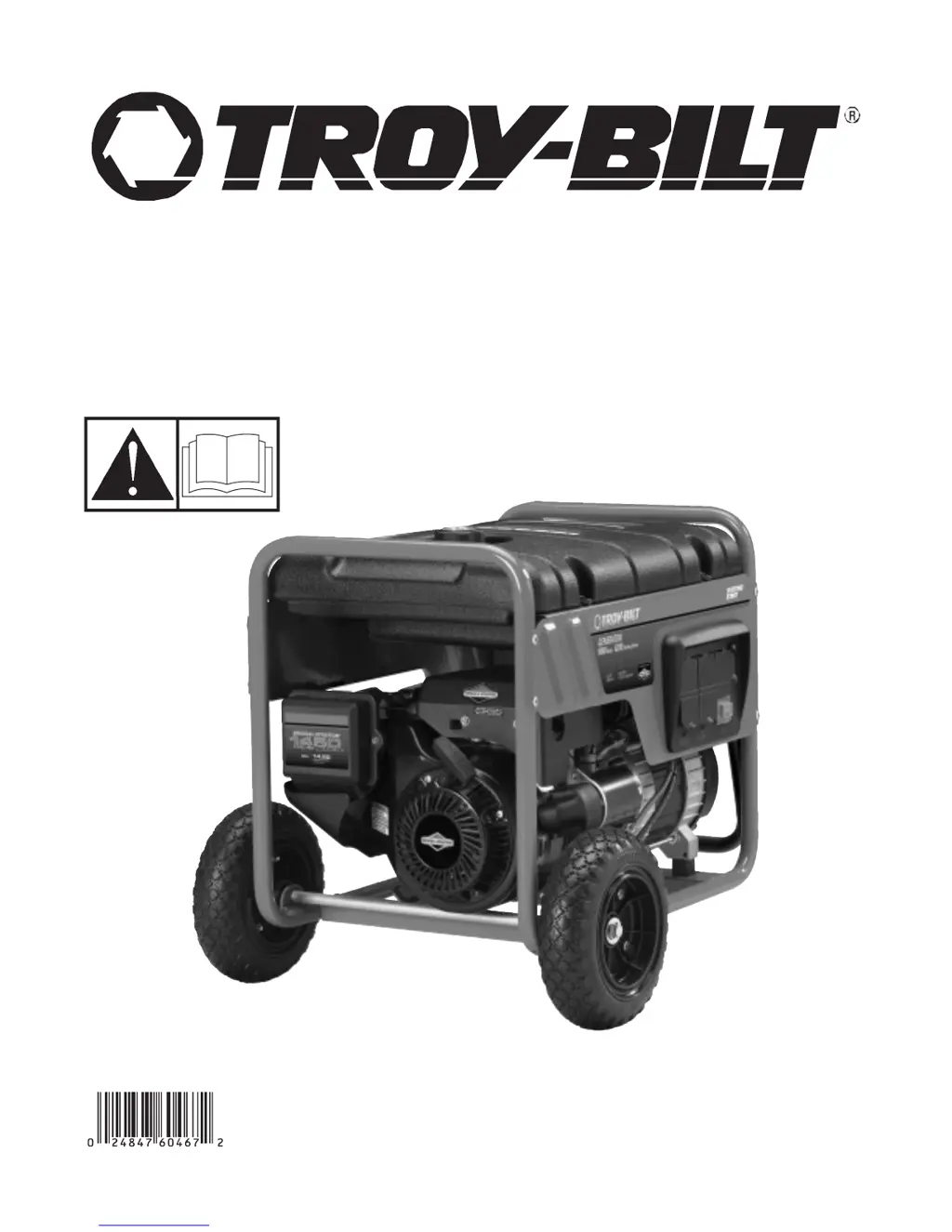
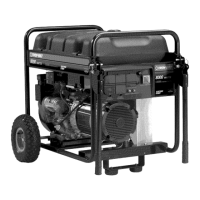
5000 Watt Portable Generator
Operator’s Manual

Table of Contents

Questions and Answers

  • A
    Alejandra DillonJul 26, 2025
    How to fix Troy-Bilt Portable Generator that will not start?
    • K
      Kara GutierrezJul 27, 2025
      If your Troy-Bilt Portable Generator's engine won't start or runs poorly, there are several potential causes. Ensure the rocker switch is set to “On” and the fuel valve is in the “Open” position. Check the air cleaner; if it's dirty, clean or replace it. Make sure the generator has fuel, and if the fuel is stale, drain the tank and carburetor, then refill with fresh fuel. Ensure the spark plug wire is connected to the spark plug, and replace the spark plug if it's bad. Also, check for water in the fuel and drain if necessary, refilling with fresh fuel. If the engine is flooded, wait 5 minutes before trying to restart it. For issues like an excessively rich fuel mixture, a stuck intake valve, or loss of engine compression, contact an authorized service facility.
  • S
    Stephen WattsAug 3, 2025
    What to do if my Troy-Bilt 5000 Watt has no AC output?
    • S
      Sarah BarkerAug 3, 2025
      If your Troy-Bilt Portable Generator is running but not producing AC output, there are a few things to check. First, see if one of the circuit breakers has tripped and reset it if necessary. If that’s not the issue, there could be a fault in the generator itself, which would require contacting an authorized service facility. Also, inspect the cord set for poor connections or defects and repair as needed. Finally, try connecting a different device that you know is in good working order to rule out a problem with the original device.
  • R
    Roger HernandezAug 10, 2025
    Why does my Troy-Bilt Portable Generator bog down when I plug something in?
    • P
      Peggy FergusonAug 11, 2025
      If your Troy-Bilt Portable Generator runs well without any load but struggles or stalls when you connect devices, it could be due to several reasons. First, there might be a short circuit in the connected device, in which case you should disconnect it. It's also possible that the engine speed is too slow or the generator is overloaded, so refer to the Operation section about not overloading the generator. Finally, there might be a shorted circuit in the generator itself, which would require contacting an authorized service facility to resolve.
  • J
    johnsonericAug 17, 2025
    Why does my Troy-Bilt Portable Generator lack power?
    • S
      Sandra KingAug 18, 2025
      If your Troy-Bilt Portable Generator lacks power, it could be due to a couple of reasons. First, the load might be too high, so refer to the Operation section about not overloading the generator. Alternatively, the air filter might be dirty, in which case you should replace it.

Summary

Operator Safety

Equipment Description

Provides a brief overview of the generator's type and function.

Safety Rules

Outlines critical safety guidelines and symbols for safe operation and hazard avoidance.

Hazard Symbols and Meanings

Explains the hazard symbols used throughout the manual for risk identification.

Assembly

Unpack Generator

Instructions for removing the generator from its packaging and preparing for assembly.

Shipment Contents

Lists all components included with the generator shipment for user verification.

Install Wheel Kit

Step-by-step guide for attaching the wheel kit to the generator for mobility.

Verify Engine Oil Level

Instructions on checking the engine's oil level before initial operation to prevent damage.

Add Fuel

Details on the type of fuel required and procedures for safely adding it to the generator.

High Altitude Operation

Information regarding fuel requirements and adjustments for operating the generator at high altitudes.

Attach Negative Battery Cable

Guide for connecting the negative battery cable for electric start functionality.

System Ground

Explains the generator's system ground connection and its purpose.

Special Requirements

Outlines federal, state, and local regulations that may apply to generator use.

Connecting to a Buildings Electrical System

Details on safely connecting the generator to a building's electrical system.

Generator Location

Guidelines for selecting a safe and appropriate outdoor location for generator operation.

Features and Controls

Generator Components Overview

Identifies and briefly describes key controls and parts of the generator.

Cord Sets and Receptacles

Information on selecting and using appropriate extension cords and understanding generator receptacles.

Generator Adapter Cord Set

Details about the provided adapter cord set for connecting multiple devices.

Battery Float Charger

Instructions on using the battery float charger to maintain the starting battery.

Operation

Starting the Engine

Detailed instructions for starting the generator using both electric and manual methods.

Connecting Electrical Loads

Procedures for safely connecting and operating electrical devices with the generator.

Stopping the Engine

Steps for safely shutting down the generator after use.

Dont Overload Generator

Guidance on calculating wattage requirements and avoiding generator overload.

Power Management

Best practices for sequentially connecting loads to the generator to protect devices and the unit.

Maintenance

Maintenance Schedule

Outlines required maintenance tasks and their recommended service intervals.

General Recommendations

Advice on regular maintenance to improve performance and extend generator life.

Generator Maintenance

Procedures for keeping the generator clean and ensuring proper cooling and operation.

Emissions Control

Information on the maintenance of emissions control systems and available service options.

Battery Maintenance

Guidance on maintaining the starting battery, including charging and cleaning.

Engine Maintenance

General procedures and warnings related to engine upkeep and repairs.

Oil Recommendations

Advises on selecting the correct oil viscosity and type for engine performance.

Checking Oil Level

Step-by-step instructions for verifying the engine oil level before operation.

Adding Engine Oil

Procedures for adding oil to the engine when the level is low.

Changing Engine Oil

Instructions on how to drain and refill the engine oil at recommended intervals.

Service Spark Plug

Procedure for inspecting, cleaning, and replacing the spark plug for optimal engine performance.

Service Air Cleaner

Instructions for cleaning or replacing the air cleaner to ensure proper engine air intake.

Service Spark Arrester

Guidance on inspecting and cleaning the spark arrester for fire prevention.

Check Valve Clearance

Recommends professional service for checking and adjusting valve clearance.

Carburetor Adjustment

States carburetor is non-adjustable and recommends dealer service for any required adjustments.

Troubleshooting

Warranties

Emissions Control System Warranty

Details the warranty coverage for the generator's emissions control system.

Briggs & Stratton Emissions Control Defects Warranty Coverage

Specifies the coverage for emissions control parts defects for two years.

Owners Warranty Responsibilities

Outlines the owner's duties regarding maintenance and proper use to maintain warranty coverage.

Length of Coverage

Defines the duration of warranty coverage for different usage types.

No Charge for Repairs

Explains that eligible warranty repairs will be performed at no cost to the owner.

Claims and Coverage Exclusions

Details the process for filing claims and lists common exclusions from warranty coverage.

Maintenance Requirements

Clarifies how required maintenance affects warranty coverage for parts.

Emission Information

Provides details on emission standards, durability periods, and compliance labels.

Limited Warranty Terms

Summarizes the limited warranty, including terms for consumer and commercial use.

Warranty Period

Specifies the duration of the warranty based on the type of use (consumer vs. commercial).

About Your Warranty

Explains what is covered and excluded under the warranty, including normal wear and maintenance.

Product Specifications

Generator Specifications

Lists key technical specifications such as wattage, voltage, frequency, and dimensions.

Common Service Parts

Provides part numbers for common maintenance and replacement items.

Troy-Bilt 5000 Watt Specifications

General IconGeneral
Power Output5000 Watts
Rated Watts5000 Watts
Fuel TypeGasoline
Runtime at 50% Load10.5 hours
Low Oil ShutdownYes
Fuel GaugeYes
Engine Type4-Stroke OHV
Wheel KitIncluded
Outlets2x 120V 20A Duplex, 1x 120V 30A, 1x 120/240V 30A

Related product manuals