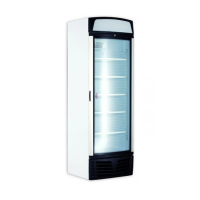
This manual describes a commercial type vertical frozen food storage cabinet, designed for efficient and safe storage of frozen food products in commercial settings. It provides comprehensive instructions for installation, operation, maintenance, and troubleshooting to ensure optimal performance and longevity of the device.
Function Description
The primary function of this commercial vertical frozen food storage cabinet is to maintain a consistent internal temperature suitable for storing packed frozen food. It is equipped with a refrigeration system that ensures food remains frozen, preventing spoilage and maintaining hygiene standards. The cabinet is designed for indoor use in commercial environments, with specific climate class ratings indicating the optimal ambient temperature and humidity conditions for its operation.
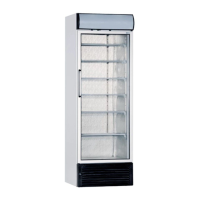
The device features a control panel, shelves, lighting, and a glass door, allowing for easy viewing and access to stored items. Some models include a canopy, which may house additional controls or lighting. The internal temperature can be observed via a digital indicator or thermostat, with factory-set values optimized for performance and energy consumption. For models with digital thermometers, temperature adjustments are typically made by an Authorized Service.
The cabinet's design emphasizes proper air circulation, both internally and externally, to ensure efficient cooling. It is crucial to maintain a gap between the stored products and the top of the cabinet, as well as adequate clearance around the compressor assembly, to facilitate airflow.
Usage Features
Before initial use, the cabinet requires careful installation and preparation. After positioning, it is recommended to wait for at least one to two hours (or longer in very cold conditions) before plugging it in, to allow compressor oil to settle. The interior and all accessories should be cleaned prior to first use.
The product operates on specific mains power (220-240V/50-60 Hz or 110-127/60 Hz) and must be connected to a grounded outlet with appropriate fuse protection (10-16 A). It is strictly forbidden to use extension cords or multiple sockets. The device does not have a separate on-off switch; it starts operating once plugged in.
When loading foodstuff, it is essential to ensure products are properly packed and conform to hygiene standards. Hot foodstuff should never be placed directly into the cabinet for cooling or freezing. The maximum shelf carrying capacity varies by model, and users must not exceed the loading line indicated in the product. A gap of at least 2 cm between the top of the loaded product and the cabinet ceiling is necessary for air circulation.
The manual defrost feature is crucial for maintaining efficiency. Excessive frost buildup on shelves can decrease freezing capacity and increase energy consumption. Defrosting involves unplugging the device, transferring food to a suitable environment, allowing frost to melt (typically within two hours), and then wiping internal walls dry. After defrosting, the device should run empty for three hours to cool down before reloading food.
For models with digital thermostats (ERC 112D or EWPLUS 971), specific keys are used for functions such as defrost, standby, adjusting set temperature, and accessing programming menus. The thermostat displays various indicators for compressor activity, fan operation, alarms, and temperature units (°C/°F). Set temperature adjustments involve pressing specific keys to display and modify the setpoint, followed by confirmation. Manual defrost can also be initiated via the thermostat.
If the product is to be shut down for an extended period, food should be removed, the device unplugged, and a full defrost and internal cleaning performed. It is important to dry the interior thoroughly and leave the door open to prevent odor formation and corrosion.
Maintenance Features
Regular cleaning and maintenance are vital for the product's performance and hygiene. Cleaning is divided into internal and external procedures. Before any cleaning, the device must be unplugged, and protective gloves should be worn. Harsh cleaning agents, abrasive substances, or pressurized water should never be used, as they can damage plastic parts, cause electrical shock, or lead to corrosion.
Internal cleaning involves removing accessories, allowing internal parts to reach ambient temperature, and then wiping surfaces with a soft cotton cloth and warm soapy water or recommended cleaning agents. After cleaning, the interior must be thoroughly dried to prevent darkening and ensure no wet or humid areas remain. The product should run empty for three hours after cleaning before reloading food.
External cleaning is performed with a cotton cloth and warm soapy water, taking care to prevent water penetration into the front control panel and lighting section. The door gasket should also be cleaned with soapy water.
Condenser maintenance is crucial for efficiency. Dust accumulated on the condenser, located at the back of the device, should be cleaned a few times a year using a vacuum cleaner or a dry brush after unplugging the device.
Troubleshooting guidelines are provided for common issues such as the device not working, high or low internal temperature, excessive sweating, or bad odors. For any failures, especially those involving electrical components or significant damage, it is imperative to contact an Authorized Service. User intervention in such cases can invalidate the warranty and pose safety risks. The manual emphasizes that setting digital thermostat values outside factory settings is the user's responsibility, and the company is not liable for resulting losses.


 To Next Page
 General