Need help?
Do you have a question about the Unicum ROSSO and is the answer not in the manual?
Details on the vending machine manufacturer LLC "KRAFT" and contact information.
Describes the manual's purpose, scope, and target audience for servicing.
Recommends reading additional manuals for peripheral devices like printers and card readers.
Details manual version, modifications, and developer rights regarding machine changes.
Covers machine units, exclusions, and components not covered by the warranty.
Key safety instructions for installation, operation, and maintenance of the vending machine.
Attention notes regarding touching electrical plugs with wet hands to prevent shock.
Attention notes on checking water quality and ensuring correct connection to water supply.
Safe cleaning procedures, power-off requirements, and permitted washing material usage.
Warning about hot drinks dispensed and the need to keep the dispensing slot flap closed.
Mandates that the vending machine must only be used inside covered premises.
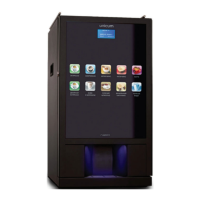
Describes the types of drinks the vending machine is designed to prepare and sell.
Lists key parameters like dimensions, power, voltage, and water supply requirements.
Details container types and volumes for coffee beans, ingredients, and sugar.
Instructions for safe lifting, packing, and transporting the vending machine vertically.
Specifies environmental requirements for storing the machine, including temperature and humidity.
Details requirements for installation location: dry premises, temperature range, ventilation, and tilt.
Steps for removing packing, accessing keys, and opening the vending machine door.
Ensures all internal packing materials are removed before powering on the machine.
Steps to remove the waste container and access installation fixtures for pegs.
Using adjustable pegs to set the machine's vertical inclination and covering them.
Emphasizes that installation and servicing must be performed by trained and authorized personnel.
Identifies main parts on the machine's metallic door and exterior, like light-boxes and keypads.
Locates external components on the rear wall such as CAN BUS connector and power cable.
Describes the body's contents and placement of dispensers, preparation units, and panels.
Lists and illustrates internal components like cup dispensers, grinders, mixers, and boilers.
Details components of the drinks dispensing tray and the dispensing mechanism.
Describes door functional parts and access to electronic circuitry for maintenance.
Explains the location and access to the power supply circuit behind ingredient containers.
Describes the safety feature that cuts power when the door is opened for recharging or cleaning.
Identifies the types of containers for ingredients and coffee beans used in the machine.
Instructions for refilling ingredient containers and sugar container, ensuring no foreign objects.
Describes the cup dispenser capacity, sequential release, and usage with customer cups.
Provides steps for installing tubes and correctly loading cups into the dispenser.
Details on refilling the spoon dispenser, its capacity, and adjustment for different spoon lengths.
Explains how the cup holder positions cups and interacts with optical sensors for drink preparation.
Describes the dispensing area, including the removable tray and grill for spilt liquids.
Details the location, function, sensor, and overflow blocking of the liquid waste container.
Describes the handling of used coffee grounds and the use of waste bags for solid waste.
Provides a detailed diagram and description of the water flow and components in the hydraulic circuit.
Details the setup for using water bottles and the feed pump for autonomous operation.
Explains requirements and procedures for connecting the machine to the municipal water supply.
Explains the float chamber's role in maintaining water level and preventing system blockages.
Describes the function of the boiler feed pump and water filter in the circulation system.
Details the function of the boiler feed pump and electromagnetic valves for water heating.
Explains boiler heating, access, and safety warnings regarding hot surfaces and water quality.
Describes how coffee beans are ground and fed into the espresso group.
Explains how to adjust the coffee grinder for the desired particle size and taste.
Step-by-step guide for initial grinding setup and tasting adjustments.
How grinding level affects drink concentration, taste, and potential machine issues.
Regulating coffee amount and warnings about improper dosing apparatus settings.
Details how the espresso group makes coffee, presses grounds, and dispenses the drink.
Instructions on how to remove the espresso group for maintenance and cleaning.
Provides detailed steps for disconnecting pipes and removing the espresso group assembly.
Procedure for adjusting the espresso group chamber volume for specific coffee weights.
Explains the water selector's role in directing hot water to mixers for instant drinks.
Describes how mixers prepare instant drinks by combining ingredients and hot water.
Steps for planned cleaning of mixer funnels and other plastic parts.
Procedure for removing the mixer motor by loosening retaining screws.
Controls machine functions, reads sensors, handles drink preparation, and stores recipes.
Holds data, controls payment systems, and manages operational modes via USB.
Buttons for accessing Operator/Technician menus, flushing, and performing test drinks.
Describes the 16-button keypad used for drink selection and menu navigation.
Details programmable locks, master key for programming, and silver operating keys.
Explains how to open/close the door and provides warnings about programming the lock.
Provides steps to reprogram the RIELDA lock for a new working key.
Instructions for connecting and configuring FOODBOX SLAVE/LONG machines to the master unit.
Step-by-step guide for removing and emptying the banknotes from the BNA stacker.
Procedures for removing jammed banknotes in the stacker or intake slot.
Instructions for filling coin tubes, coin release, and checking coin counts.
Describes button functions for menu navigation and coin handling operations.
Explains how the machine prepares and dispenses drinks after customer payment.
Details how cups are positioned, dispensed, and checked for customer removal.
Steps for grinding, dosing, pressing coffee, and dispensing the final coffee drink.
How the prepared drink is presented to the customer and sensor checks for cup removal.
Explains the importance of hygiene, frequency, and general cleaning guidelines for the machine.
Lists all parts of the machine that should be cleaned during technical service.
Critical warning and procedure for draining water before storage or transport to prevent damage.
Step-by-step guide for flushing the boiler and the entire water tract.
Procedures for accurately weighing sugar, ground coffee, and other ingredient doses.
Instructions for cleaning the Bank Note Acceptor, including optic sensors and rollers.
Details on cleaning BNA optic parts, rollers, belts, and the stacker.
Prohibits the use of spirit, acetone, solvents, and corrosive liquids for cleaning the BNA.
Details frequency, warnings, and steps for cleaning the coin slot and validator.
Explains how to access the Technician's and Operator's menus via quick access keypad.
Details the buttons used for navigating menus and editing parameter values.
Setting the display language and identifying the machine with a unique number.
Configuring the internal clock, daylight saving, date format, and access passwords.
Enabling/disabling price alteration and meter resets for operators.
Configuring machine rental parameters and buzzer volume.
Settings for product dispensing behavior and selection display timeout.
Options for resetting interim data, factory defaults, or total historical data.
Configuring start and end times for the machine's power saving mode.
Configuring data transfer, resetting interim data, and managing USB price updates.
Configuring local network settings, including MAC address for network identification.
Setting the subnet mask and gateway IP address for network communication.
Configuring IP address and port for remote server interaction, e.g., for card data.
Enabling Ethernet control and security measures to prevent unauthorized access.
Settings for SLAVE machine connection and secondary display language.
Configuring automatic data dispatch to the server for weekdays.
Setting decimal places for prices and nullification time for deposited credit.
Configuring refund algorithms and selecting payment protocols.
Setting coin slot type, interface, restriction, and denomination.
Limiting change amount and defining conditions for switching to NO CHANGE state.
Setting currency code in MDB format and enabling/disabling the change motor.
Configuring coin payout algorithms and multi-vend transaction settings.
Configuring single coin dispensing and MDB device connections.
Setting maximum credit, change limits, and coin acceptance criteria.
Setting up tokens for change, free vend, and linking to SLAVE machines.
Configuring card recharge limits, maximum card value, and bonus settings.
Configuring Ethernet access and selecting card payment systems like NFC or Sberbank.
Setting terminal, merchant numbers, port, and greeting messages for Sberbank integration.
Configuring display strings and performing manual summary collation for Sberbank.
Setting price lists for cards and transaction nullification time.
Setting up time zones for product availability, sales, or discounts.
Configuring communication protocols and data transfer rates for cash registers.
Setting passwords for accessing cash register functions and operational modes.
Configuring status display and automatic printing of Z-reports.
Configuring SMS password, server IP addresses, and GPRS access points.
Setting login credentials for mobile provider access point.
Reading unique identifiers for machine (GUID) and modem (IMEI).
Displaying modem type, version, and cellular signal strength.
Configuring names, cash prices, discounts, and surcharges for all products.
Defining price validity based on time intervals and days of the week.
Blocking sales on specific days and setting prices for card sales.
Setting article numbers for tracking and defining cell priority for product sales.
Setting up combinational sales (multiple products in one transaction).
Configuring refrigeration unit control type (Triac, Danfos, Outdoor).
Setting min/max temperatures for compartments and evaporators.
Configuring defrost cycles duration and interval for the refrigeration unit.
Setting fan modes and monitoring temperature sensor events.
Configuring optical sensors and defining machine reactions to dispensing failures.
Configuring siren alarms and electromagnetic door lock settings.
Setting vend timeout duration and enabling machine debugging for logging.
Configuring water temperature for coffee and instant drinks.
Setting pre-heating flow and delays for optimal drink preparation.
Configuring delays between preparation steps and cup handling.
Setting dispensing options for spoons and sugar quantity per portion.
Configuring photocell sensors for cup detection before and after dispensing.
Configuring drink recipes, sugar addition options, and spoon dispensing.
Setting the first ingredient for drinks like coffee or instant mixes.
Setting amounts of water and instant ingredients, delays, and testing.
Checking the functionality of mixer motors.
Testing the sugar and spoon dispensing mechanisms.
Testing the espresso group, grinder, and dosing apparatus.
Testing cup arm movement and water selector functionality.
Testing soluble ingredient selectors and boiler pump.
Testing water flow, electric valves, and cooling pump.
Checking states of photocells, waste sensors, group, selector, and dispenser sensors.
Configuring cyclical drink tests and testing keypad functionality.
Configuring automatic flushing parameters for mixers.
Settings for cooling boiler, filling/emptying boiler, and doser inversion.
Fan control for powder dispensing and settings for a second hot drink machine.
Shows lists of current/previous errors, their types, and states.
Procedure for resetting errors, some requiring manual liquidation.
Displays temperature sensor readings and DC voltage on the main board.
Loading coins into tubes and viewing tube status.
Procedures for discharging coins and testing the change motor.
Handling bill cash box signals and printing Z-reports.
Resets motors, unblocks spirals, and tests all cells.
Executes test sales from individual cells and checks sensor states.
Starts flushing for all systems, coffee, and soluble drinks (hot/cold).
Displays temperature readings, voltage, and status of air-break, cup, and arm sensors.
Checks states of doser, photocell, waste, group, selector, and dispenser sensors.
Reads coffee waste meter and tests keypad functionality.
Accesses detailed sales info: transaction count, revenue, cashbox contents.
Provides info on received banknotes, coins, card sales, and discounts.
Displays sales data for connected SLAVE snack machines and hot drinks.
Resets operational readings to zero if allowed by technician settings.
Displays serial numbers, versions, and checksums for machine and regulator.
Shows serial numbers, versions, and models for payment peripherals.
Displays peripheral data for hot drink and snack machines.
Information on accessing the prices configuration menu from the operator's menu.
Details supported drive types, connection, and general usage notes for USB flash drives.
Instructions on how to read statistical data (audit) and current machine configuration.
Loading general configuration or specific machine configurations from USB.
Steps for updating machine software via USB, including links to manufacturer resources.
Table showing factory default settings for various drinks regarding ingredients and sugar.
 General
| Model | Unicum ROSSO |
|---|---|
| Payment Options | Coin, bill, card, contactless |
| Display | Graphical LCD |
| Power Supply | 230 V, 50 Hz |
| Temperature Control | Yes |

 To Next Page