- 32 - - 33 -
ENGLISH
Adjustment
The position of the handlebar and its angle depend on the user and his preferences of comfort,
performance and balance. Your hands should be in a comfortable position, which allows you to
control the levers without problems. If your hands, arms or shoulders are in an awkward position,
you should adjust the position of the handlebar or look for components that best suit your ergo-
nomic needs. Some handlebars have marks that indicate where they can be trimmed.
Always remember to use the appropriate precaution measures whenever you make any repairs.
Use the proper tools and clothing, mask and gloves. If you are not sure how to cut it, check with us
or your trusted mechanic.
It is the user’s responsibility to find the ideal height for their ergonomics. If you are not sure how to
do it, ask us or your trusted mechanic your ideal height, cutting the tube and adding the necessary
spacers.
02 | SEAT AND SEATPOST
The seat must be positioned at the proper height for the cyclist’s height and bike usage. A good fit
is very important for safety, comfort, and pedalling efficiency. This section is about how to inspect,
adjust the seat and the seat post.
Inspection
Once a month it is necessary to inspect the seat tube clamp. Make sure that the seat is well fixed
to the frame assembly, not having any horizontal, vertical or rotational movement with respect to
the axis of the seat tube. In case of having any of these movements, it is necessary to tighten the
clamps. Some components have the tightening torque values engraved on its surface. Tighten the
screws with a torque wrench, according to the indicated values. If these are not engraved or have
ADJUSTMENT AND MAINTENANCE GUIDE
This guide deals with the inspection and maintenance to be performed for each component of the
bicycle and includes the adjustment and lubrication instructions.
If during an inspection it is found that any of the parts does not meet the operating requirements,
the bicycle must not be used until the part has been repaired or replaced, or until the bicycle has
been checked by an authorized technician.
At the end of this guide you will find a calendar with maintenance recommendations. The inspec-
tion intervals of each component are based on a normal use regime.
If you make more extreme or intensive use of the bicycle, or if you drive in adverse weather condi-
tions, such as rain and snow, maintenance should be more frequent than indicated on the calendar.
01 | HANDLEBARS
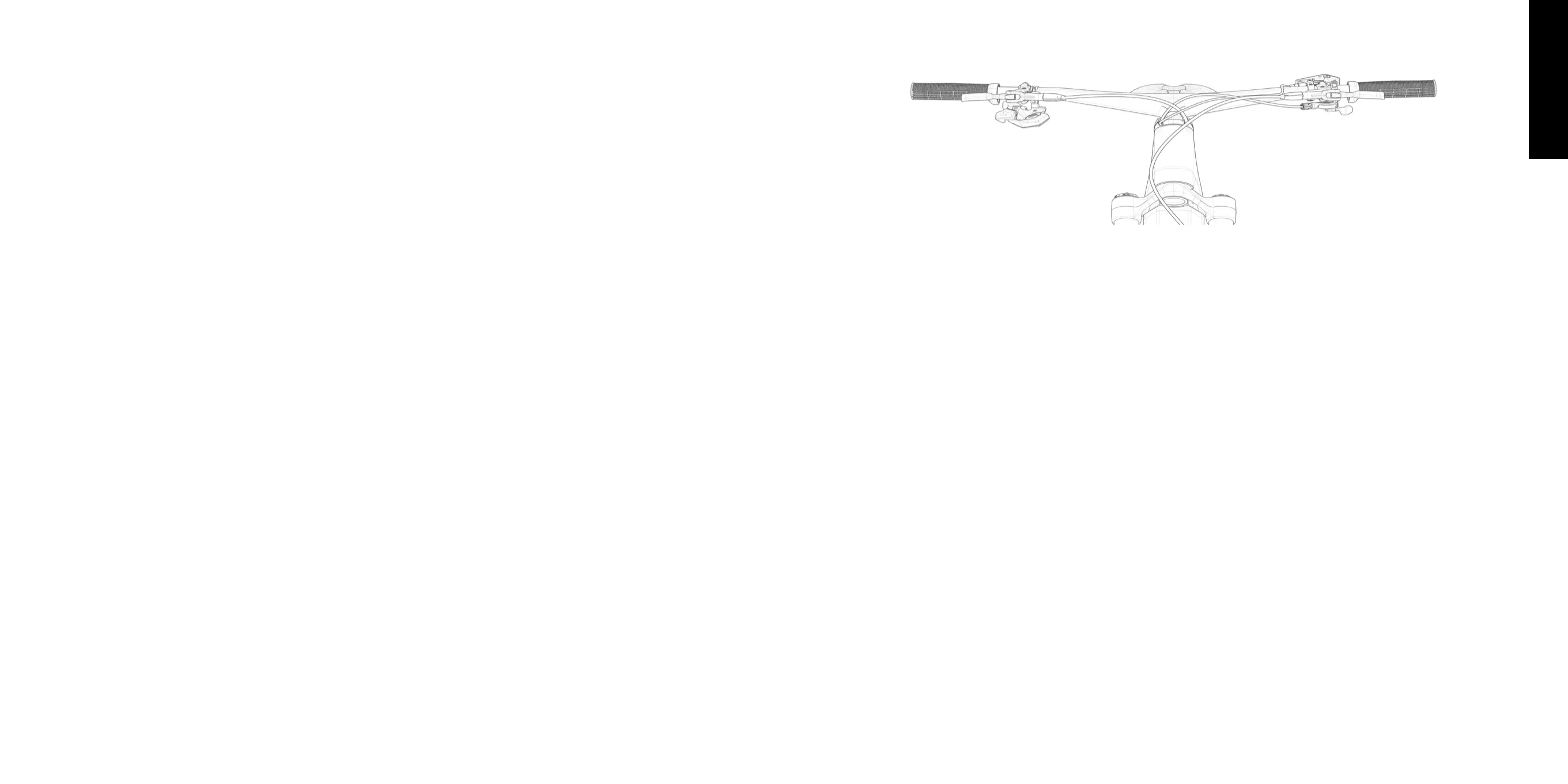
The handlebar along with the seat, define the position of the cyclist on the bicycle. You must en-
sure that the position is as ergonomic as possible. The handlebar is connected to the rest of the
bike by the stem. This section explains how to inspect, adjust and lubricate the handlebar and
stem.
Inspection
Perform this inspection at least once a month. Make sure the stem is aligned with the front wheel.
Check the connection between the stem and the fork, moving the handlebar, while holding the
front wheel. The handlebar must not move with respect to the wheel. Also, inspect the safety of
the handlebar by checking that the handlebar. Make sure that turning the handlebar does not
stretch or pinch any cables.
Verify that all bolts are tight. Many components have the tightening torque values engraved on the
part itself. Tighten the screws with a torque wrench, according to the indicated values. If these are
not engraved or have been erased, look for the values in the “Tightening torques” section of this
manual or in the manufacturer’s manual of the specific part. If after performing the inspection, you
are not sure of the reliability of your handlebar, do not use the bicycle and take it to your trusted
mechanic.


 To Next Page
 Loading...