- 34 - - 35 -
ENGLISH
On bicycles with rear suspension, make sure that when fully compressing the suspension, the
rear wheel does not touch the seat when it is in the lowest possible configuration (descent posi-
tion in the case of a telescopic (dropper) seat posts. This could damage the seat and the frame.
It is mandatory to leave a gap of minimum 12mm between wheel and seat once the rear shock
absorber is fully compressed.
Lubrication
Once a year and before the first use, the seat post must be
lubricated. To do so:
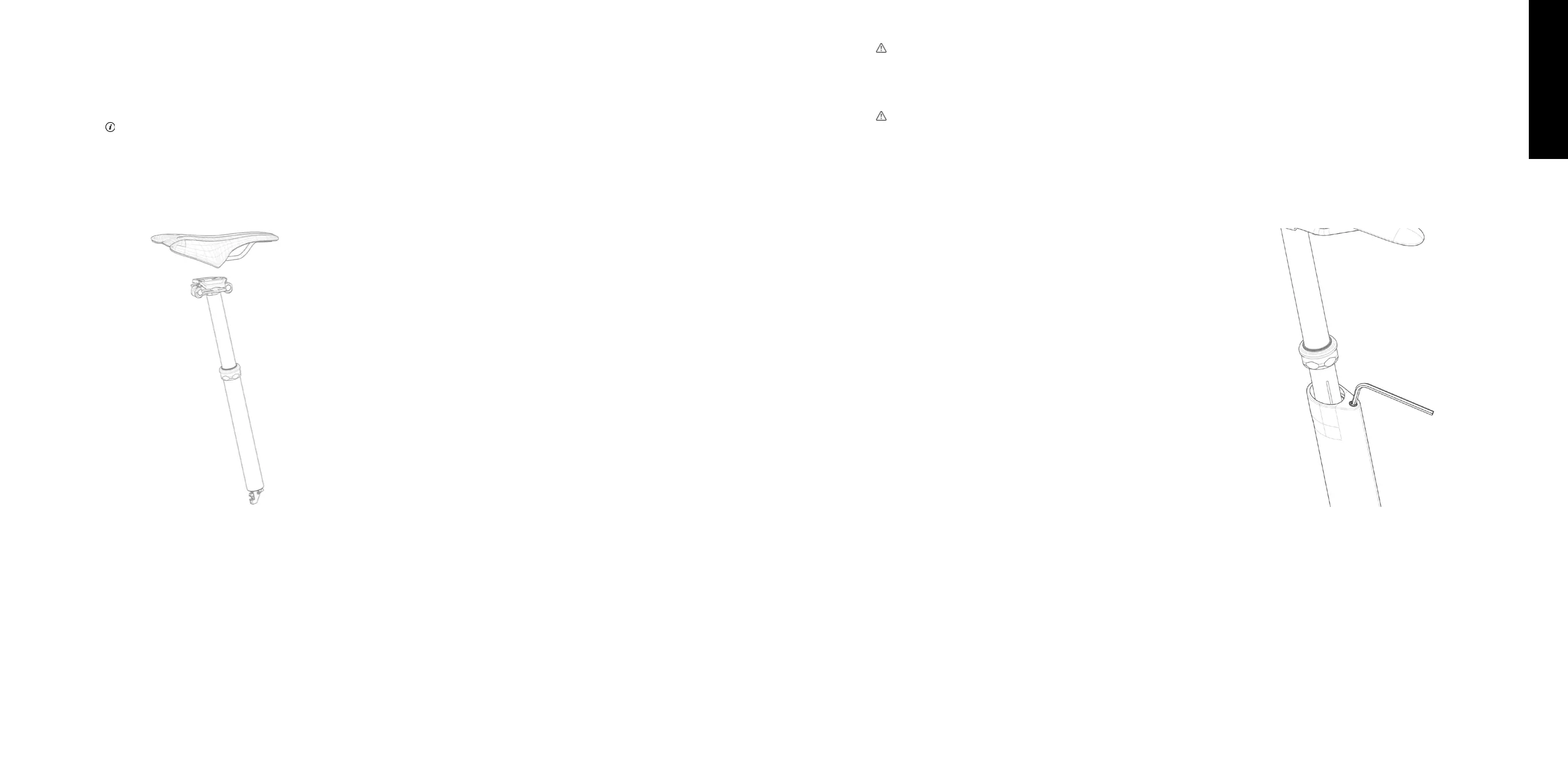
01. Loosen the screws on the seat clamp to remove the seat
post from the frame.
02. Clean the seat post and remove the old mounting paste.
03. Apply a new layer of special mounting paste to the lower
part of the seat post and inside the seat tube of the frame,
around the clamping area of the tube.
04. Insert the seat post into the frame. While making this
adjustment, it is important that the seat post slides easily
into the vertical tube, without the need to push or rotate it.
To do this, if necessary, loosen a little the screw of the seat
post clamp.
05. Adjust the height of the seat post, align the seat with the frame and tighten the clamp, ac-
cording to the recommended tightening torque.
03 | PEDALS
The control and safety on a bicycle depend to a significant extent on the strength of the connec-
tion between pedal and foot. The pedals must be chosen accordingly to the bike usage and the
rider personal preferences, being many types of pedals available in the market:
• Clip pedals of varied brands, which mechanically couple a cleat attached to the shoe sole to
the pedal.
been erased, look for the values in the “Tightening torques” section of this manual or in the manu-
facturer’s manual.
Adjustment
The height and inclination of the seat affect the weight distribution between the handlebar and
the seat. With a correct fit, the seat will be more comfortable when traveling long distances. In
case of an incorrect adjustment of the seat or when using one with a poor support in the pelvic
area, the nervous and blood systems may be affected during a prolonged use of the bicycle. In
case the seat causes pain or numbness, change it.
How to adjust the tilt
01. Loosen the seat clamping system so that it has
movement.
02. The adjustment of the seat is very personal. Ini-
tially it is recommended to place the seat parallel to
the ground, and on bicycles with integral suspension,
a bit forward inclined.
03. Tighten the seat fixing bolts, with the correct
torque, as indicated in the manufacturer’s manual.
04. How to adjust the height
05. Loosen the screws of the frame seat post clamp.
06. Raise or lower the seat post. The height of the
seat should always allow you to touch the ground
with both feet at the same time.
07. Check that the seat post is properly inserted, always leaving the minimum insertion mark
inside the seat tube.
08. On bicycles with a telescopic (dropper) seat post, when assembling, make sure that the ca-
ble that goes to the handlebar lever does not bend.
09. Re-tighten the bolts on the seat post clamp.
A seat post positioned too high, above its minimum insertion line, can damage the bicycle and
make you lose control and fall.


 To Next Page
 Loading...