EasyManua.ls Logo

Valeport MIDAS SVX2 - User Manual

Valeport MIDAS SVX2
23 pages
Print Icon
To Next Page IconTo Next Page
Loading...
MIDAS SVX2 Combined SV and CT Profiler -
Operating Manual
Document ID
MANUAL-1553401442-1 issue: 1.5
Date:
March 2022
This confidential document was prepared by the staff of Valeport Limited, the Company, and is the
property of the Company, which also owns the copyright therein. All rights conferred by the law of
the copyright and by virtue of international copyright conventions are reserved to the Company.
This document must not be copied, reprinted or reproduced in any material form, either wholly or in
part, and the contents of this document, and any method or technique available there from, must
not be disclosed to any other person whatsoever without the prior written consent of the Company.
© 2022 Valeport Ltd
Valeport Ltd
St Peter's Quay
Totnes TQ9 5EW
United Kingdom
Phone:
email:
Web:
+44 1803 869292
sales@valeport.co.uk
www.valeport.co.uk
As part of our policy of continuous development, we reserve the right to alter, without prior notice,
all specifications, designs, prices and conditions of supply for all our equipment
Question and Answer IconNeed help?

Do you have a question about the Valeport MIDAS SVX2 and is the answer not in the manual?

Summary

Introduction

Introduction

Provides an overview of the MIDAS SVX2 Combined SV and CT Profiler operating manual.

Specifications

Sensor Specifications

Details the specifications for the sound velocity, conductivity, pressure, and temperature sensors.

Mechanical Specifications

Covers the materials, connectors, and physical dimensions of the instrument and its components.

Performance Specifications

Details the instrument's memory, power, current drain, sampling rate, and data output options.

Battery Life Calculations: Based on Memory

Calculates instrument operation time based on memory capacity for different sampling scenarios.

Battery Life Calculations: Based on Batteries

Calculates instrument operation time based on battery capacity for different usage patterns.

Installation

Communications With a PC

Explains how to connect the MIDAS SVX2 to a PC for setup and data retrieval using software.

Deploying the MIDAS SVX2

Covers procedures for deploying the instrument for various operational modes.

Real Time Operation

Describes the process of connecting the instrument for real-time data output to a PC.

Self Recording Operation

Details how to operate the instrument in a self-recording mode using the switch plug.

LED Flashing Sequence

Explains the different meanings of the instrument's LED indicator lights.

Real Time Data Formats

Illustrates the structure and units of data transmitted in real-time.

Data Download and Recovery

Outlines procedures for recovering data and preparing the instrument for storage after use.

Maintenance

Changing Batteries

Provides step-by-step instructions for replacing the instrument's internal batteries.

Removing the End Cap Safely

Details a critical safety procedure for removing the end cap due to potential internal pressure.

Seals and O-Rings

Covers guidelines for maintaining seals and o-rings to ensure instrument integrity.

O-Rings

Offers guidelines for maintaining o-ring seals to ensure watertight integrity.

Anti-Extrusion Rings

Explains the purpose and correct installation of anti-extrusion rings.

Wiring Information

Switch Plug Wiring

Details the pin functions of the 10-way male SubConn switch plug.

3 m Y Lead (RS232) Wiring

Specifies the wiring connections for the 3m Y lead used for RS232 communication.

3 m Switched Y Lead (RS485) Wiring

Details the wiring configuration for the 3m switched Y lead supporting RS485 communication.

Frequently Asked Questions

SV vs. CTD Data Accuracy

Compares the accuracy of Valeport SV sensor data against traditional CTD calculations.

SV Sensor Accuracy Explained

Details the advanced techniques contributing to the high accuracy of the SV sensor.

Calibration Methods

Explains why Valeport uses pure water calibration over standard seawater formulae.

Conductivity Cell Robustness

Describes the durability and construction of the instrument's conductivity cell.

ROV Integration and Strange Readings

Addresses common issues and troubleshooting steps when integrating the instrument with an ROV.

Growth Effects and Calibration Frequency

Discusses how growth impacts readings and recommends recalibration intervals.

Upcast vs. Downcast Data Differences

Explains potential reasons for variations observed between upcast and downcast data profiles.

Profiling Speed and Zero Output Causes

Covers profiling speed limitations and common causes for the SV sensor outputting zero values.

EU Declaration of Conformity - CE Marking

EU Declaration of Conformity - CE Marking

Details the EU Declaration of Conformity and CE marking for the product.

Summary

Introduction

Introduction

Provides an overview of the MIDAS SVX2 Combined SV and CT Profiler operating manual.

Specifications

Sensor Specifications

Details the specifications for the sound velocity, conductivity, pressure, and temperature sensors.

Mechanical Specifications

Covers the materials, connectors, and physical dimensions of the instrument and its components.

Performance Specifications

Details the instrument's memory, power, current drain, sampling rate, and data output options.

Battery Life Calculations: Based on Memory

Calculates instrument operation time based on memory capacity for different sampling scenarios.

Battery Life Calculations: Based on Batteries

Calculates instrument operation time based on battery capacity for different usage patterns.

Installation

Communications With a PC

Explains how to connect the MIDAS SVX2 to a PC for setup and data retrieval using software.

Deploying the MIDAS SVX2

Covers procedures for deploying the instrument for various operational modes.

Real Time Operation

Describes the process of connecting the instrument for real-time data output to a PC.

Self Recording Operation

Details how to operate the instrument in a self-recording mode using the switch plug.

LED Flashing Sequence

Explains the different meanings of the instrument's LED indicator lights.

Real Time Data Formats

Illustrates the structure and units of data transmitted in real-time.

Data Download and Recovery

Outlines procedures for recovering data and preparing the instrument for storage after use.

Maintenance

Changing Batteries

Provides step-by-step instructions for replacing the instrument's internal batteries.

Removing the End Cap Safely

Details a critical safety procedure for removing the end cap due to potential internal pressure.

Seals and O-Rings

Covers guidelines for maintaining seals and o-rings to ensure instrument integrity.

O-Rings

Offers guidelines for maintaining o-ring seals to ensure watertight integrity.

Anti-Extrusion Rings

Explains the purpose and correct installation of anti-extrusion rings.

Wiring Information

Switch Plug Wiring

Details the pin functions of the 10-way male SubConn switch plug.

3 m Y Lead (RS232) Wiring

Specifies the wiring connections for the 3m Y lead used for RS232 communication.

3 m Switched Y Lead (RS485) Wiring

Details the wiring configuration for the 3m switched Y lead supporting RS485 communication.

Frequently Asked Questions

SV vs. CTD Data Accuracy

Compares the accuracy of Valeport SV sensor data against traditional CTD calculations.

SV Sensor Accuracy Explained

Details the advanced techniques contributing to the high accuracy of the SV sensor.

Calibration Methods

Explains why Valeport uses pure water calibration over standard seawater formulae.

Conductivity Cell Robustness

Describes the durability and construction of the instrument's conductivity cell.

ROV Integration and Strange Readings

Addresses common issues and troubleshooting steps when integrating the instrument with an ROV.

Growth Effects and Calibration Frequency

Discusses how growth impacts readings and recommends recalibration intervals.

Upcast vs. Downcast Data Differences

Explains potential reasons for variations observed between upcast and downcast data profiles.

Profiling Speed and Zero Output Causes

Covers profiling speed limitations and common causes for the SV sensor outputting zero values.

EU Declaration of Conformity - CE Marking

EU Declaration of Conformity - CE Marking

Details the EU Declaration of Conformity and CE marking for the product.

Overview

The Valeport MIDAS SVX2 is a combined Sound Velocity (SV) and Conductivity-Temperature-Depth (CTD) profiler, designed for underwater measurements. This operating manual, issue 1.5 from March 2022, provides comprehensive details on its specifications, wiring, operation, and maintenance.

Function Description

The MIDAS SVX2 is engineered to measure sound velocity, conductivity, temperature, and pressure in marine environments. It can operate in real-time data output mode or self-recording mode for deployments where continuous data logging is required. The instrument is capable of calculating salinity internally if activated. Its primary function is to provide accurate SV data, as well as density and salinity data, which are crucial for oceanographic research and hydrographic surveying. The device utilizes advanced digital signal processing techniques to ensure high accuracy in its measurements, particularly for sound velocity.

Important Technical Specifications

  • Housing: Titanium
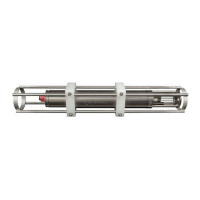
  • Deployment Cage: Stainless steel (316 grade) with polypropylene clamping brackets
  • Dimensions (Instrument): 88mm Ø, 665mm long (including connector)
  • Dimensions (Cage): 825mm long x 140mm x 120mm
  • Weight (in cage): 13.5kg (in air), 9kg (in water)
  • Depth Rating: 6000m (unless a smaller pressure sensor is fitted)
  • Memory: 16Mb solid state memory (upgradeable in 16Mb steps to 64Mb)
  • Internal Power: 8 x 1.5v alkaline C cells or 8 x 3.6v Lithium C cells (do not mix battery types). Output voltage: 12v (alkaline) or 28.8v (Lithium).
  • External Power: Between 9 and 30v DC
  • Current Drain: ~60mA at 12v when running, 0.25mA in sleep mode
  • Sampling Rate: 1, 2, 4, or 8Hz (synchronised)
  • Data Output: RS232 or RS485 (pin selection dependent). Baud rate user selectable from 2400 to 460800.

Sensor Specifications:

  • Sound Velocity:
    • Type: Valeport "time of flight" sound velocity sensor (carbon composite rods)
    • Range: 1375 to 1900m/s standard
    • Accuracy: ± 0.02m/s
    • Resolution: 0.001m/s
  • Conductivity:
    • Type: Valeport inductive coils (polyurethane and ceramic)
    • Range: 0 - 80mS/cm
    • Accuracy: ± 0.01mS/cm
    • Resolution: 0.002mS/cm
  • Pressure:
    • Type: Temperature Compensated Piezo-Resistive Sensor
    • Range: 600Bar absolute (approx 6000m water depth) standard. Others available.
    • Precision: ± 0.01% Full scale (±0.6m with a 600Bar sensor)
    • Resolution: 0.001% Full scale (0.06m with a 600 Bar sensor)
  • Temperature:
    • Type: Fast response PRT
    • Range: -5 to +35°C
    • Accuracy: ± 0.01°C
    • Resolution: 0.002°C

Usage Features

  • Connectivity: The instrument connects to a PC via a 3m Y lead (RS232) for configuration and data download using DataLog x2 software. Optional RS485 or FSK modem communication adapters are available for different communication methods.
  • Deployment: Supplied with a stainless steel protective cage, the instrument is designed for robust deployment. For profiling, suspension via the wire strop on top of the cage is recommended. For fixed deployments, the cage can be removed, and the instrument housing grooves used for clamping.
  • Real-Time Operation: Data can be output in real-time by connecting the signal cable to the instrument and the top end to a PC.
  • Self-Recording Operation: For standalone deployments, the instrument is activated by inserting a SubConn style switch plug. The switch plug is not a dummy plug; it contains wiring links to turn the instrument on.
  • LED Flashing Sequence: An LED visible through a polycarbonate window indicates various operational states:
    • Continuous ON for 15 seconds: Instrument is on and awaiting communication.
    • 1Hz Continual Flashing: Insufficient power (change internal batteries or apply higher external voltage).
    • Continuous ON for 2 seconds: Indicates the start of a Burst Sampling pattern.
    • 5 Rapid Flashes: Indicates the end of a Burst Sampling pattern.
  • Data Formats: Real-time data can be output in a tab-separated format, including Sound Velocity, Depth, Temperature, and Conductivity, with units. If internal salinity calculation is activated, Salinity data is also included.
  • Battery Life Calculations: The manual provides detailed calculations for battery life based on memory capacity and battery type (alkaline or lithium) for continuous data sampling (e.g., 58 hours for 8Hz continuous sampling with alkaline cells) and burst sampling (e.g., 36 days for 4Hz burst sampling with alkaline cells).
  • Profiling Speed: The profiler runs at 8Hz, allowing for a drop rate of approximately 2m/s, covering 0.25m between readings.

Maintenance Features

  • Cleaning: After recovery, the instrument should be cleaned to remove growth. Special care must be taken not to damage the transducer face, reflector plate of the sound velocity sensor, or the core of the conductivity sensor. A high-pressure water jet or stiff (non-metal) brush is suitable. The pressure sensor port should also be cleaned carefully, avoiding sharp objects.
  • Rinsing and Drying: Rinse the instrument in fresh water and dry it, paying particular attention to the sensors and connector, before repacking it in the transit case.
  • Battery Replacement: The MIDAS SVX2 accepts 8 x C cells. Batteries are located in a holder accessed by removing the connector bulkhead.
    • Safe End Cap Removal: A specific procedure is outlined to safely remove the end cap, involving a safety bolt, to prevent injury from potential pressure buildup inside the instrument housing.
    • Screw Replacement: The 3 M5 x 20 socket cap screws are titanium and should be replaced with titanium screws if lost, using a small amount of copper grease.
  • Seal Maintenance (O-Rings and Anti-Extrusion Rings):
    • Inspection: O-rings should be checked periodically for cuts, abrasions, dirt, grit, sand, hair, or perishing.
    • Lubrication: A light coating of silicon grease should be applied to o-rings whenever a seal is opened.
    • Anti-Extrusion Rings: These rings prevent o-rings from being squeezed out under high pressure. They are made of nitrile rubber, have a square cross-section with a concave surface, and should be fitted on the low-pressure side of the o-ring with the concave surface adjacent to the o-ring. After fitting an anti-extrusion ring, a minimum of 30 minutes should be allowed for it to recover its shape before fitting the tube to ensure a proper seal.
  • Calibration: While the SV sensor is remarkably stable and may remain within specification for several years, conductivity, temperature, and pressure sensors exhibit greater drift. Annual recalibration is often performed, though 2-yearly intervals may be sufficient for performance maintenance in many cases. The SV sensor is calibrated against a highly accurate pure water formula (Del Grosso & Mader) rather than the less accurate seawater equations (Chen & Millero) to achieve superior performance.
  • Removable Memory (Note): The manual explicitly states that the device does not use removable memory cards due to concerns about water-tightness, susceptibility to ESD shock, inefficient data storage, and the convenience of direct cable connection for data extraction.

Valeport MIDAS SVX2 Specifications

General IconGeneral
BrandValeport
ModelMIDAS SVX2
CategoryIndustrial Equipment
LanguageEnglish