- 3 -
SUBWOOFER PARAMETERS
The Following Parameters are for Optimal Subwoofer Performance.
The Volume Parameters are calculated to include the displacement by the
subwoofer Magnet and Basket.
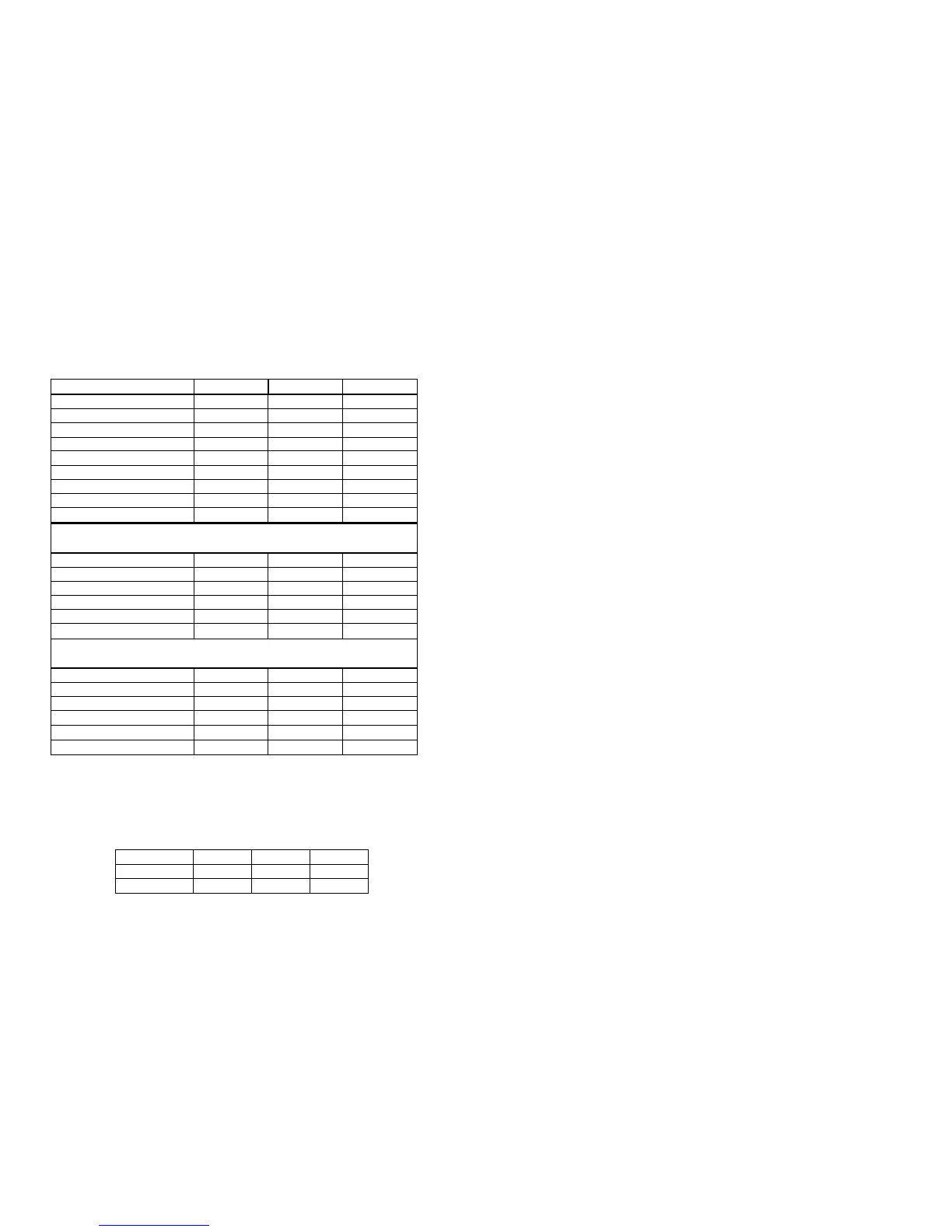
PARAMETERS V1065S4 V1265S4 V1565S4
Fo (Hz) 26.98 29.1 30.3
QMS 5.72 5.13 6.7
QES 0.39 0.38 0.69
QTS 0.36 0.35 0.63
VAS (Liters) 40.59 71.01 139.25
REVC (Ohms) 3.3 3.4 3.2
SPL @ 1 watt / 1 meter (dB) 84.9 88.4 89.31
X-max Linear peak-peak (mm) 24 24 24
LEVC at 1k Hz (mH) 3.53 4.11 3.52
ENCLOSURE VOLUME'S
SEALED
Minimum sealed (Cubic Feet) 0.5 0.85 1.75
Fill Required (%) No No No
3dB down point (-3dB Hz) 54 57 43
Maximum sealed (Cubic Feet) 1.0 1.25 2.75
Fill Required (%) No No No
3dB down point (-3dB Hz) 55 58 38
ENCLOSURE VOLUME'S
PORTED
Vented (Cubic Feet) 2.25 3.0 4.0
Vented to (Hz) 35 33 35
3dB down point (-3dB Hz) 29 27 33
Port Diameter (") 3 4 4
Port Length (") 12 19 20
Number of Ports 2 2 3
For more advanced competition information and enclosures,
please visit the Visonik Technical Support page at:
www.VisonikCarAudio.com
Power Handling Capabilities
Model V1065S4 V1265S4 V1565S4
RMS Power 400W 450W 500W
MAX Power
800W 900W 1000W
- 4 -
ENCLOSURE CONSTRUCTION
Once the chosen the type of application for your subwoofer(s) and the
dimensions of the box are calculated, the materials need to be selected. The
following is a list of common enclosure construction materials:
Particle Board: Very inexpensive, however this board tends to come
apart under the high stress of subwoofers, and is very susceptible to water
damage! Not suitable for very large enclosures unless a great deal of internal
bracing is added for extra rigidity.
Medium Density Fiber Board (MDF): The best overall material for
speaker enclosures, fiberboard is extremely rigid, and will not come apart at
even the highest pressure levels.
Plywood (all types): A poor choice for car stereo subwoofer
enclosures, as plywood tends to de-laminate under heat and weather ranges
found in cars. It can also buzz at low frequencies when played at high volume.
The thickness of material for the enclosure is governed by the overall size
of the enclosure. The smallest of enclosures (1.0 cu ft or less) can use 5/8" or
1/2" material. Average size enclosures (1.0 cu ft to 4.0 cu ft) should use 3/4".
Very large enclosures (over 4.0 cu ft) should use 1" material with braces to
prevent enclosure flex.
Adding damping material, such as fiberglass, or Dacron polyester (pillow
stuffing like Poly-Fill) to your subwoofer enclosure helps cancel any standing
waves or resonances that form in the enclosure because of its particular
dimensions. We recommend adding stuffing only to sealed enclosures. It will
not make up for a poorly-constructed enclosure or an enclosure that is built too
small, but it can help make the enclosure play low frequencies with added
emphasis. It is possible to make your speaker think that it is in a larger box
than it actually is by adding extra damping material, up to 75% of the entire
enclosure volume. The general rule here is to add 1 pound of fill material (R-
19 fiberglass, Dacron, or lamb's wool) per cubic foot of enclosure volume.
Always follow the above general rule of thumb when selecting the amount
of Fill. Fill should only be used for sealed enclosures only. This fill
recommendation can be found on the Parameters and Specifications Page.
Don’t compress the material, just loosely add fill to the enclosure. This works
because the fibers of the material cause the sound waves to bend around them,
slowing the waves down and taking longer to reach the enclosure’s sides. As
much as a 15% change in box volume/response can be achieved by this
method


 To Next Page
 Loading...
