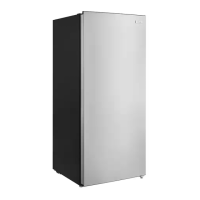
This document serves as a comprehensive Use and Care Guide for the Vissani Upright Freezer, model numbers MDUF7WH and MDUF7SS. It provides essential information for the safe and efficient operation, maintenance, and troubleshooting of the appliance.
Function Description
The Vissani Upright Freezer is designed for household and similar applications, including staff kitchen areas, farmhouses, hotels, motels, bed and breakfast establishments, and catering services. Its primary function is to store frozen foods and make ice, maintaining a low temperature to keep food fresh for extended periods. It is particularly suitable for storing items like meat, fish, shrimp, dumplings, and rice balls that are not intended for immediate consumption. For optimal storage and easy access, it is recommended to divide chunks of meat into smaller pieces. The freezer is not intended for commercial, business, rental, or other non-consumer uses, nor for storing items like blood, drugs, or biological products.
Usage Features
Placement and Installation:
Before initial use, all packaging materials, including bottom cushions, foam pads, and internal tapes, must be removed. The protective film on the door and the freezer body should also be peeled off. The freezer should be placed in a well-ventilated indoor area with a flat and sturdy ground. It is crucial to keep the appliance away from heat sources, direct sunlight, and moist or watery environments to prevent rust and maintain insulation efficiency. Adequate clearance is required for heat dissipation: the top space should be greater than 30cm, and distances from both sides and the back should be more than 10cm.
Initial Startup:
After placement, the upright freezer should remain stationary for half an hour before being connected to power. Once plugged in, it should run for 2 to 3 hours before loading fresh or frozen foods. In summer, when ambient temperatures are high, it is advisable to let the freezer run for more than 4 hours in advance to ensure proper cooling.
Temperature Control:
The interior temperature of the upright freezer is adjusted using a thermostat knob. Rotating the knob clockwise will decrease the interior temperature. The "MIN" setting represents the warmest temperature, while "MAX" indicates the coldest.
Energy Saving Tips:
To maximize energy efficiency, the appliance should be located in the coolest part of the room, away from heat-producing appliances, heating ducts, and direct sunlight. Hot foods should be allowed to cool to room temperature before being placed in the freezer to avoid overworking the compressor. Overloading the appliance can force the compressor to run longer, potentially compromising food quality. Proper wrapping of foods and wiping containers dry before placement helps reduce frost build-up. Avoid lining storage bins with aluminum foil, wax paper, or paper toweling, as these can obstruct cold air circulation. Organizing and labeling food, and minimizing door openings and search times, also contribute to energy savings.
Door Reversal (Optional):
The freezer door can be reversed to open from either the right or left side, offering flexibility in placement. This process involves several steps:
- Remove all food from door shelves and secure the door with tape.
- Dismantle the hinge hole cap, upper right hinge cover, and the screws of the upper right hinge. Carefully remove the upper right hinge, keeping the door vertical to prevent it from falling.
- Remove the door.
- Dismantle the door stopper and reinstall it on the opposite side.
- Dismantle the lower hinge and leveling foot.
- Install the lower hinge and leveling foot on the lower left side of the cabinet.
- Place the door vertically on the lower hinge and ensure the gas gasket is tight. Retrieve the spare upper left hinge and hinge cover from the accessory bag. Install the upper left hinge with screws, then attach the hinge cover, and finally cover the hinge hole cap on the upper right side.
Maintenance Features
Cleaning:
Regular cleaning is essential for maintaining the freezer's cooling efficiency, energy saving, and hygiene.
- Safety First: Always unplug the freezer from the power supply before cleaning or defrosting.
- Exterior and Rear: Timely clean dust from behind the upright freezer and on the ground to improve cooling effect and energy saving. Wipe the outer surface with a soft cloth dampened with soapy water or diluted detergent, then dry.
- Door Gasket: Regularly check the door gasket for debris and clean it with a soft cloth dampened with soapy water or diluted detergent.
- Interior: The interior should be cleaned regularly to prevent odors. Before cleaning the interior, turn off the power and remove all food, drinks, shelves, and drawers. Use a soft cloth or sponge with a solution of two tablespoons of baking soda and a quart of warm water. Rinse with clean water and wipe dry. After cleaning, leave the door open to air dry naturally before restoring power.
- Hard-to-Reach Areas: For narrow spaces, gaps, or corners, use a soft rag, soft brush, or auxiliary tools (like thin sticks) to ensure no contaminants or bacteria accumulate.
- Avoid Harsh Cleaners: Do not use soap, detergent, scrub powder, spray cleaner, hard brushes, steel wool, wire brushes, abrasives (like toothpastes), organic solvents (like alcohol, acetone, banana oil), boiling water, acid, or alkaline items, as these can damage the cooler surface, interior, or plastic parts.
- No Direct Rinsing: Do not rinse the freezer directly with water or other liquids to avoid short circuits or affecting electrical insulation.
Defrosting:
The Vissani Upright Freezer requires manual defrosting.
- Process: Disconnect the plug from the wall socket, open the door, and transfer all food to a cool place. Frost can be removed with a plastic scraper, or by allowing the temperature to rise naturally until the frost melts. Once melted, wipe away any remaining ice and water, then plug the freezer back into the socket.
- Continuous Operation: Continuous operation is recommended for the upright freezer. Avoid stopping the freezer under normal circumstances to prevent affecting its service life.
Troubleshooting Common Issues:
The manual provides guidance for common issues that users can address:
- Inoperation: Check if the freezer is plugged in, if there's low voltage, if the temperature control knob is set correctly, or if there's a power failure or tripped circuit.
- Odor: Ensure foods are closely wrapped, check for rotten foods, and clean the interior.
- Long-term Compressor Operation: This is normal in summer with high ambient temperatures. Avoid putting too much food in at once, ensure foods are cooled before loading, and minimize frequent door openings.
- Door Not Closing Properly: Check for food packages obstructing the door, too much food, or an unbalanced freezer.
- Loud Noises: Verify if the floor is flat and the freezer is stable, and ensure accessories are properly placed.
- Transient Difficulty in Door Opening: This is a normal physical phenomenon caused by pressure differences after refrigeration.
- Enclosure Heat/Condensation: Heat emission from the enclosure, especially in summer, is normal due to condenser radiation. Condensation on the exterior surface and door seals in high humidity is also normal and can be wiped away with a dry towel.
- Airflow Sound, Buzz, Clatter: These are normal sounds from refrigerants circulating, the compressor starting/shutting down, or the solenoid/electric switch valve operating.
Power Failure and Non-Use:
- Power Failure: Foods can remain preserved for a couple of hours even in summer. Reduce door openings and avoid adding fresh foods during a power outage.
- Long-time Non-use: Unplug the freezer, clean it, and leave the door open to prevent bad odors.
- Moving: Do not turn the freezer upside down or vibrate it excessively. The carrying angle should not exceed 45°. Avoid holding the door and hinge when moving the unit.
This guide emphasizes safety warnings throughout, including precautions regarding flammable refrigerants and foaming materials, electrical safety, and child entrapment prevention. It also outlines the limited warranty, covering defects in materials or workmanship for one year from the original purchase date, and details consumer responsibilities and exclusions.

 Need help?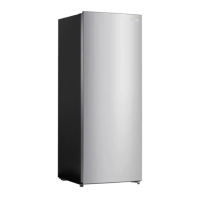

 To Next Page
 General