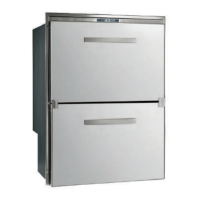
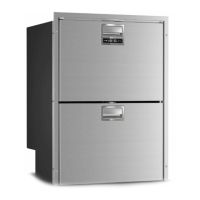
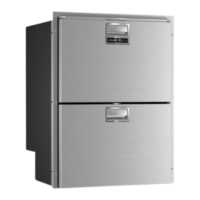
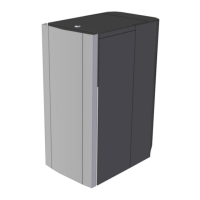
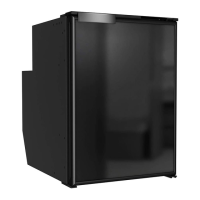
The Vitrifrigo DW Series refers to a range of fridges and freezers, primarily designed for recessed installation in various environments, including shops, offices, hotels, motels, bed and breakfast establishments, catering services, camper vans, caravans, and pleasure craft. This manual serves as a comprehensive guide for the proper use and maintenance of these appliances, ensuring optimal performance and longevity.
Function Description
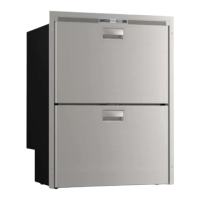
The DW Series encompasses both single and double drawer configurations, as well as combined fridge-freezer units. These appliances are designed to provide reliable refrigeration and freezing capabilities, maintaining specific temperature ranges for food storage. Depending on the model, they can function as a refrigerator (RF), a freezer (BT), or a combination fridge-freezer (DT). The core function is to preserve food items by keeping them at appropriate cool or freezing temperatures.
The internal layout of the appliances varies by model. Single drawer units typically feature an evaporator, a drip tray (for RF versions), a wire basket, drawer dividers, and a bottle holder. Double drawer units share similar components, with additional drawer dividers for the bottom drawer. Combined units offer a more extensive internal structure, including removable grilles, removable glass shelves, a fruit basket, and removable door shelves, catering to a wider variety of storage needs.
Temperature control is managed either by an electronic thermostat or a mechanical thermostat. The electronic thermostat allows users to set the desired temperature by pressing a dedicated button, with a light indicator showing the temperature level from warmest to coldest. The mechanical thermostat, on the other hand, involves turning a knob clockwise to lower the temperature and anti-clockwise to increase it. Both types are designed for automatic temperature maintenance and, in some cases, automatic defrost.
Usage Features
The DW Series is specifically designed for recessed installation, meaning it integrates seamlessly into existing cabinetry or structures. The installation process requires careful attention to ventilation, with specific guidelines provided for both ventilated condenser and ventilated remote motor versions. Adequate ventilation openings are crucial to ensure proper air circulation and prevent overheating. For mobile applications like campers and caravans, the recess space must have external ventilation vents fitted with suitable grilles to prevent access to live parts.
Before initial use, it is recommended to wait at least one hour after positioning the refrigerator to allow the refrigeration circuit to stabilize. Once connected to the power supply, the appliance will start up automatically in thermostat mode (for mechanical thermostats) or can be switched on via the stand-by command (for electronic thermostats).
The manual provides detailed guidance on food storage, including recommended preservation times, methods of preservation (e.g., wrapped or closed in hermetic containers), and optimal positions within the fridge for various food types such as meat, eggs, butter, cooked foods, cold cuts, water, beverages, fruits, and vegetables. This helps users maximize food freshness and minimize waste.
For models with drawers, the design allows for easy removal, which is beneficial for cleaning or accessing components. The door can also be placed in a "Vent Position" for long-term storage, preventing the buildup of odors and mold. This feature involves pressing two buttons to disengage the drawer mechanism from its upper bracket (DW models) or moving the central hinge pin inwards (CDW models).
Maintenance Features
Regular maintenance is essential for the efficient and safe operation of the DW Series appliances. Before any maintenance or cleaning, the refrigerator must be disconnected from the main power supply.
Cleaning:
- Outside: The exterior should be cleaned with lukewarm water, rinsed with cold water, and dried with a soft cloth. Abrasive or aggressive products should be avoided.
- Inside: Internal shelves, grilles (or baskets), and containers can be cleaned with lukewarm water mixed with baking soda or vinegar. After rinsing, they should be dried carefully with a soft cloth. To prevent mold and unpleasant smells, the appliance should be unplugged, emptied, cleaned, and the door left half-open when not in use for extended periods.
- Condenser: Cleaning and maintenance of the condenser must only be performed by authorized after-sales staff. Ventilation openings must be kept free from obstructions.
Defrosting:
Defrosting is necessary when frost builds up to a thickness exceeding three millimeters to maintain efficiency and prevent increased electricity consumption. For electronic thermostat models, defrosting is initiated by pressing the stand-by control. For mechanical thermostat models, the knob should be turned to the stop position. Keeping the drawers open can accelerate the defrosting process. It is crucial not to use mechanical devices or sharp metal tools to accelerate defrosting or remove frost, as this can damage the cooling plate and lead to irreparable consequences.
Component Replacement:
- LED Light: Replacing the LED light must be done by a suitably qualified person due to safety considerations. The process involves removing a protective cover, disconnecting power cables, replacing the LED light profile, reconnecting power, and repositioning the cover. Care must be taken not to damage the magnetic control reed during this process.
- Drawers: Drawers can be removed from their sliding guides by pressing specific levers or orange mechanisms, depending on the guide type (lateral or lower).
- Stainless Steel Front Panel (DW models) and Door Panel (CDW models): These panels can be removed by first taking out the drawer from its guides and then following specific instructions detailed in the annexes.
- Drip Tray ("DT" versions only): The drip tray can be extracted by disconnecting the water drain pipe, removing fixing screws from the inside, and pulling the tray downwards to release its fastening element.
Troubleshooting:
The manual includes a troubleshooting guide to help users address common issues such as the refrigerator not starting, not cooling, not stopping, or the courtesy light not switching on. Solutions range from checking power connections and battery charge (for direct current models) to resetting the unit, adjusting the thermostat, ensuring the door closes hermetically, and verifying ventilation. If these checks do not resolve the problem, users are advised to contact customer assistance.
General Safety:
Throughout the manual, emphasis is placed on safety warnings, particularly regarding the use of R600a isobutane refrigerant (fire hazard), keeping ventilation openings clear, avoiding damage to the refrigerant circuit, and not using unauthorized electrical appliances inside food storage compartments. Installation and maintenance should ideally be carried out by qualified staff. The appliance must be earthed, and the earthing system must be working perfectly to prevent injury or property damage. The use of adapters, multiple sockets, and extension cords is not recommended.


 To Next Page

 General