40
7. Training:
Each operator must be trained in
the proper operating procedures
prior to being allowed to operate
the machine.
a. Review control location,
function and movement
directions.
b. Move the unit to a large open
area to allow the operator to
become familiar with control
function and machine re-
sponse.
c. When a new operator is
familiar and comfortable
with the machine, they can
proceed with the work. Do
not allow untrained operators to use the
machine. They can endanger themselves
and others or damage property and the
machine.
8. Job Site:
It is the responsibility of the operator to be
thoroughly familiar with the work site prior to
starting. Prevent the chance or possiblity of
problems or accidents by not being in the situ-
ation to start with. Some items the operators
should check include but are not limited to:
a. Underground wires, cables, pipes or other
obstructions if digging. Contact your local
utility to identify exactly the location of the
lines, pipes, etc. Turn off, disconnect, etc.
as required to prevent a problem if contact
is made.
b. Overhead power lines, obstructions or
overhangs. Power lines can lead to
electrocution if the machine gets too close
without contacting the line. Overhead
obstructions can cause a loss of control or
tipping from the contact. Overhangs can
collapse or give way covering the machine
or causing it to move as the footing gives
way.
c. Close or cramped work site. Be sure
there is suffi cient space and clearance for
the machine to dig, swing and dump while
working. If the working area is cramped,
modify the work site to provide more area.
Unplanned contact with adjacent build-
ings, equipment or terrain can cause the
operator to lose control of the machine
leading to injury or damage to buildings or
equipment
d. Working Lay-Out:
Organize the work site to minimize the
distance the support equipment has to
travel between digging and dumping. The
shorter the travel distance the faster the
dig / dump cycle will be and the more that
can be done.
e. Prevailing Winds:
Set-up the work site so the prevailing
winds will blow dust, dirt, straw, chaff, de-
bris, snow, etc. away from the air intakes
for the engine and cooling system. As
a result, there will be less need to clean
these systems and more time can be
spent working.
f. Smooth the Surfaces:
A rough surface will require slow speeds
of support equipment while working.
Smoothing the surface prior to starting to
work will shorten the work cycle and result
in higher productivity.
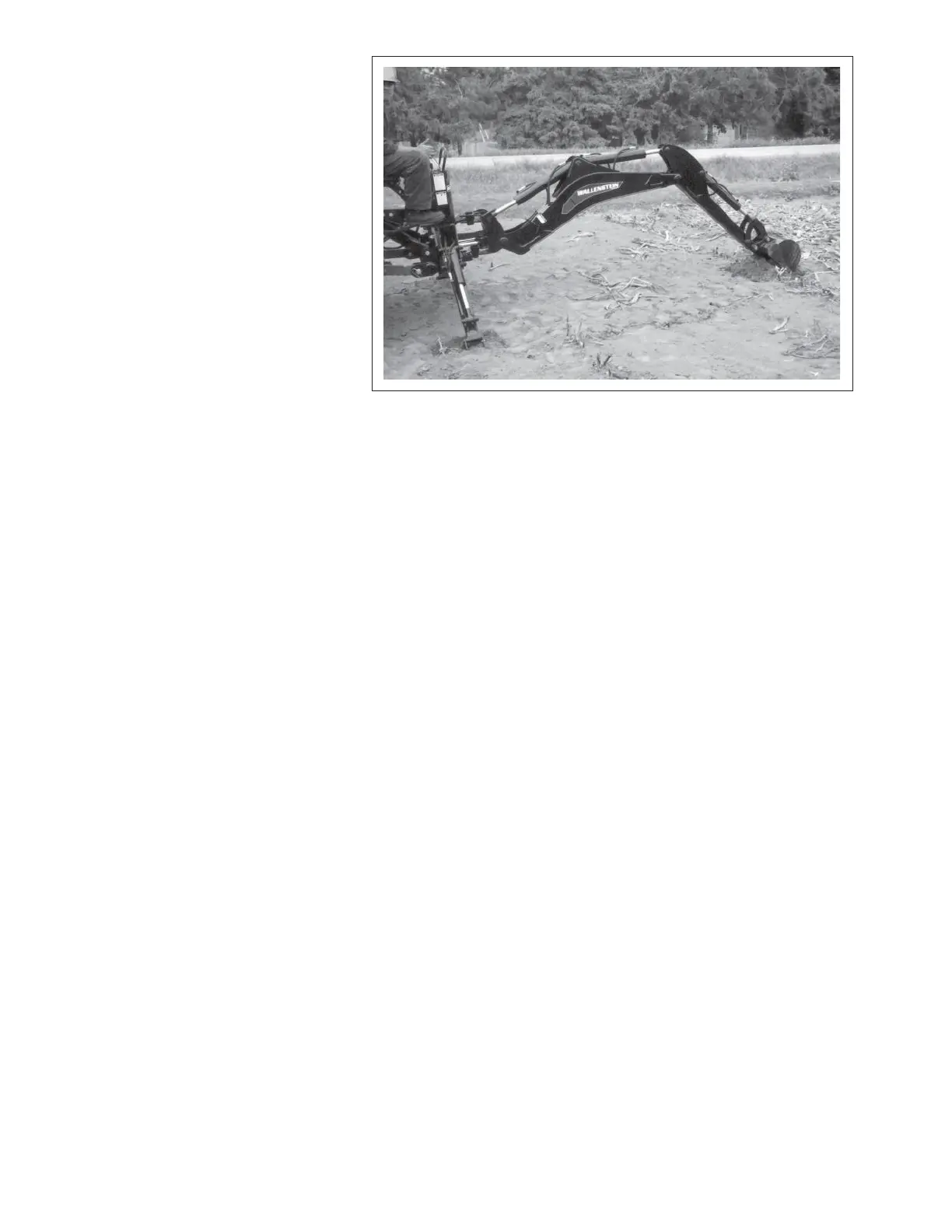
Fig. 40 TRAINING



 To Next Page