23
iron at right angles to another piece of waste pipe.
Then tack this to the work bench or hold in a vice
so that the specimen is positioned in the overhead
position as shown in the sketch.
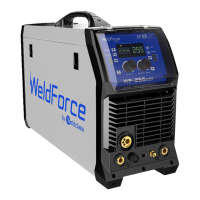
The electrode is held at 45º to the horizontal and
tilted 10º in the line of travel (Figure 1-28). The tip
of the electrode may be touched lightly on the
metal, which helps to give a steady run. A weave
technique is not advisable for overhead llet welds.
Use a 3.2mm E6013 Stick electrode at 100 amps,
and deposit the rst run by simply drawing the
electrode along at a steady rate. You will notice
that the weld deposit is rather convex, due to the
eect of gravity before the metal freezes.
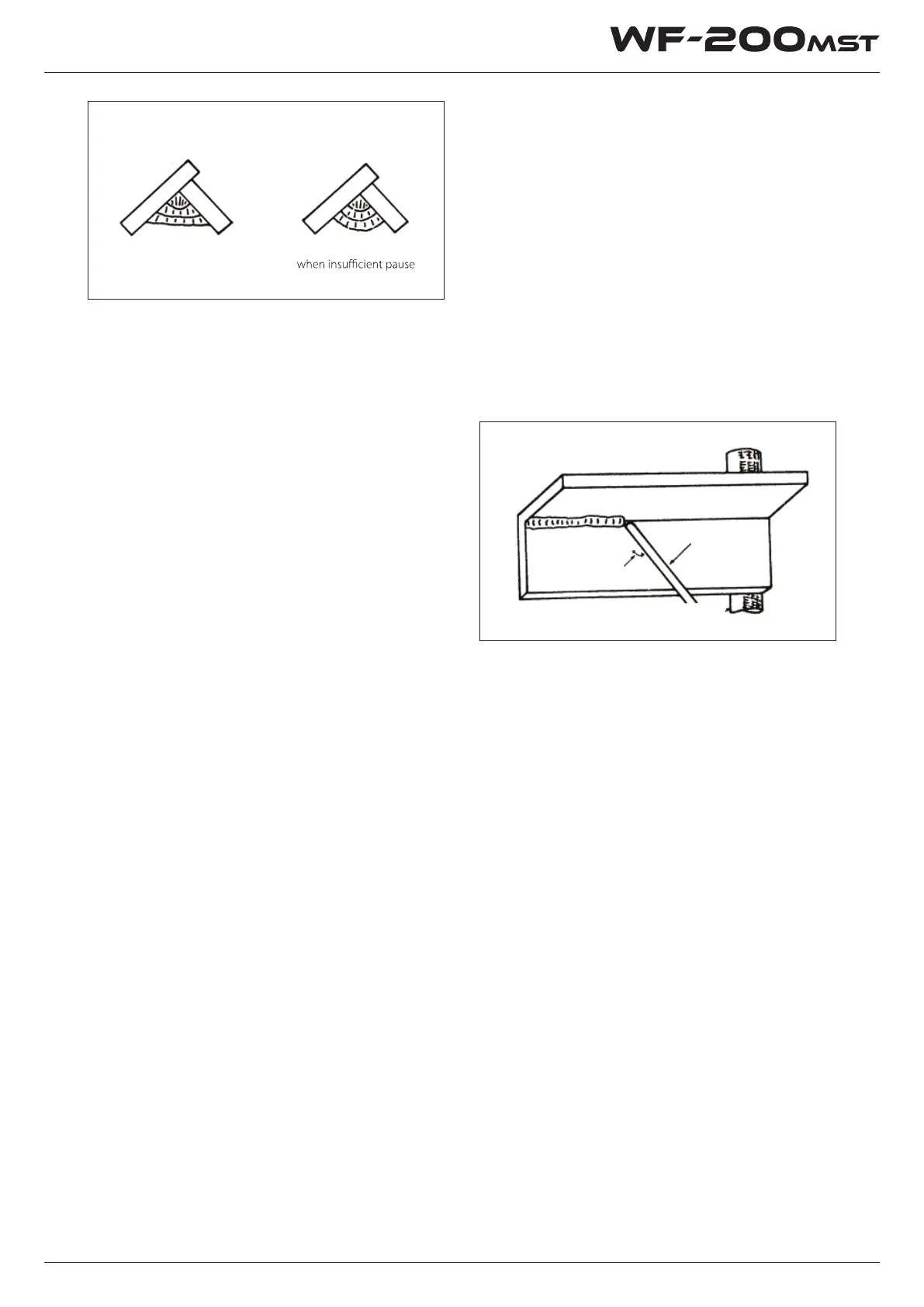
Examples of Vertical Fillet Welds
(Fig 1-27)
Pause at edge of weave
allows weld metal to build
up and eliminates undercut
Note: Weld contour
at edge of weave
CORRECT INCORRECT
Tilted 10
o
in
line of travel
Overhead Fillet Weld
(Fig 1-28)
Angle tacked to pipe
45
o
to plate
2. Vertical Down
The E7014 Stick electrode makes welding in this
position particularly easy. Use a 3.2mm electrode
at 100 amps. The tip of the electrode is held in light
contact with the work and the speed of downward
travel is regulated so that the tip of the electrode
just keeps ahead of the slag. The electrode should
point upwards at an angle of about 45º.
3. Overhead Welds
Apart from the rather awkward position necessary,
overhead welding is not much more dicult
that down hand welding. Set up a specimen for
overhead welding by rst tacking a length of angle


 To Next Page