EasyManua.ls Logo

Wellspect Navina Smart - User Manual

Wellspect Navina Smart
2 pages
Print Icon
To Next Page IconTo Next Page
Loading...
Note: Read the entire instruction for use. Empty your
bladder before irrigation. Follow the instructions given
by your healthcare professional.
A training session with a healthcare professional specialized
in TAI and familiar with the Navina Systems is mandatory
before using the Navina Smart system.
WELLSPECT does not waive any right to its trademarks by not using the symbols ® or ™.
1. Plug the cable into the power adapter
2. Plug the power adapter into a power supply
3. Plug the cable into the Navina Smart control unit
Please note: Charge the Navina Smart control unit fully
before first use. The power adapter must not be used in
the bathroom or with water
1. Turn on the Navina Smart control unit and stay on the welcome page.
2. Open the Navina Smart app.
3. The first time, you will have to confirm the control unit identity to pair
it with your app.
4. Select Synchronize in the app’s main menu.
5. The Navina Smart control unit will be turned o automatically once the data is
transferred.
6. Rate the new irrigation uploaded in the app.
Settings
Charging Transfer data
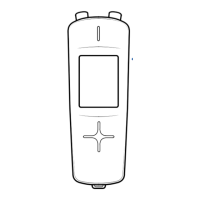
Turn on Navina Smart control unit.
The On/o button also indicates
battery charge.
Enter and exit settings.
Select flow rates (up/down).
Select balloon size (+/–).
1
Select maximum balloon size. For the small
catheter only settings 1-3 shall be used.
2
Select maximum water
volume to instill.
3
Select flow rate for button:
4
Select flow rate for button:
5
Select pin code if desired.
3
3
QUICK GUIDE
ADULT USE
Charging & Settings
(catheter)
Intended use
The Navina Smart is intended for transanal irrigation by
instilling water up into the lower part of the colon through
a rectal catheter.
Indications for use
Navina Smart is indicated to help adults and children from
3 years who suer from fecal incontinence, chronic constipation
and/or time-consuming bowel management. By instilling water
up into the lower part of the colon, the peristaltic muscles in the
bowel can be triggered and start to evacuate the
content of the lower colon and rectum.
Contraindications
Do NOT use Navina Systems if you
have one or more of the following:
• Known anal or colorectal stenosis
• Active inflammatory bowel disease
• Acute diverticulitis
• Colorectal cancer
• Ischemic colitis
• You are within three months of anal or colorectal surgery
• You are within 4 weeks of previous endoscopic polypectomy
As the list may not be exhaustive, healthcare professionals will
always consider individual user factors as well.
Warning!
Seek medical care immediately if you experience severe or
sustained abdominal pain, back pain or rectal bleeding during
or after anal irrigation. Bowel perforation is a very rare (1 out
of 500,000 irrigations or 0.0002 %
1
) yet extremely serious
complication of TAI. It is a medical emergency and requires
immediate medical attention. Symptoms of bowel perforation
include severe or sustained abdominal or back pain or signicant
rectal bleeding (not just smearing of blood on the rectal catheter
which is very common and is not a concern).
Precautions
This product is NOT recommended for:
• Pregnant women
1. Christensen P, Krogh K, Perrouin-Verbe B, et al. Global audit on bowel perforations
related to transanal irrigation. Tech Coloproctol. Feb 2016;20(2):109-115

Other manuals for Wellspect Navina Smart

Question and Answer IconNeed help?

Do you have a question about the Wellspect Navina Smart and is the answer not in the manual?

Summary

Navina Smart System Overview and Safety

Intended Use of Navina Smart

Describes the device's purpose for transanal irrigation of the lower colon.

Indications for Navina Smart Use

Lists conditions benefiting from transanal irrigation, including incontinence and constipation.

Contraindications for Navina Systems

Details conditions where the Navina Systems should not be used due to health risks.

Critical Safety Warnings and Precautions

Highlights severe pain, bleeding risks, and bowel perforation warnings.

Navina Smart Device Functions

Charging the Navina Smart Control Unit

Steps for connecting the device to a power source for charging.

Configuring Device Settings

Guide to adjusting flow rates, balloon size, and setting a pin code.

Transferring Data via Bluetooth

Instructions for pairing and synchronizing data with the Navina Smart app.

Step-by-Step Navina Smart Usage

Preparation of the System

Steps for filling the water container and connecting tubes with color coding.

Device Activation and Water Pumping

How to turn on the device, pump water for lubrication, and prepare for insertion.

Catheter Insertion and Instillation

Instructions for inserting the catheter, inflating the balloon, and instilling water.

Bowel Evacuation Procedure

Guidance on deflating the balloon, removing the catheter, and emptying the bowels.

System Disassembly and Cleaning

Steps for taking apart, cleaning components, and disposing of single-use parts.

Overview

The Navina Smart system is a medical device designed for transanal irrigation (TAI) to manage fecal incontinence, chronic constipation, and time-consuming bowel management in adults and children aged 3 years and older. It facilitates the instillation of water into the lower part of the colon to trigger peristaltic muscles and evacuate bowel content.

Function Description:

The system comprises a control unit, a water container, a catheter (available in small and regular sizes), and connecting tubes. The control unit is the central component, housing the pump mechanism and user interface for controlling irrigation parameters.

  • Water Instillation: The device pumps water from the water container, through the connecting tubes, and into the colon via the rectal catheter. This process helps to stimulate bowel activity and facilitate evacuation.
  • Balloon Inflation: The rectal catheter features an inflatable balloon that, once inserted, can be inflated to create a seal in the rectum, preventing water leakage during irrigation. The control unit allows users to select and adjust the desired balloon size.
  • Flow Rate Control: Users can select and adjust the water flow rate during instillation, providing a personalized and comfortable experience.
  • Volume Control: The system allows users to set a maximum water volume to be instilled, ensuring safe and controlled irrigation.
  • Data Transfer: The Navina Smart control unit can transfer irrigation data to a companion Navina Smart app via Bluetooth. This feature enables users and healthcare professionals to track irrigation history, monitor progress, and rate irrigation sessions.

Important Technical Specifications:

  • Water Temperature: The system is designed to be used with lukewarm water, typically between 36-38°C, for optimal comfort and effectiveness.
  • Catheter Sizes: The catheter is available in small and regular sizes, catering to different user needs. The small catheter has specific balloon size settings (1-3).
  • Power Source: The control unit is powered by a rechargeable battery.
  • Connectivity: Bluetooth technology is used for data transfer between the control unit and the Navina Smart app.

Usage Features:

  • Intuitive User Interface: The control unit features a clear display and tactile buttons for easy operation.
  • Power On/Off and Battery Indicator: A single button serves to power the device on/off and indicates the battery charge level.
  • Settings Menu: A dedicated button allows users to enter and exit the settings menu, where they can adjust various parameters.
  • Adjustable Parameters:
    • Maximum Balloon Size: Users can select the appropriate balloon size for the catheter.
    • Maximum Water Volume: The desired volume of water to be instilled can be set.
    • Flow Rate: Two dedicated buttons allow for selection of different flow rates.
    • PIN Code: An optional PIN code can be set for enhanced security.
  • Activation Mode: After turning on, the device enters an activation mode where water can be pumped to lubricate the catheter before insertion.
  • Instillation Mode: Once the catheter is inserted and the balloon is inflated, the device enters instillation mode for water delivery.
  • Evacuation Mode: After instillation, the balloon can be deflated, and the catheter removed to allow for bowel evacuation.
  • Safety Valve: The water container lid incorporates a safety valve to prevent blockages during the procedure.
  • Color Coding and Symbols: The connecting tubes and control unit ports are color-coded and use symbols to ensure correct assembly.
  • App Integration: The Navina Smart app provides a platform for data synchronization, tracking irrigation history, and rating sessions. Pairing with the app requires confirmation of the control unit's identity.

Maintenance Features:

  • Rechargeable Battery: The control unit's battery is rechargeable, requiring connection to a power adapter and power supply. It is crucial to fully charge the unit before first use.
  • Cleaning:
    • The tubing and water container should be cleaned and dried with a cloth and mild soapy water after each use.
    • The control unit should only be wiped clean.
  • Disposable Catheter: The rectal catheter is a single-use component and should be disposed of as household waste after each use. It must not be reused or flushed down the toilet.
  • Usage Calendar: A usage calendar (as described in the full instructions for use) helps users track usage and determine when to exchange the water container and tube set.

Important Safety Information:

  • The device should only be used after a training session with a healthcare professional familiar with TAI and Navina Systems.
  • Users must read the entire instruction for use and empty their bladder before irrigation.
  • The power adapter must not be used in the bathroom or with water.
  • Never insert the catheter with force. If resistance is encountered, the catheter should be removed, and medical advice sought if resistance persists.
  • Seek immediate medical attention for severe abdominal pain, back pain, or rectal bleeding during or after irrigation, as these could be symptoms of a rare but serious bowel perforation.
  • The device is contraindicated for individuals with known anal or colorectal stenosis, active inflammatory bowel disease, acute diverticulitis, colorectal cancer, ischemic colitis, recent anal or colorectal surgery (within three months), or recent endoscopic polypectomy (within four weeks).
  • The product is not recommended for pregnant women.

Wellspect Navina Smart Specifications

General IconGeneral
BrandWellspect
ModelNavina Smart
CategoryTest Equipment
LanguageEnglish