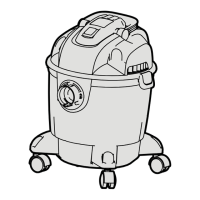
Need help?
Do you have a question about the Wen 3400 and is the answer not in the manual?
Overview of the WEN Dust Extractor's features and capabilities.
Detailed technical data including motor, voltage, airflow, and dimensions.
Details California Proposition 65 warning regarding chemicals in dust.
Guidance on personal apparel and readiness for operating the tool.
Guidelines for maintaining a safe and organized work environment.
Procedures and checks for keeping the tool in optimal condition.
Instructions and best practices for operating the dust extractor.
Critical information on electrical connections, grounding, and extension cords.
Instructions for attaching the casters to the dust extractor unit.
Steps for installing the filter cartridge and bag assembly.
Procedure for connecting the dust extractor hose.
Guide for mounting the wall bracket for storage and use.
Guidance on positioning and operating the dust collection system.
Procedure for safely emptying the dust collector tank.
Steps for replacing the filter bag and/or cartridge.
Identifies common issues, their causes, and corrective actions.
Diagram showing all parts of the dust extractor for reference.
A comprehensive list of all available parts with stock numbers.
The WEN Dust Extractor with Wall Mount, Model #3400, is a powerful and compact dust collection system designed for both portability and space-saving wall storage in workshops. It is engineered to WEN's high standards for dependability, ease of operation, and operator safety, promising years of rugged, trouble-free performance when properly cared for and used for its intended purpose.
The primary function of the WEN Dust Extractor is to collect dust and debris generated by woodworking or other dust-producing machines. It features a 4-inch diameter collection hose and an adapter set that allows connection to various dust exhaust port sizes (34, 40, 45, and 68 mm), making it versatile for use with different tools. The system includes a filter cartridge and five filter bags with an efficiency rating of 0.5 microns, ensuring effective capture of fine particles. The unit can be used as a portable dust extractor with its included caster set or mounted on a wall to free up floor space in the workshop.
The dust extractor is designed for straightforward operation. To use, position the unit on a flat, level surface near the dust-producing machine or mount it on a wall. Connect the inlet hose to the dust-producing machine using the provided hose coupling and adapters if necessary. Always turn the dust collector on before starting the dust-producing machine.
For portability, the unit comes with a caster set. Installation involves threading M10 hex nuts and flat washers onto the threaded studs of the casters, inserting them into holes on the bottom of the tank, and securing them with additional washers and hex nuts inside the tank.
For wall mounting, the unit includes a wall bracket and mounting hardware. Installation requires drilling four holes into a solid wood stud using a #10 drill bit, ensuring the bottom edge of the bracket is at least 45 inches above the floor. The bracket is then secured with four mounting bolts, paying attention to the orientation of the supporting bolt holes. To store the extractor, lift and insert its support bolts into the bracket's bolt holes.
The filter cartridge and filter bag are easily installed by placing the filter cartridge inside a filter bag, folding any bag overhang inside the cartridge, and then sliding the assembly onto the motor until snug.
Regular maintenance is crucial for the longevity and performance of the dust extractor. Always turn the switch off and remove the plug from the power source outlet before performing any maintenance.
The manual emphasizes reading all instructions and precautions before operating the tool. It warns against carelessness, which can lead to severe personal injury. Users are advised to wear proper apparel (no loose clothing, gloves, neckties, rings, bracelets, or other jewelry that could get caught), protective hair covering, safety shoes with non-slip soles, safety glasses complying with ANSI Z87.1, and a facemask or dust mask in dusty conditions. Operators should be alert and never operate the tool when tired, intoxicated, or under the influence of medications causing drowsiness.
The work area should be clean, properly lit, and free from damp or wet conditions. Power tools should not be exposed to rain. Three-prong plugs must be plugged into properly grounded, three-prong receptacles. Extension cords must have a grounding prong and be of the correct gauge, with a table provided for minimum gauge based on ampere rating and cord length. The manual advises against modifying the plug and warns that improper connection of the grounding conductor can result in electric shock. It also highlights Proposition 65 warnings regarding chemicals in dust that can cause cancer or reproductive harm, recommending work in well-ventilated areas with approved safety equipment like OSHA/NIOSH approved facemasks or respirators.
The tool should always be unplugged prior to inspection, kept lubricated and clean, and adjusting tools removed before switching on. Damaged parts should be properly repaired or replaced, not with makeshift repairs. Users should understand the tool's operation, application, and limitations, and never force it or leave it running unattended. Keeping hands away from moving parts and maintaining proper footing and balance are also stressed.
 General
| Brand | Wen |
|---|---|
| Model | 3400 |
| Category | Vacuum Cleaner |
| Language | English |

 To Next Page