The Wexxar BEL 507 Tilt Case Packing Station is a semi-automatic machine designed to facilitate the forming and packing of cases. Its primary function is to erect flat case blanks into a square, open-bottomed box, fold the bottom flaps, and then present the case to an operator in a tilted position for easy product loading. Once filled, the station can be tilted back to an upright position, allowing the packed case to be discharged for further processing, such as sealing.
Function Description:
The core function of the BEL 507 is to automate the bottom flap folding process, thereby streamlining the case packing operation. It achieves this through a series of pneumatic and mechanical actions triggered by the presence of a case. When an open-bottomed case is placed into the tilted station and pushed down to actuate the "floor switches" and "body switch," the machine initiates its folding cycle. First, the front and rear minor flaps are folded up. Subsequently, the major flap openers momentarily widen the major flaps to clear the minor flaps, and then the major flap folders fold up the side major flaps. These major flaps remain in position to support the box during the packing process.
The tilting mechanism is a key feature, allowing the station to present the case at an ergonomic angle for the operator to load products. After the case is filled, the operator presses a "TILT UP" button, which rotates the inner packing station to a vertical position, aligning it with an exit conveyor or adjoining case sealer. As the filled case is pushed out, it passes over an exit switch, which triggers the station to tilt back to the loading position, ready for the next case.
Usage Features:
The BEL 507 is designed for ease of use and operator safety.
- Case Erection and Loading: Operators manually open a flat case blank to a square shape and place it into the tilted station. Pushing the box down activates the floor and body switches, initiating the automatic bottom flap folding sequence. The tilted position significantly improves ergonomics for product loading, especially for heavier or bulkier items.
- Tilt Control: The station offers flexible control over its tilting function. A "TILT UP" button allows the operator to manually bring the station to an upright position after packing. For applications where the tilt function is not desired, a tilt function override valve can be rotated to the "off" position, keeping the machine in the upright position.
- Adjustability for Case Sizes: The machine accommodates a range of case sizes through several adjustments:
- Case Length: Adjusted by loosening a "T" handle on the tower base and sliding the rear minor flap folder tower to the desired length indicated on a scale.
- Case Width: Adjusted by turning a hand crank until the case slides without excessive friction between the stainless steel sides. It's crucial that the "Body Switch" is adequately depressed to prevent premature release or double cycling.
- Major Flap Folder Roller Plates: These plates, consisting of one small and one large on each side, can be adjusted independently. Loosening socket-head cap screws allows the large folder plate to be slid to a position that best supports the lower major flaps. The smaller plates are adjusted by loosening hex head bolts from underneath. These adjustments are important for supporting wide, heavy cases and must be carefully managed to avoid interference with other machine components or limiting minimum width adjustments.
- Manual Reset: In the event of a case jam or sequence shift, the lockup switch also functions as a reset. Switching the machine to "Lockup" mode and then back can force a manual reset of the cycle.
- Safety Features: The machine incorporates several safety cautions, particularly regarding air supply connection and emergency stop button usage. Operators are instructed to depress the emergency stop button and ensure all personnel are clear before connecting to an air supply, as the station will immediately tilt if pressurized with the button in the operating position. The main on/off air valve must also be shut off.
Maintenance Features:
Maintenance of the BEL 507 focuses on ensuring smooth operation and preventing mechanical interference.
- Pre-Operation Checks: Before starting, operators are advised to hand-swing all moving parts to check adjustments and for any mechanical interference.
- Air Pressure Monitoring: Adequate and consistent air pressure is critical for the proper functioning of the folding cycle. Fluctuations can lead to issues such as minor flaps failing to fold fully or major flaps having difficulty folding.
- Flow Control Adjustment: The flow controls on the small major flap opening cylinders need to be set correctly to momentarily open the major flaps wider, allowing the minor flaps to clear. Similarly, flow controls on the minor flap folding cylinders should be set for an appropriate speed to ensure effective folding without causing damage.
- Switch Adjustment: Regular checks are needed to ensure the "body switch" is correctly adjusted and secured, and that its contact wheel is firmly attached. The actuator arms attached to the "floor switches" must also be in position to be pushed down fully by the bottom flaps of the open box.
- Alignment Checks: For smooth transfer of packed cases to adjoining equipment, the height of the rollers at the outfeed end of the packing station and the alignment of the machine with the case sealer (using a long straight edge) should be checked.
- Troubleshooting Guide: The manual provides a comprehensive troubleshooting guide addressing common issues such as cases releasing prematurely, flaps failing to fold, cases collapsing, and transfer problems, offering specific checks and adjustments for each.

 Need help?
 General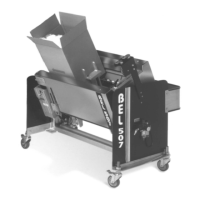

 To Next Page