EasyManua.ls Logo

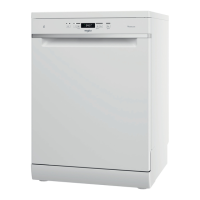
Whirlpool ADG 957 - User Manual

Whirlpool ADG 957
4 pages
Print Icon
To Next Page IconTo Next Page
Loading...
Further indications are given in the pages to follow and in the user instructions.
On button
Off button
Rinse aid level indicator
Add rinse aid.
Salt level indicator
Add regeneration salt; only add
regeneration salt immediately before
starting a wash programme.
Programme selection button
Start button
Indicator lamp lit while the dishwasher is operating.
Flashes when a fault occurs.
Switches off at the end of the programme.
Options
Delayed start button
The wash cycle can be programmed to start after 3-
6-9 hours. Then press the Start button. The
dishwasher will start at the set time.
Half load / Multizone button
This function can be used with any programme.
The indicator lamp switches on: The wash cycle is
activated for the upper or lower rack
only
.
Programme Symbol
and Temperature
Programme selection and
recommended load type
Place the detergent in the:
Consumption 1)
Normal load / (Half load / Multizone)
small
compartment
large
compartment
Water
(Litres)
Energy
(kWh)
Time
(Min.)
Pre-wash
Crockery to be washed later.
- - 5.0 (4.2) 0.02 (0.02) 9(9)
Rapid 40° C
Lightly soiled crockery with no dried-on food.
- X 13.0 (13.0) 0.85 (0.75) 30 (30)
Bio-Eco 50° C
2)
Normally soiled crockery, with dried-on food.
X X 16.0 (14.5) 1.35 (1.30) 86 (85)
Universal 65° C
Normally soiled crockery.
- X 14.0 (12.0) 1.50 (1.40) 73 (71)
Normal 65° C
3)
Normally or heavily soiled crockery with dried-on food.
X X 20.0 (18.0) 1.63 (1.55) 98 (90)
Quick Reference Guide
GB
5019 100 91245
(We reserve the right to make technical modifications)
1) Values may vary in relation to usage, e.g.: different loads, water temperatures - above or below 15° C -
as well as water hardness and power supply voltage.
2) Programme recommended when using detergents of type B (enzyme-based detergents). Reference programme for energy label.
3) Programme recommended when using detergents of type A (non enzyme-based detergents).
ADG 957
Question and Answer IconNeed help?

Do you have a question about the Whirlpool ADG 957 and is the answer not in the manual?

Overview

This document provides a comprehensive guide for the Whirlpool ADG 957 dishwasher, covering its functions, usage, troubleshooting, and maintenance.

Function Description

The Whirlpool ADG 957 is a dishwasher designed to efficiently clean various types of crockery and cutlery. It offers a range of wash programmes tailored to different levels of soiling and load types. Key functions include:

  • Programme Selection: Users can choose from several wash programmes, such as Pre-wash, Rapid 40°C, Bio-Eco 50°C, Universal 65°C, and Normal 65°C, each optimized for specific cleaning needs.
  • Start/Off Control: Dedicated buttons for switching the dishwasher on and off, and initiating a selected wash programme.
  • Delayed Start: Allows users to program the wash cycle to start after 3, 6, or 9 hours, offering flexibility for off-peak energy usage or convenience.
  • Half Load / Multizone: This feature enables washing with a partial load, activating the wash cycle for either the upper or lower rack only. This saves water and energy when the dishwasher is not fully loaded.
  • Rinse Aid and Salt Indicators: Visual indicators alert the user when rinse aid or regeneration salt levels are low, prompting replenishment to ensure optimal washing and drying performance. Regeneration salt should be added immediately before starting a wash programme to prevent corrosion.
  • Fault Indication: The Start button indicator lamp flashes to signal a fault, guiding users to troubleshoot or contact service.
  • End of Programme Notification: An acoustic signal and the switching off of the Start indicator lamp (and lighting of the End indicator lamp, if fitted) indicate the completion of a wash programme.

Important Technical Specifications

The manual provides consumption values for various programmes, which can vary based on usage conditions (load, water temperature, water hardness, and power supply voltage).

  • Pre-wash:
    • Water: 5.0 (4.2) Litres
    • Energy: 0.02 (0.02) kWh
    • Time: 9 (9) Min.
  • Rapid 40°C:
    • Water: 13.0 (13.0) Litres
    • Energy: 0.85 (0.75) kWh
    • Time: 30 (30) Min.
  • Bio-Eco 50°C (Reference programme for energy label):
    • Water: 16.0 (14.5) Litres
    • Energy: 1.35 (1.30) kWh
    • Time: 86 (85) Min.
    • Recommended for enzyme-based detergents (Type B).
  • Universal 65°C:
    • Water: 14.0 (12.0) Litres
    • Energy: 1.50 (1.40) kWh
    • Time: 73 (71) Min.
  • Normal 65°C:
    • Water: 20.0 (18.0) Litres
    • Energy: 1.63 (1.55) kWh
    • Time: 98 (90) Min.
    • Recommended for non-enzyme-based detergents (Type A).

(Values in parentheses refer to Half Load / Multizone function.)

Usage Features

The dishwasher is designed for user-friendly operation with several features to optimize loading and washing:

  • Loading Instructions:
    • Upper Rack: Suitable for cups, long-stemmed glasses, and smaller items. Crockery holders can be adjusted (down for cups/glasses, up for plates).
    • Lower Rack: Designed for larger crockery, plates, and saucepans. Plate holders can be lowered to increase available space.
    • Cutlery Basket: Can be placed in the lower rack or moved to the upper rack when using the Half Load/Multizone function. It is removable to create more space.
    • General Loading Tips: Arrange crockery to avoid contact, load cups at an angle for drainage, place cutlery handles downwards (except sharp knives/forks for safety), and ensure spray arms can rotate freely.
  • Rack Height Adjustment: The upper rack's height can be adjusted even when loaded, allowing flexibility for different item sizes.
  • Programme Selection and Start:
    1. Turn on water supply and open the dishwasher door.
    2. Press the "On" button; a programme indicator lamp will light up.
    3. Press the programme selector button until the desired programme's indicator lamp lights up. Select options if needed.
    4. Press the "Start" button to begin. The corresponding indicator lamp will light up. Once started, programmed data cannot be altered by pressing the programme selector button.
  • Changing Programmes: To change a programme after starting, open the door (caution: danger of scalding steam!), press the Start button for about 5 seconds until its lamp switches off, then select a new programme and press Start.
  • Power Interruption: The dishwasher memorizes the last selected programme and resumes the cycle from where it was interrupted if power is restored or if the dishwasher is switched off and then back on during a wash cycle.
  • Safety: Only open the door during a wash cycle if strictly necessary and with maximum caution due to scalding steam. Only open the door after the wash cycle has terminated to avoid scalding.

Maintenance Features

Proper maintenance ensures the longevity and optimal performance of the dishwasher:

  • Detergent, Salt, and Rinse Aid:
    • Always fill the detergent dispenser and check salt and rinse aid levels.
    • Add regeneration salt immediately before starting a wash programme to prevent residual salt.
    • The salt indicator lamp may remain lit for the first wash cycle even after refilling.
  • Filter Cleaning: Regularly check and clean the filters to prevent clogging, which can affect washing effectiveness. Instructions for filter maintenance are found in the user manual's "Care and Maintenance" chapter.
  • Spray Arm Check: Before each wash, ensure the spray arms can turn freely and are not impeded by crockery or cutlery. Check that nozzles are not clogged.
  • Water Supply: Ensure the water supply tap is on and that the water flow is not obstructed by impurities. If obstructed, close the tap, detach the hose, clean the filter, and re-connect.
  • Water Hardness Adjustment: Ensure the water hardness level selector is properly adjusted to prevent marked crockery. Refer to the "Filling the salt container" section for instructions.
  • Rinse Aid Usage: Adjust rinse aid dosage to prevent marked glasses and cutlery. Refer to the "Filling the rinse aid dispenser" section.
  • Items Not Suitable for Dishwasher: Avoid washing wooden items, aluminum, plastic utensils, tin, hand-decorated crockery (unglazed), and silver cutlery. Do not put liquid fat or candle wax in the dishwasher.

Troubleshooting Guide

The manual provides a comprehensive troubleshooting guide for common issues:

  • Dishwasher Not Working:
    • Check if the plug is properly inserted, if there's a power failure, if the dishwasher is switched on, if the Start button was pressed, if the delayed start timer is set, if the water supply tap is on, and if the filters are clogged.
    • Ensure the door is closed properly.
    • If a fault is indicated (Start indicator lamp flashing), restart the programme by pressing the Start button for 5 seconds until the lamp switches off, then select a new programme and press Start.
  • Crockery Still Dirty After Washing:
    • Verify proper loading (facing downwards, not impeding water jets).
    • Check if the correct programme was selected.
    • Assess detergent quantity and quality.
    • Inspect filters for clogging or incorrect assembly.
    • Check spray arms for blockages or clogged nozzles.
    • Ensure the lower spray arm is correctly fitted.
    • Verify the salt container cap is screwed down.
  • Marked Crockery:
    • Check if the water hardness level selector is properly adjusted and if the salt container is empty.
    • Ensure sufficient detergent was used.
  • Marked Glasses and Cutlery:
    • Check if too much rinse aid was used.

If issues persist after troubleshooting, users are advised to contact After-Sales Service, providing details such as the nature of the fault, appliance type and model, and the service code found on the rating plate.

Whirlpool ADG 957 Specifications

General IconGeneral
BrandWhirlpool
ModelADG 957
CategoryWasher/Dryer
LanguageEnglish

Related product manuals