18
Moving
When you are moving your refrigerator to a new home, follow
these steps to prepare it for the move.
1. If your refrigerator has an automatic ice maker:
■ Turn off the water supply to the ice maker at least one
day ahead of time.
■ Disconnect the water line from the back of the
refrigerator.
■ When the last load of ice drops, raise the wire shutoff
arm to the OFF (up) position or press the switch to OFF,
depending on your model.
2. Remove all food from the refrigerator and pack all frozen
food in dry ice.
3. Empty the ice bin.
4. Turn off the Temperature control(s). See “Using the
Control(s).”
5. Unplug refrigerator.
6. Clean, wipe, and dry thoroughly.
7. Take out all removable parts, wrap them well, and tape them
together so they don’t shift and rattle during the move.
8. Depending on the model, raise the front of the refrigerator so
it rolls more easily OR raise the leveling screws so they don’t
scrape the oor. See “Adjust the Door(s)” or “Door Closing
and Door Alignment.”
9. Tape the doors closed and tape the power cord to the back
of the refrigerator.
When you get to your new home, put everything back and
refer to the “Installation Instructions” section for preparation
instructions. Also, if your refrigerator has an automatic ice
maker, remember to reconnect the water supply to the
refrigerator.
TROUBLESHOOTING
Try the solutions suggested here first before calling for assistance.
Operation
PROBLEM POSSIBLE CAUSES SOLUTIONS
The refrigerator will not operate Check electrical supply Plug the power cord into a grounded 3 prong outlet.
Do not use an extension cord.
Make sure there is power to the outlet. Plug in a
lamp to see if the outlet is working.
Reset a tripped circuit breaker. Replace any blown
fuses.
NOTE: If problems continue, contact an electrician.
Check controls Make sure the controls are turned on. See “Using
the Controls.”
New installation Allow 24 hours following installation for the
refrigerator to cool completely.
NOTE: Adjusting the temperature controls to the
coldest setting will not cool either compartment
quicker.
The motor seems to run too
much
High-efciency compressor and This is normal. Larger, more efcient refrigerators
run longer.
The room or outdoor temperature is hot It is normal for the refrigerator to work longer under
these conditions. For optimum performance, place
the refrigerator in an indoor, temperature-controlled
environment. See “Location Requirements.”
A large amount of warm food has been
recently added
Warm food will cause the refrigerator to run longer
until the air cools to the desired temperature.
The door(s) are opened too frequently or
for too long
Warm air entering the refrigerator causes it to run
more. Open the door less often.
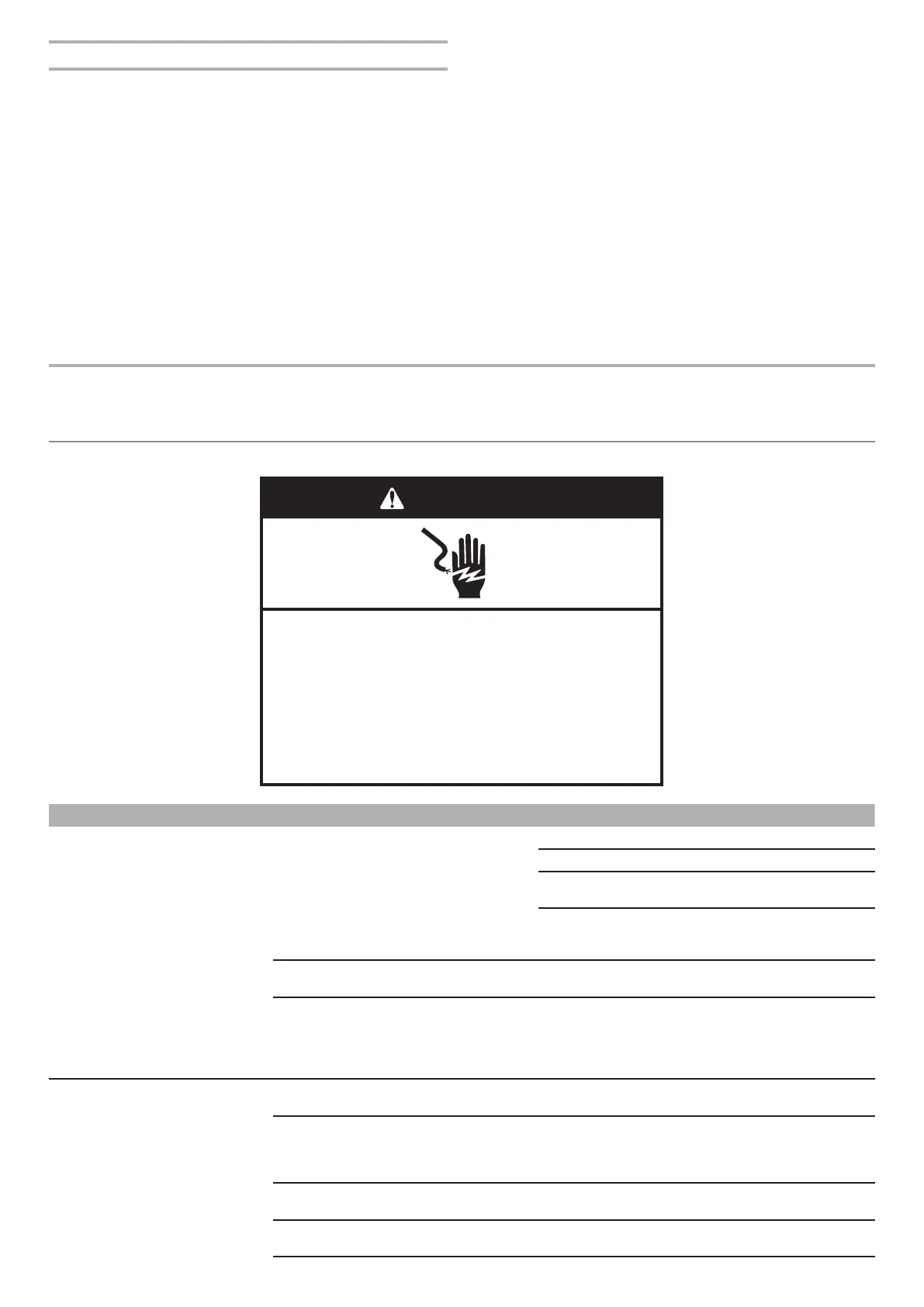
WARNING
Electrical Shock Hazard
Plug into a grounded 3 prong outlet.
Do not remove ground prong.
Do not use an adapter.
Do not use an extension cord.
Failure to follow these instructions can result in death,
fire, or electrical shock.








 To Next Page