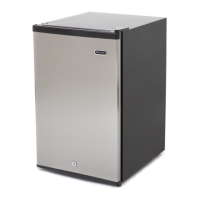
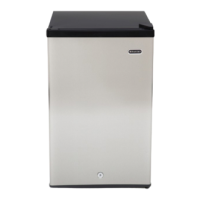
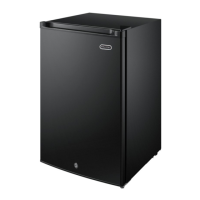
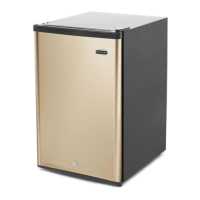
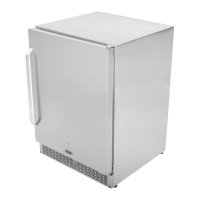
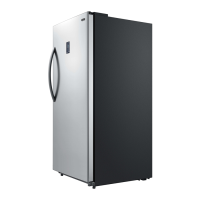
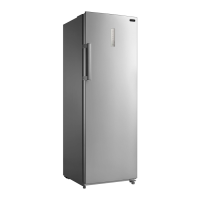
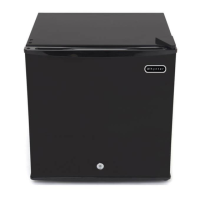
This document is an instruction manual for the WHYNTER Energy Star 1.1 cu. ft. Upright Freezer, available in two models: CUF-110 (black) and CUF-112SS (stainless steel). The manual provides comprehensive information on the freezer's function, usage, and maintenance, ensuring proper operation and longevity of the product.
Function Description
The WHYNTER Upright Freezer is designed to store frozen food products, maintaining temperatures between -10°F and 2°F. It operates as a standalone freezing unit, suitable for household use. The freezer features a mechanical thermostat control knob located inside the cabinet, allowing users to adjust the internal temperature. Settings range from "1" (warmest) to "6" (coldest), with "OFF" to turn the unit off. It's important to note that even at setting "1," the temperature will not rise above freezing. The freezer is equipped with a single powder-coated steel wire shelf for organizing contents. A lock mechanism is included for securing the freezer's contents. The appliance is designed to be energy-efficient, carrying an Energy Star certification.
Usage Features
Installation:
The freezer requires a free-standing installation, ensuring adequate ventilation and access for service. It should be placed on a flat, level, and solid surface, strong enough to support the unit when fully loaded. A minimum clearance of 4 inches at the rear and 1 inch at the top and sides is recommended. The unit should not be installed in an enclosed area, outdoors, or near heat sources like ovens or grills. Before connecting to power, the freezer should stand upright for approximately 4 hours to allow the cooling system to settle.
Electrical Requirements:
The freezer operates on a standard 115V, 60Hz, 10A electrical supply, properly grounded according to national and local codes. A dedicated circuit is recommended. The power cord has a 3-prong grounding plug, which must be plugged directly into a matching 3-pronged, grounding-type wall receptacle. Extension cords are strongly discouraged; if one must be used, it must be a UL-listed 3-wire grounding type with a rating of at least 15 amperes and 120 volts.
Leveling:
Proper leveling is crucial for the freezer's optimal performance, ensuring the door closes and seals correctly to prevent cooling, frost, or moisture issues. The freezer can be leveled by adjusting the two feet on the bottom. A carpenter's level is recommended to check for levelness from front to back and side to side. Turning the leveling feet to the right lowers that side, while turning to the left raises it.
Door Swing Reversal:
The freezer's door can be configured to open from either the left or right side. This process requires a flathead screwdriver and a Phillips screwdriver. It involves tilting the appliance backward to access the bottom hinge, removing the bottom hinge, sliding the door off the top hinge pin, removing and repositioning the top hinge, and then reattaching the door and bottom hinge on the opposite side. Care must be taken not to lay the appliance completely flat to avoid damaging the coolant system.
Storing Frozen Food:
When using the freezer for the first time or after defrosting, the temperature control should be set to "6" for at least two hours before introducing food. All purchased frozen food should be placed in the freezer as soon as possible to prevent thawing. Manufacturers' storage recommendations on food packaging should be followed. The freezer can freeze approximately 3 pounds (1.5 kg) of food per cubic foot of freezer capacity at one time.
Freezing Fresh Food:
For freezing fresh food, ensure hygienic conditions. It's advisable to pack food into separate meal portions rather than in bulk. Hot or warm food should never be placed directly into the freezer. Prior to storage, pack food in plastic bags, aluminum sheets, or freezing containers. Bottled food or drinks should not be placed in the freezer compartment. Sufficient space should be left for air circulation around packages for best performance.
Normal Sounds:
Users may hear various sounds during operation, including rattling noises from refrigerant flow or items on top of the freezer, a pulsating or high-pitched sound from the high-efficiency compressor, a gurgling sound as the refrigerant flows, and a gentle trickling sound from coolant. These are considered normal operational sounds.
Energy Saving Tips:
To maximize energy efficiency, place the freezer in the coolest area of the room, away from heat sources and direct sunlight. Allow hot foods to cool to room temperature before placing them in the freezer. Avoid overloading the freezer, as this forces the compressor to run longer. Properly wrap foods and wipe containers dry to reduce frost buildup. Do not line freezer shelves with aluminum foil, wax paper, or paper toweling, as this interferes with cold air circulation. Organize and label food to minimize door openings and search times. Defrost the freezer when the frost layer reaches ¼ inch thick, as excessive frost increases energy consumption.
Maintenance Features
Cleaning:
Before any cleaning or maintenance, ensure the freezer is unplugged from the power supply. The exterior can be cleaned with a clean cloth lightly dampened with appliance polish wax or mild liquid dishwashing detergent, then dried and polished with a soft cloth. Avoid using soiled cloths, scouring pads, powdered cleaners, bleach, or abrasive cleaners, as these can damage the surface.
The interior should be cleaned at least once a year. It is recommended to unplug the freezer before cleaning. If not possible, wring excess moisture from the sponge or cloth when cleaning near switches, lights, or controls. Use a solution of warm water and baking soda (about a tablespoon per quart of water). Rinse thoroughly and wipe dry. Do not use cleaning powders or abrasive cleaners. Removable parts should not be washed in a dishwasher. An open box of baking soda placed inside the freezer can absorb stale odors and should be changed every three months.
Defrosting:
The freezer requires manual defrosting when the frost layer becomes ¼ inch thick. To defrost:
- Turn the temperature control knob to "OFF" and unplug the unit.
- Remove all food and place it in insulated bags or a picnic cooler.
- Leave the door open. To speed up frost loosening, place a pot of hot water inside.
- Remove large pieces of frost before they melt.
- Sponge excess water from the bottom of the freezer to prevent overflowing.
- After defrosting, clean the inside of the freezer with a soft cloth to wipe away remaining ice and water.
- Once the compartment is wiped dry, plug in the freezer, return the temperature control knob to its previous position, and return food to the freezer.
Do not use mechanical devices, sharp or metallic instruments, or hot water directly to accelerate defrosting, as this can damage the freezing compartment wall or warp the inner case.
Prolonged Off Periods:
If the freezer will not be used for an extended period, disconnect it from the main power supply. Clean and dry the inside thoroughly. Leave the door open to prevent mold and mildew growth.
Preparing for Vacation:
For short vacations, ensure the house power remains on to keep the freezer operational. For extended vacations or absences, consider moving frozen foods to a temporary storage locker. If the freezer is left empty, disconnect the power cord, clean the interior, and place an open box of baking soda inside with the door left open to prevent odors.
Extended Power Failure:
During a power failure, keep the freezer door closed. The freezer will keep food frozen for approximately 24 hours if warm air is not admitted. For power outages lasting 24 hours or more, add dry ice. Handle dry ice with gloves or other protective measures to prevent freezing of hands. If dry ice is unavailable, move food to a frozen food locker temporarily until power is restored.


 To Next Page
 General