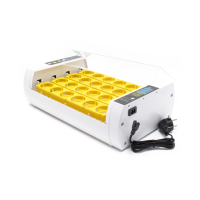
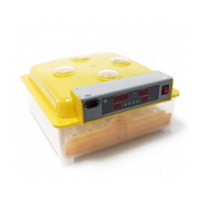
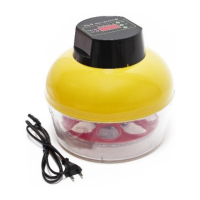
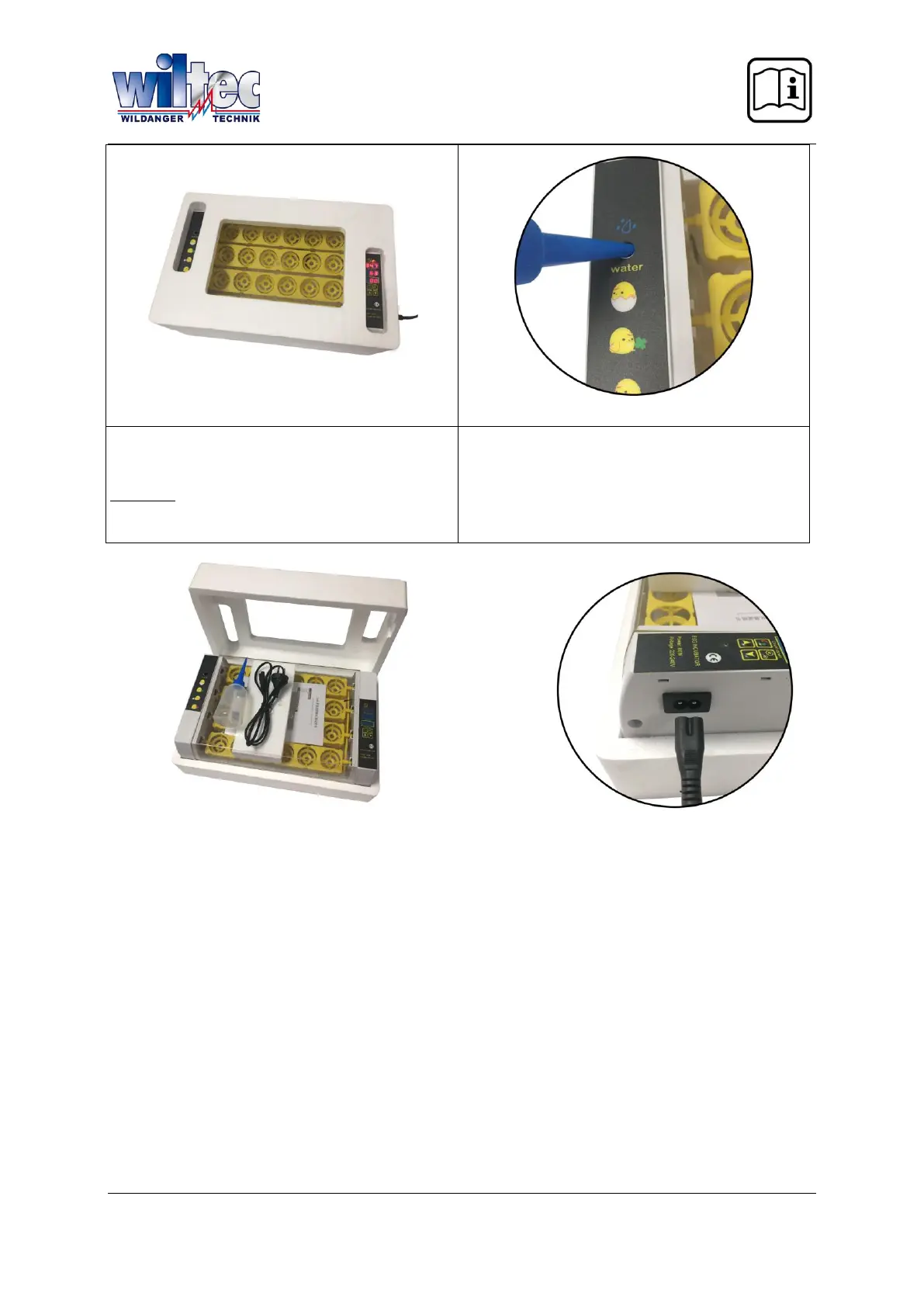
5. Ensure, that the ventilation, temperature dis-
play, operating buttons and heater work properly.
Attention: Place the incubator into the Styrofoam
to keep the temperature constant if it drops below
20 ℃.
Breeding notes: The first step to successful hatching is the selection of the best fertilised eggs. But
how are these selected?
1. The fertilized eggs need to be fresh and within the time frame of 4–7 days after being laid. The best
temperature to store the fertilised eggs is 8–15 ℃. The fertilised egg is covered with a powder like
substance, which must not be wiped off or stored in the fridge.
2. The surface of the eggshell needs to be free of any deformation, tears or marks.
3. There is no necessity to disinfect the fertilised eggs, as an improper disinfection can negatively im-
pact the hatching rate. Just ensure that the eggshell is clean and without marks.
4. When placing the egg into the incubator, ensure that the tip of the egg points downward.
5. A proper operation and supervision are required during the breeding process. Amongst other things,
this means adding water regularly, every 1–2 days (dependent of the surrounding, the water level and
the air humidity in the incubator).
6. The fertilised eggs cannot be tested within the first four days of the breeding, as a decrease of tem-
perature in the incubator has a negative impact on the early development stages of the egg.


 To Next Page
 Loading...