Storage SenTix
®
6
ba75737e02 06/2013
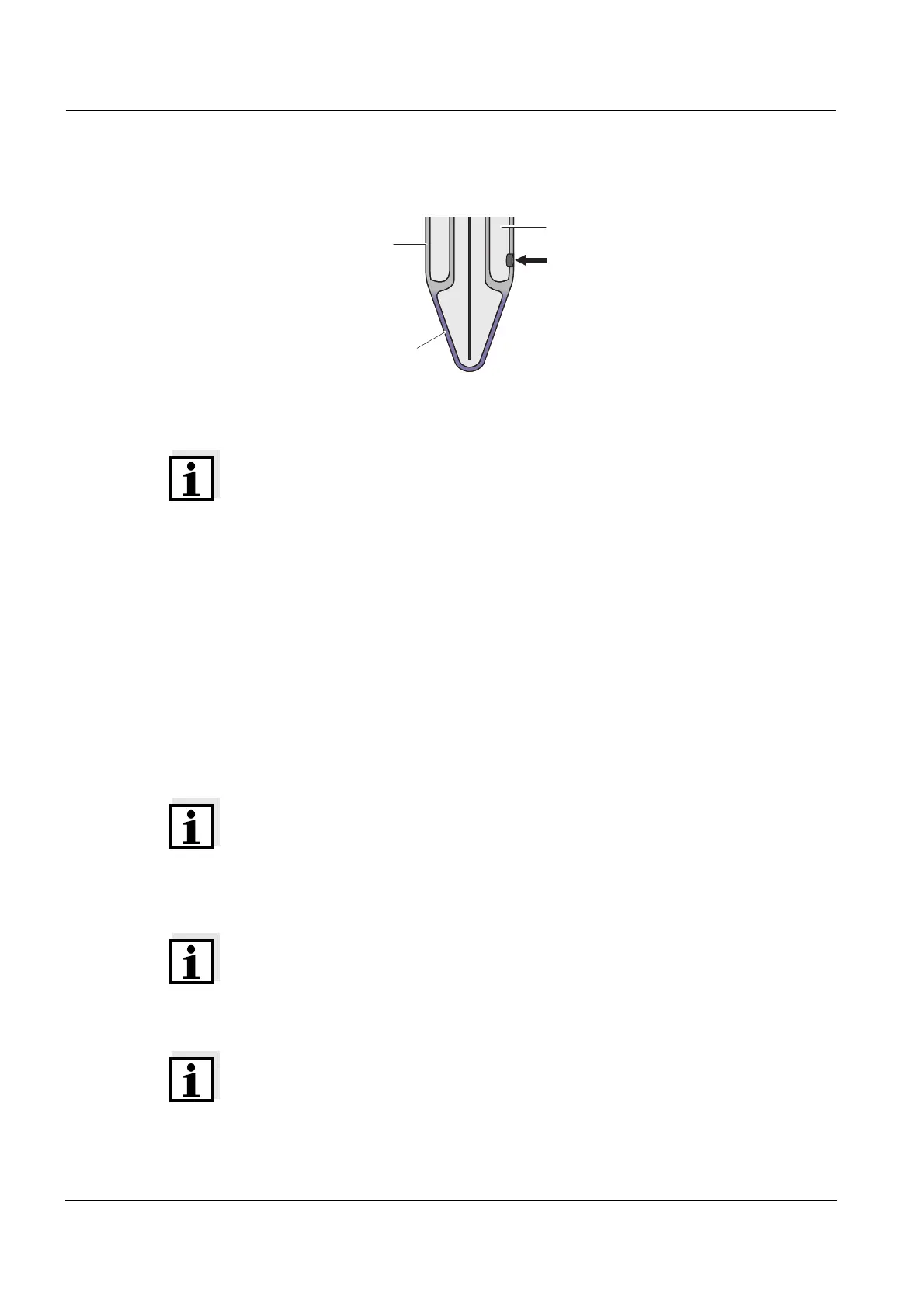
of the shaft (see figure). At the same time, the level of the reference elec-
trolyte must be at least 2 cm above the level of the solution.
Provide approximately the same stirring conditions for measuring as for
calibrating.
Note
Prevent contact of the pH membrane to the beaker bottom to avoid scratches
on the pH membrane.
Subsequent
calibrations
The frequency of subsequent calibrations depends on the application. Many
meters provide an option where you can enter a calibration interval. After the
calibration interval has expired, the meter will automatically remind you of the
due calibration.
Storage
During short
measuring breaks
With the refilling opening open, immerse the combination electrode in
reference electrolyte (KCl 3 mol/L, Ag
+
free). Prior to the next measurement,
shortly rinse the combination electrode with the test sample or deionized
water.
Note
Prevent contact of the pH membrane to the beaker bottom to avoid scratches
on the pH membrane.
Overnight or
longer
Put the clean combination electrode in the watering cap that is filled with
reference electrolyte (KCl 3 mol/L, Ag
+
free) and close the refilling opening.
Note
pH combination electrodes must not be stored dry or in deionized water. The
combination electrode could be permanently damaged by this. If the liquid in
the watering cap has dried up, condition the combination electrode in
reference electrolyte (KCl 3 mol/L, Ag+
+
free) for at least 24 hours.
Note
During longer storing periods, salt sediments may develop on the watering
cap. They do not affect the measuring characteristics and can easily be re-
moved with deionized water when the combination electrode is put into oper-
ation again.
Junction
Referenceelectrolyte
(Example)
Glass membrane
Shaft


 To Next Page