This document outlines the process for bending and preparing PETG tubing for use in a liquid cooling system, utilizing the XSPC PETG Toolkit. The toolkit is designed to assist users in creating custom tubing runs with precise bends and properly finished ends, ensuring a secure and leak-free connection.
Function Description:
The XSPC PETG Toolkit provides a comprehensive set of tools for manipulating PETG tubing, a common material for custom liquid cooling loops. The primary function of the toolkit is to enable users to bend PETG tubing to specific angles, cut it to the desired length, and prepare the ends for secure fitting into compression fittings. This allows for customized and aesthetically pleasing liquid cooling setups. The process involves softening the PETG tube with heat, bending it around a specialized tool, and then finishing the ends to ensure proper sealing and prevent damage to O-rings within the fittings.
Important Technical Specifications:
The toolkit includes several components, each with a specific role in the tubing preparation process:
- Heavy Duty Hose Cutter: Used for precisely cutting PETG tubing to the required length. This ensures clean, straight cuts that are essential for proper fitting.
- PETG Easy Bending Tool: This is the core component for shaping the tubing. It features a contoured surface around which the heated PETG tube is bent. The tool likely has markings or a design that aids in achieving consistent bend angles. The images show a tool with a black body and a white bending surface, suggesting a robust construction for repeated use.
- Bending Rubber: An insert that is placed inside the PETG tube before heating and bending. Its purpose is to prevent the tube from kinking or collapsing during the bending process, ensuring a smooth, uniform bend. The instructions specify soaking it in warm water before insertion, which may make it more pliable or easier to insert.
- PETG Chamfer Tool: This tool is used to create a chamfer (a beveled edge) on the inside and outside of the cut PETG tube ends. This chamfer is crucial for preventing sharp edges from damaging the O-rings inside compression fittings during installation. The instructions explicitly state to rotate it only anti-clockwise to avoid damaging the blades or the tube.
- PETG Edging Sandpaper: Used to further refine and smooth the chamfered edges of the tubing after using the chamfer tool. This ensures a perfectly smooth surface that will not abrade or cut the O-rings, contributing to a leak-free seal.
The bending process involves heating a specific area of the tube, approximately 30mm for a 90° bend, indicating the amount of material required for a standard bend. The tool itself appears to have markings or a design that helps align the heated section for accurate bending.
Usage Features:
The usage of the XSPC PETG Toolkit is broken down into a series of sequential steps, ensuring a methodical approach to tubing preparation:
- Preparation of Bending Rubber: The bending rubber is soaked in warm water and then inserted into the PETG tube. The PETG tube is then inserted into the bending tool. This initial step ensures the bending rubber is ready to perform its function of preventing kinks.
- Marking the Bend Location: A mark is made on the PETG tube at the intended bend location. This serves as a guide for applying heat and for aligning the tube within the bending tool.
- Heating the Tubing: The tube is slid forward in the tool, and heat is applied to the area in front of the mark. The instructions emphasize rotating the tube to ensure even heat distribution. A hair dryer or heat gun can be used, with a caution against getting the heat gun too close to prevent excessive heat application. The heating area for a 90° bend is specified as 30mm.
- Aligning for Bending: Once the tube is soft, it is slid back into the tool so that the mark aligns with the top of the tool. This ensures the bend occurs at the desired location.
- Bending the Tube: The tube is bent over the head of the tool to achieve the desired angle. It must be held steady until it cools to set the bend.
- Removing Bending Rubber and Trimming: After cooling, the bending rubber is removed by twisting and pulling. The tube is then trimmed to the correct length using the heavy-duty hose cutter.
- Chamfering the Edges: The chamfer tool is used to create an edge on both ends of the cut tube. Crucially, the tool must only be rotated anti-clockwise to prevent damage to the blades and ensure a clean finish.
- Sanding the Edges: The chamfered edges are then cleaned and smoothed using the provided sandpaper. A critical warning is given: do not sand the sides of the tube, as this could compromise the tube's ability to seal properly in the fitting.
- Installing Compression Fittings: The compression fitting's nut and O-ring are placed over the PETG tube. The chamfered end of the tube is then pushed into the fitting. Force is required to push the tube past the two internal O-rings of the fitting.
- Securing the Fitting: Finally, the nut is screwed down until the fitting is completely closed and sealed, ensuring a leak-free connection.
The entire process is designed to be user-friendly, with clear instructions and visual aids (images) for each step. The emphasis on even heating, correct chamfering, and proper fitting installation highlights the importance of precision for a reliable liquid cooling system.
Maintenance Features:
While the document doesn't explicitly detail maintenance for the tools themselves, some aspects can be inferred:
- Chamfer Tool Care: The instruction to rotate the chamfer tool only anti-clockwise suggests that rotating it clockwise could damage its blades. This implies that proper usage is key to maintaining the tool's effectiveness and longevity. Regular inspection of the blades for wear or damage would be good practice.
- Hose Cutter Maintenance: A heavy-duty hose cutter typically requires its blade to be kept sharp for clean cuts. While not mentioned, periodic cleaning and potentially blade replacement (if applicable) would be standard maintenance for such a tool.
- General Tool Cleanliness: Keeping all tools clean and free of debris (especially from PETG shavings) would ensure their smooth operation and prevent contamination of the tubing or fittings.
The document primarily focuses on the process of using the toolkit rather than its maintenance. However, by following the detailed usage instructions, users can ensure the tools are used correctly, which contributes to their overall lifespan and effectiveness. The emphasis on ordering more tube than expected also acknowledges that some wastage may occur, which is a practical consideration for any DIY project involving custom cuts and bends.

 Need help?
 General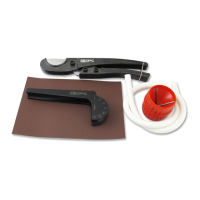

 To Next Page