The Xtreme Power Compactor 2.5HP 79CC (Item: 61017 / 61018) is a machine designed for compacting ground surfaces by transmitting vibration through a vibrating plate. This process makes the surface smooth and is suitable for various applications such as leveling soil, beaching, and finishing asphalt paving. Its primary function is surface compaction, and it is not recommended for deep compaction or for leveling ground with large stones due to insufficient compacting force. For heavy compaction, tamping rammers, vibrato compactors, and vibration rollers are suggested. This compactor is ideal for soil, sediment, sand, beaching, and asphalt surfaces.
Structure and Operation:
The compactor's upper part consists of a power source, handle, belt cover, and guard hook, all fixed to the engine base. The engine base is mounted on the vibrating plate via shock-absorbing rubber. The lower part comprises the vibrating plate and a vibrator unit with a built-in eccentric rotary shaft. Power is transmitted from a centrifugal clutch on the engine output shaft to the eccentric rotary shaft via a V-belt.
The power source is an air-cooled single-cylinder engine. A centrifugal clutch is fixed to the engine output shaft. When the engine runs up, the centrifugal clutch engages, and the engine speed is reduced to a suitable level for compacting. The engine's rotation is transmitted from a V-pulley (integrated with the clutch drum) to the vibrator pulley via a V-belt. The vibrator pulley then rotates the eccentric rotor shaft within the vibrator case, generating vibrations that, combined with the machine's weight, enable ground compaction.
Controls:
The motor is controlled by an ON/OFF switch or push button located on the motor below the fuel tank. The motor speed is regulated by a remote throttle lever on the machine handle. Honda and Kama motors include an oil alert device that stops the motor or prevents starting if the crankcase oil level drops below a safe limit.
Drive Belt:
The tension of the drive belt is adjustable. To adjust, loosen the four nuts securing the motor to the base plate, then use the set screws against the motor crankcase to achieve the desired belt tension. Ensure all four nuts and set screw lock nuts are tightened after adjustment.
Emergency Shutdown:
Move the throttle lever to the “OFF” position and turn the stop switch to “OFF.”
Normal Shutdown:
Move the throttle lever quickly from “ON” to “OFF” and allow the engine to run at low speed for 3 to 5 minutes. After the engine cools, turn the stop switch to “OFF” and close the fuel shutoff valve.
- Carbon Monoxide Hazard: Operating the compactor indoors can be fatal due to carbon monoxide (CO) in engine exhaust. Always use outdoors, far from windows, doors, and vents.
- Flammable Vapors: The engine emits highly flammable gasoline vapors. Do not operate near open flames or smoke.
- Refueling: Always turn off the compactor and allow it to cool for at least 2 minutes before refueling. Loosen the fuel cap slowly to relieve pressure. Do not overfill the tank; allow space for expansion.
- Storage/Transport: Empty the fuel tank before storing or transporting.
- Operating Conditions: Do not use in wet conditions.
- Personnel: Only qualified persons should operate the compactor. Keep children away.
- Hot Surfaces: Avoid touching hot surfaces; allow the unit to cool after use.
- Moving Parts: Keep hands and feet clear of rotating and moving parts.
- Vibration Effects: Before compacting near buildings or pipelines, check for vibration effects and stop work if necessary.
- Protective Gear: Always wear proper protective clothing, shatterproof ANSI-approved glasses, steel-toed boots, and other job site safety devices. Wear respiratory, hearing, and eye protection during operation.
- Substance Impairment: Never operate under the influence of medication, drugs, or alcohol.
- Machine Integrity: Always check for loosened bolts and threads before each use.
- Modifications: The manufacturer is not responsible for accidents due to equipment modifications, which also void the warranty.
- Accessories: Only use accessories or attachments recommended by STARK for this model.
- Static Electricity: Do not refuel on plastic surfaces (e.g., pickup truck beds with plastic liners) to avoid static electricity buildup, which can cause ignition or explosion.
- Ventilation: Refuel in a well-ventilated area, away from open flames or sparks.
- Trench Stability: Ensure trench walls are stable before compaction to prevent collapse.
- Underground Services: Ensure the compaction area does not contain "live" electrical cables, gas, water, or communication services that could be damaged.
- Vibration Exposure: Exercise care during operation; repetitive vibration can be harmful to hands and arms.
- Engine Speed: Do not increase the governed no-load motor speed above 3,500 r/min to avoid personal injury and machine damage.
- Muffler: Be careful not to contact the hot muffler to prevent severe burns.
- Fuel Storage: Store petrol in an approved container. Do not refuel the motor while it is in operation or hot.
Prior to Operation:
- Cleanliness: Remove all dirt, mud, etc., especially from the vibrating plate's bottom face and areas near the engine's cooling air inlet, carburetor, and air cleaner.
- Fasteners: Check all bolts and screws for tightness.
- V-belt: Check V-belt tightness; normal slack is 10-15mm (1/2") when depressed. Excessive slack can reduce impact force or cause erratic vibration.
- Engine Oil: Check engine oil level daily. Refill if low using the recommended motor oil (SAE 30 for Spring/Summer, SAE 20 for Winter, SAE 10W-30 for below 15°F).
- Vibrator Oil: Remove the oil plug in the vibrator assembly and check the oil level. Ensure the compactor is level. The oil level should be up to the oil plug. Replace oil every month or 200 hours of operation.
- Fuel: Use regular grade gasoline. Use a fuel filter when filling the tank.
- Hot Components: Mufflers and other hot parts are dangerous; do not touch with bare hands.
- Transport: Clamp the fuel tank cap securely and turn the fuel valve OFF. Drain gasoline from the tank for long-distance transport or rough roads.
Starting the Gasoline Engine:
- Turn the STOP SWITCH clockwise to the "I" (ON) position.
- Open the fuel cock.
- Set the speed control lever 1/3 to 1/2 of the way towards the high-speed position.
- Close the choke lever (fully for cold engine/low ambient temperature, half-way or fully open for warm engine/high ambient temperature).
- Pull the starter handle slowly until resistance is felt (compression point), then return to the original position and pull swiftly.
- Do not pull the rope all the way out. After starting, allow the starter handle to return while still holding it.
After Starting:
- As the engine warms up, gradually move the choke lever to the OPEN position.
- Move the speed control lever from LOW to HIGH. The centrifugal clutch engages between 2,300-2,600 RPM. Avoid slow movement of the speed control lever to prevent clutch slip.
Oil Alert System:
This system prevents engine damage from insufficient crankcase oil. It automatically stops the engine if the oil level drops below a safe limit (engine switch remains ON).
Asphalt Compaction:
When compacting asphalt, paint the bottom face of the vibrating plate with diesel fuel to prevent sticking.
Shutting Off Vibrator:
Move the speed control lever from HIGH to LOW. Do not move it slowly.
Transportation:
- Stop the engine.
- Screw the fuel tank cap securely and close the fuel valve.
- Securely fix the machine in a car to prevent movement or falling.
- Drain fuel from the tank for long distances or off-road driving.
Shutdown:
- Set the speed control lever to low speed and let the engine run for 2-3 minutes.
- Turn the stop switch to OFF.
- Close the fuel cock.
Maintenance:
- Daily: Check motor crankcase oil level.
- Weekly: Check vibrator oil level.
- Regularly: Inspect rubber anti-vibration mounts for wear. Clean the underside of the plate to prevent buildup. Change motor crankcase oil to minimize wear. Inspect, clean, and/or replace the motor air cleaner (especially in dusty environments). Inspect, clean, and/or replace the spark plug. Check all fasteners for tightness. Check "V" belt tension and adjust/replace as needed.
- Vibrator Oil Check: Place the compactor horizontally on a flat surface. Remove the plug (vibrator oil gauge) to check the oil level (should be up to the plug). To change oil, remove the drain plug and tip the compactor (easier when hot).
Maintenance Schedule:
- Every 8 hours (daily): Check for loose/missing screws, damaged parts, and function of controlling system.
- Every 100 hours: Vibrator oil check, Battery check.
- Every 200 hours: V-belt (clutch) check.
- Every 300 hours: Vibrator oil replacement.
Storage:
- Long Periods: Drain fuel from the tank, fuel pipe, and carburetor.
- Engine Protection: Pour a few drops of motor oil into the cylinder (after removing the spark plug), then rotate the engine several times by hand to coat the cylinder interior.
- Cleaning: Clean the outer surface with an oil-moistened cloth.
- Storage Location: Store in a humidity-free, dust-free area.
Air Cleaner Service:
Dirty air cleaner elements cause starting difficulty, power loss, engine malfunctions, and shorten engine life.
- Urethane Foam Element: Remove, wash in kerosene or diesel fuel, then saturate in a mixture of 3 parts kerosene/diesel fuel and 1 part engine oil. Squeeze out excess mixture and reinstall.
- Urethane Foam Dual Structure: Clean as above.
Spark Plug:
Remove, clean, and adjust the spark plug gap to 0.6-0.7mm (0.02-0.03 in.).
Motor Oil:
Drain and replace engine motor oil. For new engines, the first oil change should be after 20 hours of operation.
Troubleshooting:
- Motor will not start: Check ON/OFF switch, fuel supply, crankcase oil level (if oil sensor fitted), spark plug ignition lead, carburetor jet, and bowl.
- Motor stops: Check fuel supply, fuel cock, and air filter.
- Petrol Motor lacks power: Check air filter and spark plug.
- Insufficient vibration: Check for slipping or missing V-belt, and motor governed speed (should be 3,500 r/min).
- Machine is not moving freely: Check the underside of the plate for material buildup.
Warranty:
The manual provides a parts list and assembly diagram for reference only. The manufacturer/distributor does not warrant that the buyer is qualified to repair the product or replace parts. All repairs and parts replacements should be undertaken by certified and licensed technicians. The buyer assumes all risk and liability for repairs or installation of replacement parts.
Customer Support:
For questions, call (909) 628-0880 Monday-Friday, 9 AM to 3 PM PST, or email customer@xtremepowerusa.com.
Product Made in China.

 Need help?
 General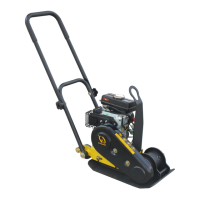

 To Next Page