EasyManua.ls Logo

Yamaha 500LI - User Manual

Yamaha 500LI
20 pages
Print Icon
To Next Page IconTo Next Page
Loading...
CAUTION
ELECTRICALLY OPERATED PRODUCT
Not recommended for children under 16 years of age. As with all electrical products, precautions should be observed during
handling to reduce the risk of electric shock.
EN
When passing on this device, include the user manual and
all relevant warning information and parts.
It is the responsibility of the owner to give proper instruction
and precaution (regarding the risk associated with this
device) when lending the device to other people.
USER MANUAL
Yamaha, the Crossed Tuning Fork Design, and any likeness thereof are trademarks
of Yamaha Motor Corp. U.S.A. and Yamaha Motor Co., Ltd. (“Yamaha”) used
under license by Sport Dimension Inc. www.yamaha-motor.com.
This Product is not manufactured by Yamaha. For consumer purposes,
please contact Sport Dimension Inc. at 1-800-678-7873.
LICENSED PRODUCT
Question and Answer IconNeed help?

Do you have a question about the Yamaha 500LI and is the answer not in the manual?

Summary

Introduction to Yamaha Seascooter

Buoyancy Features

Describes self-filling ballast hull for neutral buoyancy in seawater.

Fins for Stability and Speed

Describes front foil and pectoral fins for stability and speed.

Handlebar and LED Status Indicator

Details the handlebar as a navigation tool with ergonomic triggers and LED status.

Warnings and Safety Precautions

General Safety Precautions

Covers device usage, personal safety, environment, and operational guidelines.

Crushing Hazard and Cautions

Product Cautions

Lists important safety notes and warnings for product operation and maintenance.

Parts Diagram

Battery Caution and Safety

Battery Safety Guidelines

Essential rules for safe handling, charging, and storage of the battery.

Charging the Battery

Replacing the Battery

Getting Started with Your Seascooter

Initial Setup and Buoyancy Adjustments

Covers charging, water entry, buoyancy, and accessory attachment.

Operating the Seascooter Controls

Explains how to turn on, control speed, and stop the device using triggers.

Proper Usage and Post-Operation

Details posture for maximum speed and turning off the master switch.

LED Battery Status Indicator

Care and Maintenance Procedures

Washing and General Care

Instructions for cleaning and drying the Seascooter after use.

Buying Parts and Accessories

Information on purchasing additional parts and accessories.

Optional Extended Life Battery Usage

Details on using and the performance of optional extended life batteries.

Battery Upgrade Buoyancy Caution

Specific warning regarding buoyancy changes when using a heavier battery.

Troubleshooting Common Issues

Unit Does Not Function

Steps to diagnose and resolve issues when the propeller does not start.

Blocked Propeller and Obstructions

Instructions to clear obstructions from the propeller and grilles safely.

Sand, Grit, and Flooding Issues

Procedures for clearing O-ring seals and handling water leakage events.

Blocked Triggers Maintenance

Maintenance steps to clear debris from the trigger mechanism.

Camera Assembly and Mounting

Attaching Camera Mount

Step-by-step guide to attach a camera to the Seascooter's mounting system.

Removing Camera Mount

Instructions on how to detach the camera mount from the Seascooter.

Technical Specifications

Consumer Warranty and Service Information

Warranty Exclusions and Policies

Outlines what the warranty does not cover and the procedures for customer inquiries and repairs.

Product Information and Contact

Overview

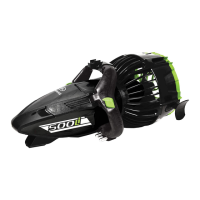
This document describes the Yamaha Professional Dive Li Series Seascooter, a lightweight recreational Diver Propulsion Vehicle (DPV) designed for underwater navigation. It features a Li-ion battery system that can be charged inside the unit or removed for external charging, facilitating back-to-back dives or snorkel runs.

Function Description

The Seascooter is designed to assist users in underwater propulsion for swimming, snorkeling, and scuba diving. It operates by means of a propeller, which is activated by triggers on the handlebar. The device offers multiple speed levels, allowing users to adjust their propulsion as needed. It is equipped with a Master Switch to turn the unit ON or OFF, ensuring safe operation. The Seascooter is intended for single-person use and is not a life-saving device or buoyancy aid. It is specifically designed for use in seawater, where it achieves neutral to positive buoyancy due to its self-filling ballast hull. In fresh water or pools, it will have less buoyancy and may sink.

Usage Features

The Seascooter incorporates several features to enhance its usability and performance:

  • Buoyancy: The self-filling ballast hull allows the Seascooter to achieve neutral buoyancy almost instantly in seawater. Strategically placed drain holes enable water to freely enter and exit the ballast space, ensuring neutral buoyancy when submerged and expelling water upon surfacing. Users should be aware that buoyancy will differ in fresh water or pools. For the 220Li model, accessory lead ballast weights can be purchased separately for small buoyancy adjustments.
  • Fins: The device includes strategically placed front foil and pectoral glide fins. These fins are designed to prevent upward skidding during acceleration and facilitate fast, straight-line forward navigation underwater. They also allow users to rest their arms while operating the Seascooter.
  • Handlebar and LED Battery Status Indicator: The handlebar serves as the primary navigation tool and is constructed from impact-resistant material. It features ergonomically positioned triggers for natural thumb operation. Accessory D-ring attachment points are provided for additional gear. A dashboard-style LED battery status indicator offers an accurate voltage display during use. Three green LEDs indicate a full battery, two LEDs indicate 2/3 power, and one flashing LED indicates approximately 1/3 power remaining. When all LEDs are off, the unit will run for 3 minutes before automatically shutting down.
  • Speed Control: The Seascooter offers multiple speed levels (3 speeds for 500Li & 350Li, 2 speeds for 220Li). In the US version, either one or both triggers can be pushed to start the propeller and accelerate to speed 1. To increase speed, users can pulse the left or right trigger off and on again within half a second. For the EU version, both triggers must be pushed to start the propeller and accelerate to speed 1, and both must be kept pressed to increase speed. Once maximum speed is reached, further pulses will have no effect. Releasing both triggers stops the propeller.
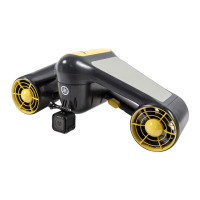
  • Camera Mount: The Seascooter is equipped with a camera mount compatible with GoPro® HERO cameras (3, 3+, 4, or 5) or other cameras using the same mount system. This allows users to attach their cameras to capture underwater footage.
  • Safety Precautions: Users are advised to wear a life vest approved by local authorities for snorkeling. It is crucial to inspect the swimming area for hazards before use. Body parts, loose clothing, or other objects should never be near the propeller. Users with long hair should tie it up or wear a swimming cap. Awareness of water levels, tidal changes, currents, weather, and offshore winds is essential. The battery must always have sufficient charge to return to the surface. Alcohol and drugs should not be consumed prior to or during use. The Seascooter should only be operated in water and not in reverse. Adequate lighting is required for use in dark waters or during night diving. Children under 16 years old should not operate this product.

Maintenance Features

Proper maintenance is crucial for the longevity and safe operation of the Seascooter:

  • Washing and Care: The Seascooter should always be removed from the water when not in use and rinsed with fresh water immediately after each use. It should be allowed to dry before storage. Detergents should not be used for cleaning; a damp cloth is sufficient. The battery housing interior must be kept dry at all times.
  • Battery Charging: The Li-ion battery system allows for charging inside the unit. The charging process involves removing the outer nose cone, releasing the vent plug, connecting the extended charging cable to the battery pod, and then plugging the charger into a wall socket. The LED light on the charger indicates charging status (RED for charging, GREEN for fully charged). Charging times vary by battery model (3-5 hours for 220Li, 4-6 hours for 350Li, 7-9 hours for 500Li).
  • Battery Replacement: The battery pod can be replaced by removing the inner nose cone. This involves pulling down the latches, removing the outer nose cone, releasing the vent plug, tying up rubber rings, removing the pump nozzle, and using a pump to pop off the nose cone. After removing the rubber ring and inner nose cone, the battery pod can be taken out and replaced with a new, suitable battery pod.
  • Seal Lubrication: Before replacing the vent plug or inner nose cone, the seals and sealing surfaces must be clean and fully lubricated with the supplied silicone grease to ensure a watertight seal.
  • Propeller Obstruction Removal: If the propeller becomes blocked, the protective grilles can be opened for maintenance. This involves ensuring the master switch is OFF and the battery is disconnected, removing the rear grille screws, and using an M6 socket wrench to remove the nut from the propeller shaft. The propeller can then be slid off to remove any blockage, taking care not to lose the drive pin or washers. The drive pin and propeller are then reinstalled.
  • Flood Prevention: To prevent water ingress, the O-ring seal must be kept clean and free of sand or grit, and the latches must be fully closed. If water enters the battery chamber, the Seascooter has a built-in water leakage sensor that will stop the motor momentarily every 10 seconds and sound a buzzer. In such an event, the Seascooter should be removed from the water, the nose cones and battery pod removed, and any excess water tipped out. If salt water has entered, the battery, battery pod, and housing should be rinsed with fresh water and thoroughly dried.
  • Trigger Maintenance: Sand, salt, or grit build-up can harm the operation trigger mechanism. To clean, pull out the trigger buttons, remove the rubber caps, and spray/flush water into the triggers to clear debris. After cleaning, replace the triggers, locking buttons, and rubber caps.
  • Battery Storage: Li-ion batteries should always be removed from the Seascooter for storage. They should be partially discharged and stored in a cool, dry, well-ventilated area, away from heat and ignition sources. Batteries should be recharged at least every six months to prevent damage from self-discharge. Avoid direct sunlight, high temperatures, strong impacts, or exposure to water. Do not incinerate, disassemble, or short-circuit batteries.

The Seascooter is an electrically operated product and is not recommended for children under 16 years of age. Precautions should be observed during handling to reduce the risk of electric shock.

Yamaha 500LI Specifications

General IconGeneral
TypeDive Computer
PowerCR2450 battery
DisplayLCD
ModesAir, Nitrox
Operating Depth100 meters
Battery LifeApprox. 2 years
Water Resistance100 meters

Related product manuals