3-153-14
Rotating parts could cause severe
injury or death. Before attempting to
remove weeds or debris from the jet
intake or impeller areas; shut off the
engines, remove ignition key, then
remove the engine shut-off switch
cord from the shut-off switch.
Fuel System
Refer to page 4-11, “FUEL SYSTEM
INSPECTION,” for correct procedure.
Fuel and Engine Oil Levels
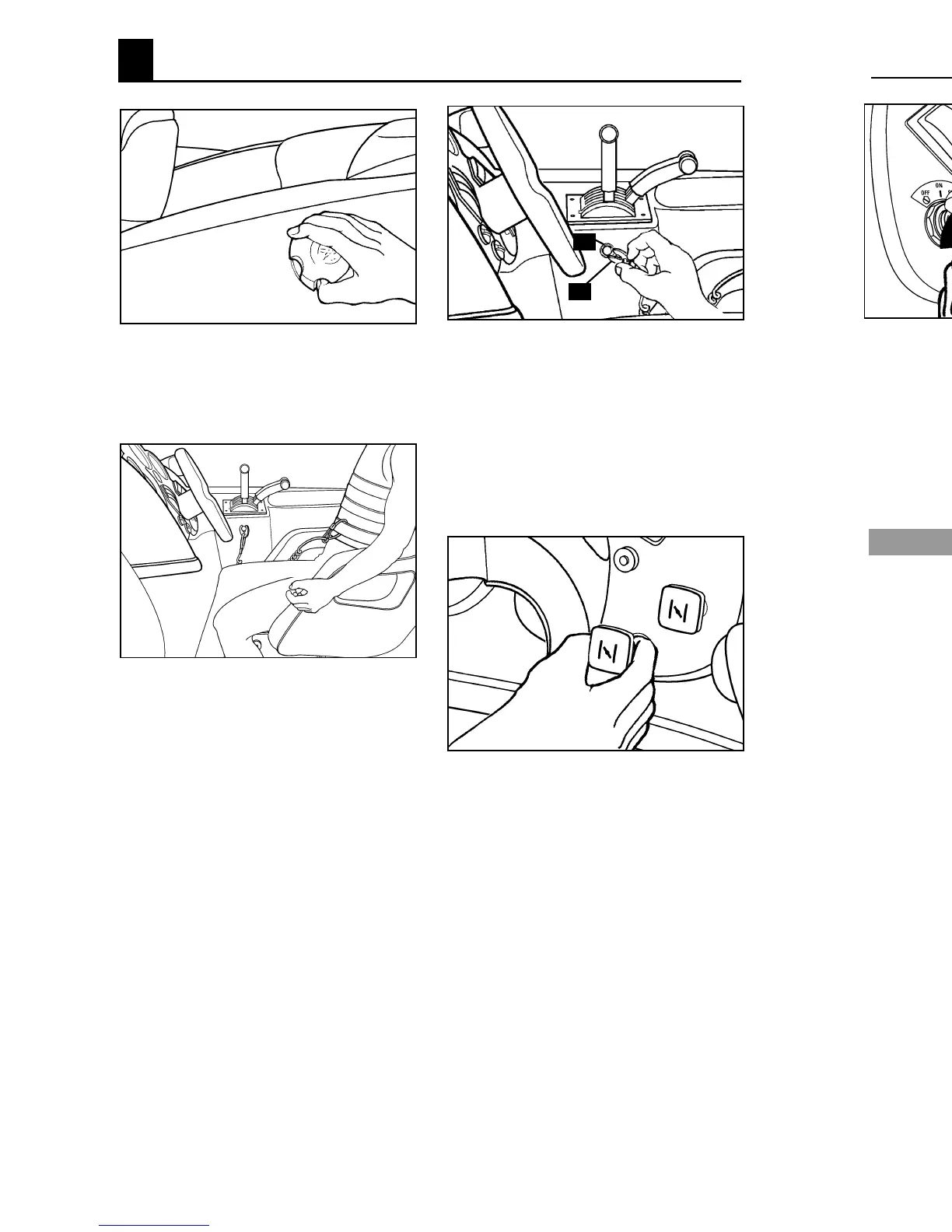
1) Turn the main switch key to ON.
Wait for the fuel gauge needle to
stop moving, then note the fuel
level. Add fuel if necessary.
NOTE: The fuel level is most accurate
when the boat is sitting level on the
trailer or in the water.
2) Open the engine hatch, remove the
center storage tray, then check oil
level in the tank.
Add as necessary.
Battery
The Sport Boat uses one battery.
Check the battery condition and the
battery electrolyte level. Make sure
connections are tight and that battery is
properly secured.
The battery must always be fully
charged and in good condition. Loss
of battery power may leave you
stranded. Never operate the Sport
Boat if the battery does not have
sufficient power to start the engine
or if it shows any other signs of
decreased power.
Drainage System
Self-Bailing Deck—
Most water which enters the deck area
have one, contact your local Yamaha
Sport Boat dealer or a fire extinguisher
dealer to obtain one meeting the prop-
er specifications.
Access Port Caps
Lift the hatch on the rear platform. Pull
up forcefully on the T-handle of each
cap. If the cap will move, it is not
installed properly. Refer to “Jet Pump
Clean-Out Procedure” on page 5-5 for
proper installation instructions.
Jet Intakes
Before launching the Sport Boat, care-
fully check the jet intakes under the
boat for weeds, debris, or anything else
that might restrict the intake of water. If
the intakes are clogged, cavitation
could occur, reducing jet thrust, and
possibly damaging jet pump parts. In
some cases, the engine may overheat
because of lack of cooling water, and
damage could result. Engine cooling
water is fed to the engine by the jet
pumps (see page 2-10).
Refer to Jet Pump Clean-Out proce-
dures on page 5-5 before attempting to
remove weeds or debris from the jet
intake or impeller areas.
1
2
3 OPERATION
OPERATION 3



 To Next Page