Need help?
Do you have a question about the Yamaha EKS and is the answer not in the manual?
This document describes the Yamaha Electronic Key Switch (EKS) and its associated engine control systems, providing a comprehensive guide for operation, features, and maintenance. The EKS is a key fob-like device that serves as the primary interface for starting and stopping Yamaha marine engines, offering both single and multi-engine control capabilities.
The Yamaha EKS is a sophisticated electronic key system designed to simplify engine operation and enhance security. It replaces traditional mechanical keys with a modern, push-button interface. The core function of the EKS is to enable or disable the engine's power system and to initiate the start/stop sequence. The system supports various configurations, including single, twin, triple, and quad engine setups, each with specific control mechanisms.
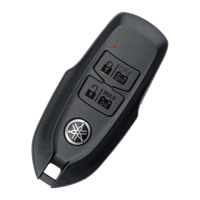
The key fob itself features a "POWER" button, a "START/STOP" button, and indicators for lock and unlock status. When the "POWER" button on the key fob is pressed, it activates the EKS system, allowing further commands to be issued. The "START/STOP" button on the EKS console is then used to control individual engines or all engines simultaneously, depending on the system configuration and the specific button pressed.
For multi-engine applications, the system provides dedicated "START/STOP" buttons for each engine (e.g., P for Port, C for Center, S for Starboard) as well as an "ALL START/STOP" button to control all engines at once. This modular design allows for precise control over complex propulsion systems.
The EKS key fob is identified by model numbers LIT-18826-12-7B, 6WC-28195-40, and 6WC-28195-41. It operates using a CR2032 battery, which is a common coin-cell battery. The recommended battery replacement interval is every two years. The key fob also features LED indicators for lock/unlock status, which blink to confirm actions.
The EKS console, which integrates with the boat's electrical system, includes multiple "START/STOP" buttons and a "POWER" switch. The "POWER" switch on the console turns the power to each engine ON and OFF. The "START/STOP" buttons are momentary switches that initiate the engine's start or stop sequence. The console also features a "START/STOP" switch that applies to all engines simultaneously in multi-engine setups.
The system is designed to operate within a specific range. The key fob can be detected within approximately 5 meters (16 feet) of the console, and within a closer range at the console area itself. This proximity detection is crucial for security and proper operation.
Key Fob Operation: The EKS key fob has a "Lock" button and an "Unlock" button. Pressing the "Lock" button locks the system, indicated by a single blink of the LED. Pressing the "Unlock" button unlocks the system, indicated by two blinks of the LED. The "POWER" button on the key fob activates the EKS system. The LED on the key fob also blinks when the "POWER" button is pushed, confirming activation.
Single Engine Application:
Twin Engine Application:
Triple Engine Application:
Quad Engine Application:
Key Fob Location and Beeps: The system provides audible beeps to indicate the key fob's proximity and status.
The primary maintenance aspect for the EKS key fob is the replacement of its CR2032 battery. The manual recommends replacing the battery every two years to ensure reliable operation. The key fob's LED indicators can also assist in troubleshooting, as they blink to confirm actions and may indicate low battery or other issues.
The system's design, with separate "POWER" and "START/STOP" switches, allows for clear operational steps, which can help in diagnosing issues. If an engine fails to start, the user can verify that the "POWER" switch is ON and that the key fob is within range before attempting to start the engine again. The modular nature of multi-engine controls also aids in isolating problems to a specific engine if one fails to respond.
Overall, the Yamaha EKS system offers a modern, user-friendly, and secure way to control marine engines, with clear operational guidelines and straightforward maintenance requirements.

 To Next Page
 General