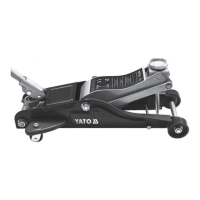
The YATO hydraulic floor jack is a robust and versatile lifting device designed for various applications, from automotive maintenance to industrial use. It is available in three models: YT-17205, YT-17207, and YT-17213, each offering distinct lifting capacities and ranges.
Technical Specifications
The YATO hydraulic floor jacks come with the following key technical specifications:
- YT-17205:
- Lifting capacity: 2.5 tons (2500 kg)
- Lifting range: 100 - 465 mm
- Weight: 26.2 kg
- YT-17207:
- Lifting capacity: 2.5 tons (2500 kg)
- Lifting range: 80 - 508 mm
- Weight: 34.0 kg
- YT-17213:
- Lifting capacity: 3.0 tons (3000 kg)
- Lifting range: 145 - 500 mm
- Weight: 37.0 kg
These specifications highlight the suitability of these jacks for lifting heavy loads with precision and safety. The varying lifting ranges and capacities allow users to choose the model best suited for their specific needs.
Function Description
The YATO hydraulic floor jack operates on the principle of hydraulic pressure to lift heavy objects. It features a robust steel construction, ensuring durability and stability during operation. The jack is equipped with a release valve that allows for controlled lowering of the load. The design incorporates a long handle for ease of pumping and maneuverability, and some models include a foot pedal for quicker initial lifting.
The YT-17213 model, for instance, features a foot pedal that accelerates the raising movement of the arm. This pedal is not designed to lift the load but rather to quickly bring the jack arm into contact with the lifting point. The release valve, typically located on the handle, allows for gradual and controlled lowering of the load by turning it counter-clockwise.
Usage Features
To ensure safe and effective use, several guidelines must be followed:
- Preparation: Before use, inspect the jack for any damage or leaks. Ensure the working area is flat, stable, and free from obstacles. Always use the jack on a hard, level surface.
- Lifting: Position the jack directly under the vehicle's designated lifting points. Pump the handle or use the foot pedal (if available) to raise the load. For maximum safety, always use additional support stands (e.g., jack stands) once the desired height is reached, and never work under a vehicle supported solely by the hydraulic jack.
- Lowering: To lower the load, slowly turn the release valve counter-clockwise. This will gradually release the hydraulic pressure, allowing the load to descend. Ensure the area around the load is clear before lowering.
- Load Capacity: Never exceed the maximum load capacity specified for each model. Overloading can lead to equipment failure and serious injury.
- Stability: The jack must be placed on a firm, flat, and stable surface. Avoid using the jack on soft ground, asphalt, or uneven surfaces, as this can compromise stability.
- Personal Protective Equipment (PPE): Always wear appropriate PPE, such as safety glasses and gloves, during operation.
- Storage: When not in use, store the jack in a clean, dry place, preferably in its lowest position to prevent damage to the hydraulic system.
Maintenance Features
Regular maintenance is crucial to ensure the longevity and safe operation of the YATO hydraulic floor jack.
- Hydraulic System: The hydraulic system should be checked periodically for air bubbles. If air is present, it can impair the jack's efficiency. To purge air, fully extend the ram, then open the release valve and push the ram back down. Repeat this process several times.
- Oil Level and Quality: The hydraulic oil level should be checked regularly. Use only SAE 10 hydraulic oil. If the oil level is low, top it up. If the oil appears milky or contaminated, it should be replaced. The manual specifies that the oil should be replaced every 10 working hours or at least once a year.
- Lubrication: Regularly lubricate all moving parts, including the wheels, axles, and pivot points, to ensure smooth operation and prevent corrosion.
- Cleaning: Keep the jack clean and free from dirt, grease, and debris. This prevents contamination of the hydraulic system and ensures proper functioning of moving parts.
- Inspection: Periodically inspect the jack for any signs of wear, damage, or leaks. Pay close attention to the ram, seals, hoses, and structural components. Any damaged parts should be replaced immediately by a qualified service technician.
- Troubleshooting: The manual provides a detailed troubleshooting guide for common issues such as the jack not lifting, lifting slowly, or leaking oil. For example, if the jack does not lift, it could be due to insufficient oil, air in the hydraulic system, or a faulty release valve. If oil is leaking, it might indicate damaged seals or an overfilled reservoir.
- Disposal: When the jack reaches the end of its service life, dispose of used oil and grease at a professional waste disposal facility. Metal parts should be returned to a ferrous metal waste treatment plant.
By adhering to these usage and maintenance guidelines, users can maximize the performance, safety, and lifespan of their YATO hydraulic floor jack.

 Need help?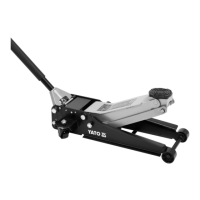

 To Next Page
 General