Need help?
Do you have a question about the YATO YT-24800 and is the answer not in the manual?
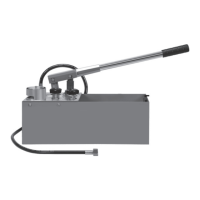
The YATO YT-24800 is a hand pressure test pump designed for checking the tightness and strength of various water-supplied systems and receivers. This includes solar heating systems that operate with a water-glycol solution.
Installation: The pump is assembled by screwing the handle into its holder. The rear wall of the pump features a rotating hook, which is used to fix the handle in the lower position. Keeping the pump handle in this lower position provides better protection for the pump's piston.
Safety Requirements: Before commencing pressure tests, it is crucial to read the test procedure outlined in the documentation accompanying the receiver or system. Incorrect execution of the test procedure can lead to damage to both the tested device and the pump itself. The manufacturer disclaims responsibility for any damage resulting from improper use of the pump.
During the test procedure, personal protective equipment must be worn. This includes safety glasses, protective clothing with long sleeves and legs, protective footwear with anti-slip soles, and protective gloves. Pressure testing carries the risk of the tested device unsealing, potentially ejecting high-pressure water jets. Direct contact of unprotected body parts with such a jet can cause skin perforation. Spilled water can also create a slipping hazard, leading to injuries. The pump is designed to operate with water or a water-glycol solution used in solar heating systems. It is strictly forbidden to use the pump with any other liquid.
Test Procedure:
Draining and Drying: Empty the pump's water tank. Close the V2 valve and begin pumping to remove any residual water from the pump's system and hose. Dry any remaining water with a soft cloth.
Lubrication: The pump piston, which is connected to the handle, should be periodically lubricated with water-resistant grease. This prevents the piston from rusting.
Storage: Store the pump in shaded, well-ventilated rooms. Protect it from dust, dirt, and other contaminants.
Cleaning the Tank: Before refilling the pump with water, thoroughly clean the inside of the tank. Contaminants from the tank that enter the tested system can cause damage.
 General
| Brand | YATO |
|---|---|
| Model | YT-24800 |
| Category | Water Pump |
| Language | English |

 To Next Page