
 Need help?
Do you have a question about the Zabel PL-SE-13T and is the answer not in the manual?
Explains the safety alert symbol and signal words (DANGER, WARNING, CAUTION) for potential hazards.
Lists essential safety rules for pump installation and operation, covering codes, venting, and hazardous locations.
Warns about electrical shock risks during installation and handling, emphasizing cord safety.
Details pipe sizing for flow rates, check valve installation, and anti-airlock hole drilling.
Provides safety warnings and instructions for electrical connections, avoiding splices and extension cords.
Advises against running the pump dry and explains the function of the automatic overload protector.
Warns about hazardous voltage during service and improper lifting by the power cord.
Provides steps to diagnose and fix issues when the pump fails to operate.
Lists common causes and solutions for a pump not emptying the sump effectively.
Offers guidance for troubleshooting a pump that continuously runs and does not shut off.
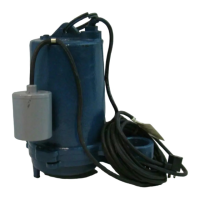
The provided document is an installation and operation manual for Zabel Submersible Sewage and Effluent Pumps, including models PL-SE-13T, PL-SU-13T, PL-EC3120T, PL-SE-41T, PL-SE-12T, PL-SC-550T, and PL-SC-650T.
These pumps are designed for handling sewage and effluent, indicating their use in wastewater management systems. The manual emphasizes safety throughout, starting with a prominent "SAFETY INFORMATION" section that uses the safety alert symbol and signal words like DANGER, WARNING, and CAUTION to highlight potential hazards. Users are instructed to read and follow all safety rules carefully to prevent serious bodily injury, death, or major property damage. Compliance with local codes is also stressed, particularly for venting sewage or septic tanks and avoiding installation in hazardous locations as classified by the National Electrical Code or Canadian Electrical Code.
A critical safety warning concerns hazardous voltage, which can cause shock, burns, or death, especially since the pump operates in water. Specific precautions are outlined for servicing the pump, including disconnecting power before unplugging, exercising extreme care when changing fuses (avoiding standing in water or touching fuse sockets), and never modifying the cord and plug. If wiring to a system control, the pump's ground lead must be connected to the system ground. The manual explicitly warns against running the pump dry, as this can lead to overheating, potential burns, and will void the warranty. It also notes that the pump normally runs hot and requires a 20-minute cooling period after shutdown before handling. The pumps are permanently lubricated, eliminating the need for oiling or greasing during normal operation.
For installation, the manual provides detailed instructions, starting with a "NOTICE" to install the pump on a hard, level surface like cement or asphalt, never directly on earth, clay, or gravel. A "WARNING" about the risk of electrical shock, burns, or death reiterates that the pump should not be lifted by its power cord.
Piping instructions specify that the discharge pipe must not be smaller than the pump discharge and, for effluent systems, must be capable of handling semi-solids of at least 3/4" diameter. The flow rate in the discharge pipe must be sufficient to keep solids in suspension, with minimum flow requirements of 2 feet per second. A table provides recommended pipe sizes for various flow rates: 1-1/2" for 12 GPM, 2" for 21 GPM, 2-1/2" for 30 GPM, and 3" for 48 GPM. In effluent systems, a 1-1/2" check valve is required in the pump discharge to prevent backflow, and it must be a free-flow valve capable of passing solids. Proper check valve installation according to local codes is essential. For optimal performance with solids, the check valve should not be installed with the discharge more than 45° above the horizontal and never in a vertical position, as solids could settle and prevent opening. To prevent air-locking, a 3/16" hole should be drilled in the discharge pipe 1-2" above the pump discharge connection (but below the check valve), though models P-SU-13T and P-SE-13T have built-in anti-airlock holes, making drilling unnecessary for them.
Electrical installation instructions are equally stringent, with a "WARNING" about hazardous voltage. Users are explicitly told not to splice the electrical power cord, submerge the cord plug, or use extension cords, which are identified as fire hazards that can also reduce voltage and damage the motor. Handling or servicing the pump while it is connected to the power supply is forbidden. The grounding prong must not be removed from the plug, nor should the plug be modified on cord-connected models, as the power cord is a three-wire conductor with a 3-prong grounded plug designed for protection against electrical shock. The pump must be plugged into an individual branch circuit with a 3-wire, grounded, grounding-type receptacle, and wiring must comply with NEC or CEC and local codes. For automatic operation, the pump should be plugged or wired into an automatic float switch or duplex controller. Plugging it directly into an electrical outlet will cause it to run continuously. The manual also includes a table for individual branch circuit requirements based on pump model, HP, voltage/phase, and max load amps, emphasizing that power supply information on the pump motor nameplate must match the incoming power supply.
The "Operation" section includes a "NOTICE" against running the pump dry, as this voids the warranty and can damage the pump. An automatic overload protector in the motor is designed to prevent burnout from overheating or overloading, resetting automatically once the motor cools down. Frequent tripping of the overload protector warrants investigation for causes like a stuck impeller, wrong/low voltage, or electrical failure in the motor, in which case a competent repairman should be consulted.
"SERVICE – General" reiterates the "WARNING" about hazardous voltage, shock, burns, or death, instructing users to always disconnect electrical power to the pump and control switch before removing the pump from the basin. After removing the basin cover and discharge piping, the pump can be lifted out. A "WARNING" about the risk of cord damage and electrical shock explicitly states not to lift the pump by its power cord, as this can damage the cord and connections, expose bare wires, and void the warranty. Instead, the lifting ring or handle on top of the pump should be used for all lifting and lowering operations.
The "TROUBLES-REMEDIES" section provides a systematic guide for troubleshooting common issues. A "WARNING" about sudden starts is included, advising users that if power is on when the thermal overload resets, the pump may start without warning, posing a risk of electrical shock or injury from the impeller. Therefore, power must be disconnected before servicing.
If the pump fails to operate, users should check if the power cord is securely plugged in or wired, if electrical power is available, if the liquid level is high enough to activate the switch or controller, if the 3/16" vent hole in the discharge pipe is clear, and if there's any blockage in the pump inlet, impeller, check valve, or discharge pipe. If the thermal overload has tripped, the pump should be tested; if it starts and stops immediately, power should be disconnected for 30 minutes to allow cooling, then reconnected, and the cause of overheating/overloading investigated.
If the pump fails to empty the sump, checks include ensuring all valves in the discharge pipe are fully open, cleaning the discharge pipe and check valve, checking for blockage in the pump inlet or impeller, and considering if a higher capacity pump is required if the pump is undersized.
If the pump will not shut off, users should check the automatic floats of the switch or controller for proper operation and location, referring to the installation instructions for the switch/controller. If the pump remains inoperative or malfunctions, a local serviceman should be consulted.
Finally, the manual includes a "LIMITED WARRANTY" section, stating that effluent pumps are warranted against defects in material and workmanship for one year from the original installation date, not to exceed 18 months from the date of manufacture. Zabel's liability is limited to repair or replacement of the part, and the warranty is void if the product has been improperly modified, applied, installed, misused, or abused. The warranty explicitly disclaims any other express or implied warranties, including merchantability or fitness for a specific purpose.
 General
| Voltage | 230V |
|---|---|
| Maximum head | 13 m |
| Outlet diameter | 1 inch |
| Frequency | 50 Hz |
| Maximum flow rate | 2.5 m³/h |
| Max Flow Rate | 2.5 m³/h |

 To Next Page