
 Need help?
Do you have a question about the Zamboni 450 ELECTRIC and is the answer not in the manual?
Explains symbols indicating personal risk of injury or death.
Explains symbols indicating potential damage to the machine.
Introduces the safety section and explains warning labels used on the machine.
Introduces the operation section covering controls and basic operating techniques.
Emphasizes the importance of periodic maintenance for safety and reliability.
Explains specific safety signs on the machine and their importance.
Lists precautions to avoid crushing or cutting hazards during operation.
Details fire and explosion risks, particularly concerning oils and flammable materials.
Safety precautions for handling, charging, and servicing the machine's batteries.
Safety guidelines for storing and handling flammable lubricants and oily materials.
Procedures for inspecting and maintaining lines, tubes, and hoses to prevent leaks.
General rules and precautions for the safe operation of the ice resurfacer.
Pre-operation checks and adjustments for safe use before driving the machine.
Safe procedures for getting on and off the machine, including during wet conditions.
General operational guidelines for safe use, including traffic rules and clearances.
Safe procedures for parking the machine, including securing it on inclines.
Importance of walk-around inspection for safety and maximum service life.
Safe procedures for lifting components and handling hot parts during maintenance.
Guidelines for repairs, welding, and line maintenance to ensure safety.
Precautions for operating in very cold temperatures and their impact on the battery.
Step-by-step instructions for starting the machine's motor and ensuring proper conditions.
Step-by-step instructions for safely stopping the machine's motor.
Procedure for connecting and charging the machine's battery pack.
Guidelines for parking and storing the machine when not in use.
Precautions and limitations for operating the machine on highways.
Defines adequate ventilation required for a healthy rink environment.
Program for ensuring healthy rink air quality through regular monitoring.
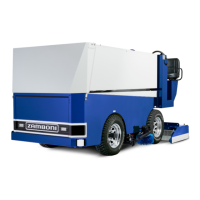
Identifies components visible from the front of the machine.
Identifies components visible from the rear of the machine.
Details the instrument panel and controls on the operator's platform.
Illustrates and labels the motor and pump assembly.
Shows the location and purpose of the snow tank safety stand.
Details the internal components of the battery pack.
Illustrates and labels the GEN 1 battery charger unit.
Illustrates and labels the GEN 2 battery charger unit.
Illustrates and labels the GEN 3 battery charger unit.
Shows the overall operator area, including the steering wheel and controls.
Details the multi-function battery display and other indicators.
Lists and describes the function of various dash switches for machine operations.
General guidance on operating the ice resurfacer.
Pre-driving safety checks and considerations for safe operation.
Explains the primary driving controls: steering wheel and foot pedals.
Explains the function and operation of the hydrostatic transmission system.
Details how motor speed is controlled and its importance for performance.
Explains how machine speed is determined by motor RPM and pedal input.
Describes the function and operation of the accelerator foot pedal.
Illustrates motion controls including speed selector and brake pedals.
Outlines the simultaneous processes required for quality ice resurfacing.
Guidance on preparing for and performing the resurfacing process.
Checks and preparations required before going onto the ice.
Operations that can be performed while the machine is on the ice surface.
Procedure for shaving or cutting the ice surface during resurfacing.
Steps to properly lower the conditioner onto the ice surface.
Procedure to start the auger system for collecting snow.
Instructions for using the optional reverse auger function for clearing debris.
Diagrams illustrating the process of going onto and leaving the ice.
How to operate the snow breaker for clearing snow buildup in the auger opening.
Procedure for using the wash water system to clean the ice surface.
Using hot water for the best ice surface quality during resurfacing.
Operation of the optional board brush for cleaning ice edges.
Procedure to remove excess water from the ice surface using the wash system.
Procedure for removing slush (ice and water mix) from the ice surface.
Steps for safely leaving the ice after completing a resurfacing.
Operations performed after leaving the ice surface, such as dumping snow.
Shows a diagram illustrating a good resurfacing pattern.
Guidance on making smooth turns without over-engaging the steering relief valve.
How to avoid excessive loads on the motor and battery pack.
How to connect the wash water tank to the ice making water tank for added capacity.
Steps and precautions for safely changing the machine's cutting blade.
Guidance on using a new blade, including hole placement and initial setup.
Guidance on when to use rear mounting holes and when to discard a used blade.
Explains the side adjustment screws for leveling the blade.
How the center hand wheel controls blade angle and depth of cut.
Details the system for adjusting blade angle and depth for optimal performance.
Procedure for tightening bolts when attaching the cutting blade.
Step-by-step guide to setting the blade angle and depth of cut.
Location and use of the decal for setting the correct blade angle.
Explains the purpose and adjustment procedure for down pressure springs.
How to use the edger attachment to clean ice edges.
Instructions for mounting and operating the edger attachment.
Location and purpose of the emergency hand pump for manual operation.
Steps to operate the hand pump for raising components when the engine fails.
How to use the bypass valve for moving the machine without engine power.
Explains the auger hydraulic stop valve and its function based on snow tank position.
How to use and reset the emergency stop button for immediate shutdown.
Explains diagnostic systems and alerts displayed on the dash for operation issues.
Guidelines for storing the machine in a suitable heated room above freezing.
Recommendations for daily indoor storage, including safety stand and charging.
Specific tips for storing the machine during summer, including lubrication and tires.
 General
| Brand | Zamboni |
|---|---|
| Model | 450 ELECTRIC |
| Category | Automobile |
| Language | English |

 To Next Page