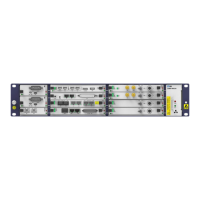
The ZXMW NR8950 is a digital microwave transmission system designed for robust and efficient wireless communication. This hardware installation guide outlines the procedures for correctly and safely deploying the system, ensuring compliance with specifications. It is intended for equipment installation engineers, installation supervision engineers, and maintenance engineers.
Function Description
The ZXMW NR8950 system facilitates digital microwave transmission, enabling high-capacity data transfer over wireless links. It supports various installation configurations, including buckle installation and split installation, and can be deployed with or without a combiner depending on the specific network requirements and the number of ZXMW NR8950 units and antennas involved. The system also supports different power supply scenarios: direct power through a DC power cable via a DC lightning protection module (PIMDC), Power over Ethernet (PoE) via a PSE module and Ethernet cable, and AC power supply using an AC-DC converter.
Installation Modes and Configurations:
The ZXMW NR8950 offers flexible installation modes to cater to diverse deployment scenarios:
-
Buckle Installation:
- 1+0 Buckle Installation (Single-Polarization): This configuration involves a single ZXMW NR8950 unit directly buckled to an antenna, providing a basic point-to-point link.
- 1+1 Buckle Installation (Single-Polarization): This setup uses two ZXMW NR8950 units with a combiner, buckled to an antenna, offering redundancy for enhanced reliability.
- 2+0 Buckle Installation (Dual-Polarization): This configuration involves two ZXMW NR8950 units with a combiner, buckled to an antenna, enabling dual-polarized transmission for increased capacity.
-
Separate Installation:
- 1+0 Separate Installation (Single-Polarization): A single ZXMW NR8950 unit is installed separately from the antenna, connected via a waveguide or cable.
- 1+1 Separate Installation (Single-Polarization): Two ZXMW NR8950 units are installed separately with a combiner, connected to an antenna, providing redundancy.
- 2+0 Separate Installation (Dual-Polarization): Two ZXMW NR8950 units are installed separately with a combiner, connected to an antenna, supporting dual-polarized transmission.
- 2+2 Separate Installation (Dual-Polarization): This advanced configuration involves four ZXMW NR8950 units with a combiner, installed separately and connected to an antenna, offering high capacity and redundancy with dual polarization.
The system also supports XPIC (Cross-Polarization Interference Cancellation) cross-connection cables as an optional component for specific configurations like 2+2 XPIC HSB protection and 2+2 XPIC SD protection, which are crucial for mitigating interference in dual-polarized systems.
Important Technical Specifications
While specific numerical values for technical specifications are not provided in the given excerpts, the document highlights several key aspects:
- Power Supply:
- DC Power Cable: Direct connection to DC power supply equipment via a DC lightning protection module (PIMDC).
- PoE: Power over Ethernet, connecting to a PSE module via an Ethernet cable (GbE1&PoE interface).
- AC Power Supply: Utilizes an AC-DC power supply equipment to convert AC voltage (90 V AC-290 V AC) to DC voltage (-54 V DC).
- Connectivity:
- Ethernet Cable: Used for data transmission and PoE power supply.
- Optical Fiber: Supported for data transmission, particularly in commissioning scenarios with a photoelectric converter.
- XPIC Cross-Connect Cables: Optional for specific XPIC protection configurations.
- Grounding: The system requires protective grounding cables to ensure safety and prevent damage from electrical surges.
- Antenna: The system integrates with an antenna, and its polarization mode (vertical or horizontal) must match that of the ZXMW NR8950. Antenna adjustment procedures are detailed, including polarization mode, azimuth, and pitch angle adjustments.
Usage Features
The ZXMW NR8950 is designed for straightforward deployment and operation, with features that simplify installation and ensure reliable performance:
- Flexible Installation: Supports both buckle and separate installation methods, allowing for adaptability to various site conditions and infrastructure.
- Scalable Configurations: Offers a range of configurations from 1+0 to 2+2, enabling operators to scale capacity and redundancy based on network demands.
- Polarization Adjustment: Provides a mechanism to adjust the polarization mode (vertical or horizontal) of the ZXMW NR8950 to match the antenna, which is critical for optimal signal transmission and reception. This involves loosening guide screws, removing a guide pin, rotating it 90 degrees, and re-inserting and tightening the screws.
- Integrated Lightning Protection: The use of a DC lightning protection module (PIMDC) in DC power scenarios helps protect the equipment from lightning strikes and power surges.
- PoE Capability: Simplifies cabling and installation in scenarios where Power over Ethernet is utilized, reducing the need for separate power lines.
- Comprehensive Cabling Options: Supports various cable types including power cables, Ethernet cables, optical fibers, and specialized XPIC cross-connect cables, catering to different data and power transmission needs.
Maintenance Features
The manual emphasizes several aspects that contribute to the maintainability and longevity of the ZXMW NR8950 system:
- Clear Installation Guidelines: Detailed step-by-step instructions for hardware installation, cable installation, and post-installation checks ensure that the system is set up correctly, reducing the likelihood of errors and subsequent maintenance issues.
- Safety Precautions: Strict adherence to safety guidelines, including warnings against electric shocks, falling objects, and laser beam eye injury, protects personnel and equipment during installation and maintenance.
- Authorized Replacement Policy: The requirement for authorization before replacing any part or device prevents unauthorized modifications that could lead to unexpected dangers or system malfunctions, ensuring that only qualified personnel perform critical tasks.
- Troubleshooting Support: Users are encouraged to contact ZTE Corporation for any questions, indicating a support structure for troubleshooting and maintenance assistance.
- Regular Checks: The inclusion of "Installation Check" and "Cable Installation Check" chapters ensures that all components are properly installed and connected before power-on, minimizing initial setup problems.
- Documentation: The comprehensive manual serves as a valuable resource for maintenance personnel, providing detailed information on the system's components, installation procedures, and operational considerations.
- Component Identification: The manual provides clear illustrations and descriptions of tools and instruments required for installation, facilitating efficient maintenance operations. For example, it lists tools like spanners, wire strippers, crimpers, hex wrenches, screwdrivers, pliers, paper knives, crowbars, telescopes, pulleys, hand files, marking pens, waterproof cement, hoisting cables, tape, multimeters, grounding resistance testers, and GPS devices.
The ZXMW NR8950 is designed as a reliable and adaptable solution for digital microwave transmission, with a strong emphasis on correct installation and safety to ensure optimal performance and ease of maintenance.

 Need help?
 General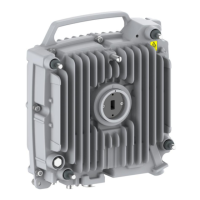

 To Next Page