
 Need help?
Do you have a question about the a/d/s/ P440 and is the answer not in the manual?
Advises on safe listening levels to prevent permanent hearing damage from sustained loud music.
Describes the power supply's advantages: fast overload recovery, low output impedance, and voltage stability.
Details the ability to use an accessory for dashboard-mounted subwoofer or rear channel level control.
Highlights high-current speaker and power connectors that simplify installation.
Explains the built-in high-pass, low-pass, and band-pass functions that eliminate external crossovers.
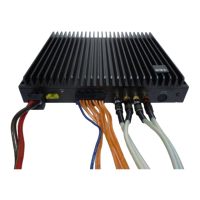
Notes the low profile, high efficiency heatsink design for minimal size and flexible mounting.
Allows connection to various source units, from factory OEM radios to low output preamps.
Each channel pair can be used Stereo, Mono, or Bridged, enabling additional mono speakers.
Organizes all signal processing controls on one side for convenient system adjustment.
Covers essential safety precautions for installation and operation, including electrical safety and tool use.
Details impedance requirements for stereo, bridged, and subwoofer use, and potential issues with lower impedances.
Explains connecting to OEM or aftermarket source units and the benefits of the PowerPlate's input stage.
Configuration for using the P440 in four-channel mode with front and rear full-range speakers.
Configuration for 3-channel mode with high-pass main speakers and low-pass subwoofer.
Configuration for 4-channel mode with 2-channel high-pass and 2-channel low-pass/band-pass.
Configuration for 2-channel bridged mode, commonly used for subwoofers.
Configuration for front high-pass and rear tri-mode operation with full-range rear channels.
Setup using two P440s for bi-amping midranges/tweeters and driving rear speakers/subwoofers.
Discusses under-seat mounting possibilities and the need for 1" clearance for airflow.
Covers trunk mounting, recommending vertical fin orientation or upward horizontal fin orientation for cooling.
Strongly advises against engine compartment mounting due to harsh environments; voids warranty.
Step-by-step guide for installing the amplifier, from initial disconnection to final checks.
Details on connecting the power wire, including fuse placement and ground wire attachment.
Illustrates how to connect speakers for stereo configurations, including impedance notes.
Explains the 2-channel/4-channel input switch for routing signals between channels.
Describes independent level controls for channels 1/2 and 3/4, and their interaction with crossover settings.
Explains the three-position switches for stereo, summed-bridged, and bridged-mono output configurations.
Details how to connect and use the AC502 remote level control for adjusting specific channels.
Explains the three settings for crossover 1/2: bypassed, high-pass variable, and routed from ch 3/4.
Details the high-pass and low-pass crossover controls, infinitely adjustable for creating band-pass filters.
Provides reference frequency points and recommendations for tuning crossover settings for optimal performance.
Lists common symptoms like no output or distorted output and their probable causes and solutions.
Details power output, distortion, frequency response, signal-to-noise ratio, damping factor, and input parameters.
Outlines specifications for the high-pass and high-pass/low-pass crossover sections.
Provides general dimensions and notes regarding FTC rated power output and crossover adjustment rates.
Details requirements for warranty service, including keeping the sales receipt and proper shipping.
Explains the 1-year (3-year if installed by dealer) warranty, exclusions, and legal rights.
Lists conditions that void the warranty, such as misuse, accident, or unauthorized service.
 General
| Channels | 4 |
|---|---|
| RMS Power at 4 Ohms | 40W x 4 |
| Frequency Response | 20Hz - 20kHz |
| THD at Rated Power | 0.05% |
| Signal to Noise Ratio | 100dB |

 To Next Page
