Hardware and physical integration guideline A1 PCR sensors
Page 22 of 30
© 2024 by Acconeer – All rights reserved 2024-02-07
𝑥
=𝑥
+ 𝑎
1 +
𝑡
𝑏
𝑦
=𝑡
,𝑡∈
−
𝐷
2
,
𝐷
2
4.1.3 Plano-convex lens
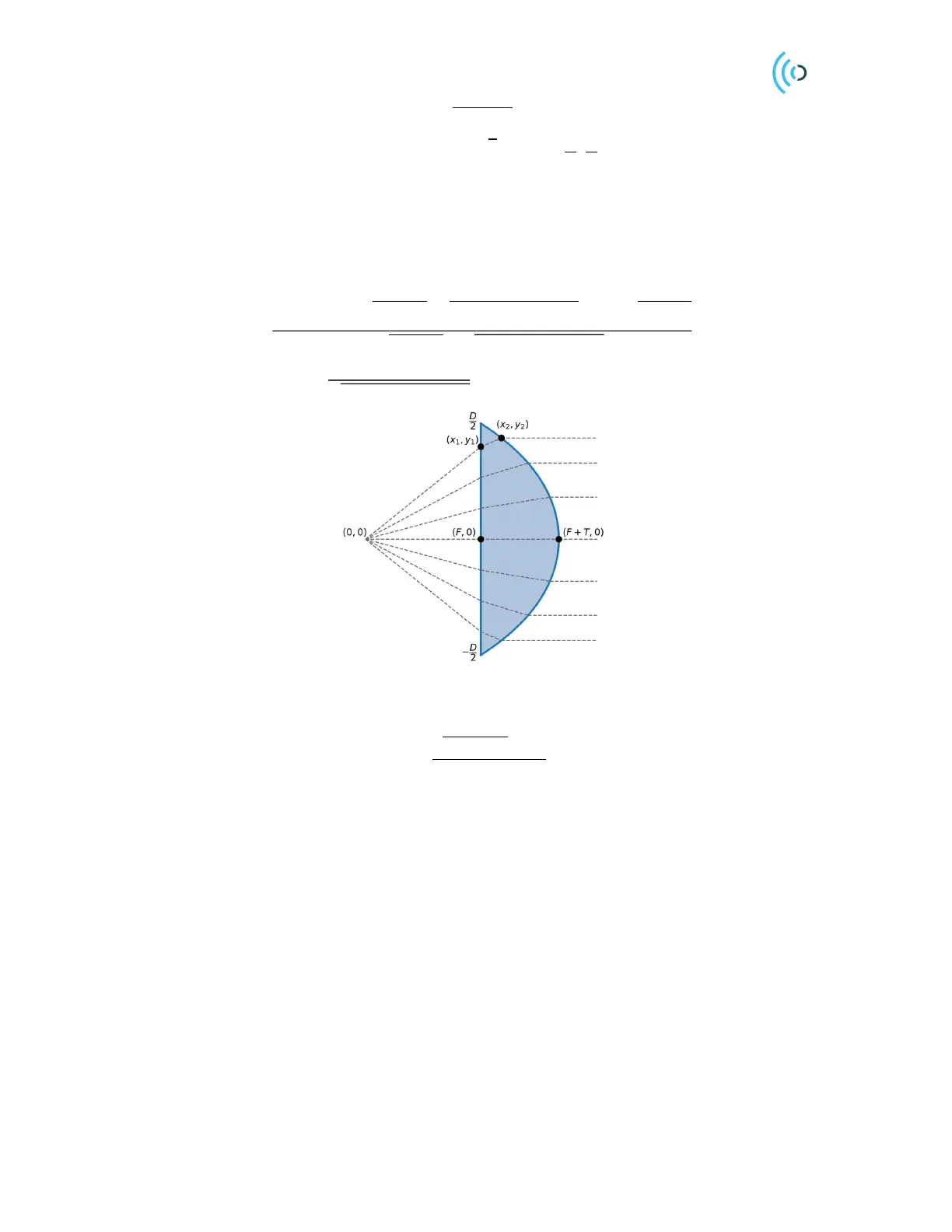
Constraining the inner surface to planar results in a plano-convex lens, see Figure 19. We then have
𝑥
=𝐹 and carrying out the algebra results in the following parametric solution for the outer surface:
𝑛
𝐹
+ 𝑦
−
(
𝑛
− 1
)
𝑦
+ 𝑛
𝐹
𝑥
− 𝐹
(9)
Figure 19. Plano-convex lens ray model.
The central thickness is given by
𝑇=
√
4𝐹
+ 𝐷
− 2𝐹
2(𝑛 −1)
.
Contrary to the hyperboloidal lens, we now have refraction at both the inner and the outer surfaces.
The lens profile given in Eq. (9) do not resemble any known function and we therefore simply call this
lens a plano-convex lens.


 To Next Page
 Loading...