
 Need help?
Do you have a question about the ACR Electronics MS-2000(M) and is the answer not in the manual?
Explains the light's intended use for distress signaling in emergency situations.
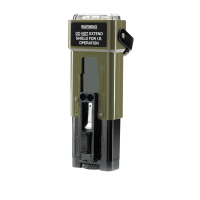
Details the light's features, design, and components like the xenon lamp and filters.
Describes how the strobe light's internal circuitry operates to produce flashes.
Step-by-step guide to turn the strobe light ON and OFF using the slide switch.
Instructions on how to position the filter for white light output.
Procedure for activating the Infrared (IR) light function.
Guide to engage the blue filter for directional signaling.
Procedure to check for unintended light emissions in IR mode.
One-time test for new units to ensure sustained operation capability.
Test for ongoing operational checks, can be manual or automated.
Lists required tools for testing, like the TS-23/A Strobe Light Tester.
Outlines that maintenance is limited to testing and visual inspections due to sealed design.
Specific visual checks for the light and batteries to ensure proper condition.
Lists available replacement parts such as flashguard and battery door assemblies.
Step-by-step guides for replacing components like the flashguard or battery door.
Covers the product's warranty period and conditions for repair or replacement.
Defines the expected service life and service limitations for the product.
Contains information on manual updates, copyright, and product improvement notices.
 General
| Type | Distress Marker Light |
|---|---|
| Light Source | LED |
| Light Color | White |
| Flash Rate | 50-70 flashes per minute |
| Visibility Range | Up to 3 miles |
| Waterproof | Yes |
| Activation | Manual |
| Power Source | Battery |
| Operating Life | >8 hours |
| Operating Temperature | -40°C to +60°C |
| Compliance | USCG, SOLAS |
| Battery Type | 2 x AA alkaline batteries |

 To Next Page