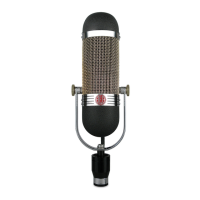
Because the N22 has a bidirectional pattern, it has nulls at 90° / 270°
from the principal (front) axis. Projected in three dimensions, these nulls
produce a “plane of rejection” to the sides of the microphone that can
be used effectively to reduce leakage. Simply arrange the musicians
so that nearby instruments are placed in the “null” of their neighbor’s
microphone, and vice versa. Although this does not entirely eliminate the
need for gobos, it can significantly reduce their number.
Keep in mind that a certain degree of bleed doesn’t necessarily have
to be bad. For some styles and genres it can in fact be beneficial to
embrace a little bit of bleed in order to create cohesive and natural
sounding recordings. The important thing to listen for is whether or
not other instruments that bleed into a specific instrument microphone
still sound natural. You will generally find that well-designed ribbon
microphones like the N22 capture a natural off-axis sound, which means
that bleed from other instruments can contribute to the overall sound in
a pleasing way.
Proximity Effect
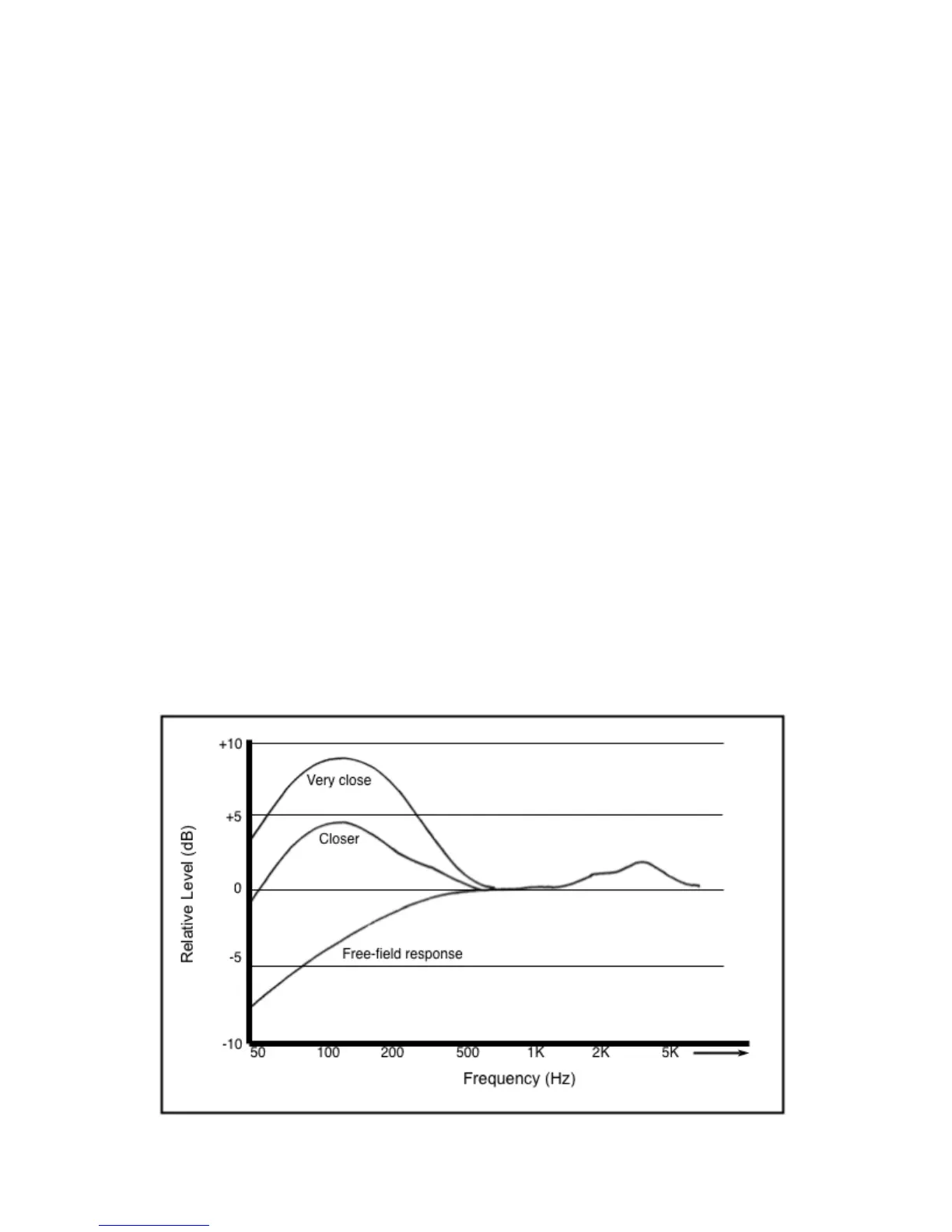
Proximity effect is a characteristic of all directional microphones; it is a
rising low-frequency response at closer working distances. While this
can be used to good effect, particularly with male voices to give them
an enhanced richness and depth, the potential tradeoff is reduced
articulation or clarity that can result from the masking effect on the
treble due to “excessive” bass response.
6


 To Next Page