1919
English
TECHNICAL DATA
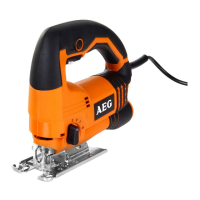
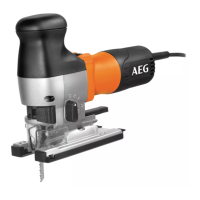
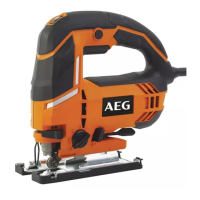
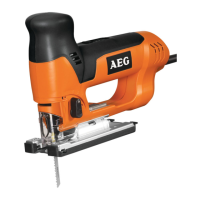
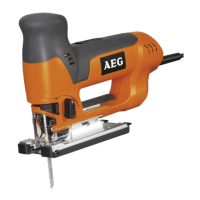
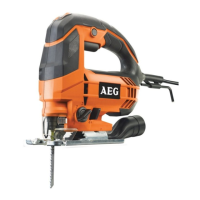
Jig Saw
STEP 100 X STEP 100 STEP 80
Production code 4522 83 06...
4601 63 05 ...
...000001-999999
4522 90 06...
...000001-999999
4525 91 06...
...000001-999999
Rated input 700 W 700 W 700 W
Stroke rate under no-load 1000 - 3200 min
-1
1000 - 3200 min
-1
1000 - 3200 min
-1
Lengths of stroke 20 mm 20 mm 20 mm
Bevel cuts up to 45 ° 45 ° 45 °
Cutting depth max. in
Wood 100 mm 100 mm 80 mm
Steel 10 mm 10 mm 10 mm
Aluminium 20 mm 20 mm 20 mm
Weight according EPTA-Procedure 01/2014 2,3 kg 2,2 kg 2,2 kg
Noise information
Measured values determined according to EN 62841. Typically, the A-weighted noise levels of the tool are
Sound pressure level (Uncertainty K=5dB(A))
Sound power level (Uncertainty K=5dB(A))
Wear ear protectors!
88,6 dB(A)
99,6 dB(A)
88,6 dB(A)
99,6 dB(A)
88,6 dB(A)
99,6 dB(A)
Vibration information
Vibration total values (triaxial vector sum) determined according to EN 62841
Cutting boards with sawblade HCS, dimension 100 x 8,0 x 1,3 mm and tooth
pitch 4,2 mm
Vibration emission value a
h, B
Uncertainty K=
8,71 m/s
2
1,5 m/s
2
8,71 m/s
2
1,5 m/s
2
8,71 m/s
2
1,5 m/s
2
Cutting sheet metal with sawblade BIM, dimension 75 x 8,0 x 1,0 mm and
tooth pitch 2,0 mm
Vibration emission value a
h, M
Uncertainty K=
7,01 m/s
2
1,5 m/s
2
7,01 m/s
2
1,5 m/s
2
7,01 m/s
2
1,5 m/s
2
WARNING!
The vibration emission level given in this information sheet has been measured in accordance with a standardised test given in EN 62841
and may be used to compare one tool with another. It may be used for a preliminary assessment of exposure.
The declared vibration emission level represents the main applications of the tool. However if the tool is used for dierent applications,
with dierent accessories or poorly maintained, the vibration emission may dier. This may signicantly increase the exposure level over
the total working period.
An estimation of the level of exposure to vibration should also take into account the times when the tool is switched o or when it is
running but not actually doing the job. This may signicantly reduce the exposure level over the total working period.
Identify additional safety measures to protect the operator from the eects of vibration such as maintain the tool and the accessories,
keep the hands warm, organisation of work patterns.
WARNING Read all safety warnings, instructions,
illustrations and specications provided with this power tool.
Failure to follow all instructions listed below may result in electric
shock, re and/or serious injury.
Save all warnings and instructions for future reference.
JIG SAW SAFETY WARNINGS
Hold the power tool by insulated gripping surfaces, when
performing an operation where the cutting accessory may
contact hidden wiring or its own cord. Cutting accessory con-
tacting a “live” wire may make exposed metal parts of the power
tool “live” and could give the operator an electric shock.
Use clamps or another practical way to secure and support
the workpiece to a stable platform. Holding the work by hand
or against your body leaves it unstable and may lead to loss of
control.
Wear ear protectors! Exposure to noise can cause hearing loss.
Additional Safety and Working Instructions
Use protective equipment. Always wear safety glasses when
working with the machine. The use of protective clothing is recom-
mended, such as dust mask, protective gloves, sturdy non-slip
footwear, helmet and ear defenders.
The dust produced when using this tool may be harmful to health.
Do not inhale the dust. Use a dust absorption system and wear a
suitable dust protection mask. Remove deposited dust thoroughly,
e.g. with a vacuum cleaner.
Do not machine any materials that present a danger to health (e.g.
asbestos).
Switch the device o immediately if the insertion tool stalls! Do
not switch the device on again while the insertion tool is stalled,
as doing so could trigger a sudden recoil with a high reactive force.
GB


 To Next Page