EasyManua.ls Logo

AEROPRAKT A32-103-POH - User Manual

Default Icon
62 pages
Print Icon
To Next Page IconTo Next Page
Loading...
Aeroprakt Ltd.
24, Polyova str., Kyiv, Ukraine
Tel: 0038 044 496-77-21
Fax: 0038 044 496-77-31
e-mail: aeroprakt.kiev@gmail.com
www.aeroprakt.kiev.ua
AEROPRAKT-32
Pilot Operating Handbook
A32-103-POH
Airplane Model: AEROPRAKT-32 (A-32)
Airplane Registration Number:
Airplane Serial Number: 103
Date of issue: XX.XX.20XX
Approved by: Yuriy Yakovlyev
Position: Chief designer
Date of approval: XX.XX.20XX
This manual must be carried in the airplane at all times.
This airplane is to be operated in compliance with information and limitations contained herein.

Table of Contents

Question and Answer IconNeed help?

Do you have a question about the AEROPRAKT A32-103-POH and is the answer not in the manual?

Overview

This document is the Pilot Operating Handbook for the AEROPRAKT-32 (A-32) aircraft, model A32-103-POH. It provides essential information for the safe and efficient operation, maintenance, and training related to this light sport airplane.

Function Description:

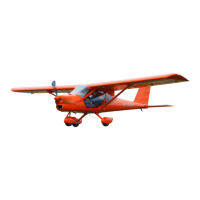
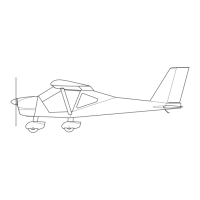
The AEROPRAKT-32 (A-32) is a two-seat, high-wing, strut-braced monoplane with a "classic" aerodynamic layout. It features a closed cockpit, non-retractable landing gear with a steerable nose wheel, and is powered by a Rotax-912 engine with a tractor three-blade on-ground adjustable pitch propeller. The aircraft is approved for flying under Visual Flight Rules (VFR) in simple meteorological conditions and is certified in the Light Sport Airplane (LSA) category. The handbook details normal and emergency operating procedures, performance data, weight and balance information, and descriptions of the airplane's systems.

Important Technical Specifications:

  • Dimensions:
    • Wing span: 9.45 m (31 ft)
    • Wing area: 12.83 m² (138 sq ft)
    • Length: 6.27 m (20 ft 7 in)
    • Height: 2.22 m (7 ft 3 in)
    • Wheel base: 1.27 m (4 ft 2 in)
    • Wheel track: 1.75 m (5 ft 9 in)
    • Minimum turn radius: ~2 m (7 ft)
  • Weight:
    • Gross weight (Maximum Take-Off Weight, MTOW): 600 kg (1320 lb)
  • Performance (at 1000 ft, ISA conditions, MTOW):
    • Top speed at sea level: 215 km/h (116 kts)
    • Cruising speed (IAS) range: 100 km/h (54 kts) at 3500 RPM to 215 km/h (116 kts) at 5500 RPM
    • Range with full tanks (30 min. reserve), still air, 3700 RPM: 1307 km (706 nm)
    • Best angle of climb speed (Vx), IAS: 100 km/h (54 kts)
    • Best rate of climb speed (Vy), IAS: 120 km/h (65 kts)
    • Maximum rate of climb at Vx: 2.8 m/s (551 fpm)
    • Maximum rate of climb at Vy: 4.2 m/s (827 fpm)
    • Stalling speed at MTOW, flaps up (Vs), IAS: 60 km/h (32 kts)
    • Stalling speed at MTOW, full flaps (Vso), IAS: 50 km/h (27 kts)
  • Engine:
    • Manufacturer: BRP-Rotax GmbH&Co KG, Austria
    • Model: Rotax-912ULS (four-cylinder, four-stroke, carburetor, combined cooling)
    • Maximum engine power: 73.5 kW (100 hp) at 5800 RPM (5 minutes limit)
    • Max. continuous performance: 69 kW
    • Max. continuous speed: 5500 rpm
    • Idle speed: min. 1400 rpm
    • Oil pressure: 0.8 bar (12 psi) below 3500 RPM, 2.0 to 5.0 bar (27–73 psi) above 3500 RPM
    • Oil temperature: 50 °C (120 °F) min., 130 °C (266 °F) max.
    • Coolant temperature limit: max. 120 °C (248 °F)
    • Fuel pressure: 0.15 bar (2.2 psi) min., 0.5 bar (7.26 psi) max.
  • Fuel System:
    • Total fuel capacity (standard tanks): 90 l (23.8 US gal)
    • Usable fuel (standard tanks): 88 l (23.3 US gal)
    • Approved fuel types: unleaded mogas min. RON 95 (min. AKI 91) or avgas 100LL (ASTM D910)
  • Airspeed Limitations (IAS):
    • White arc (Vso to VFE): 50 - 147 km/h (27 - 79 kts)
    • Green arc (Vs to Vo): 60 - 151 km/h (32 - 81 kts)
    • Yellow arc (Vo to VNE): 151 - 240 km/h (81 - 130 kts)
    • Red line (VNE): 240 km/h (130 kts)
  • Maneuvering Load Factors (at 600 kg / 1320 lb gross weight):
    • Maximum positive limit load factor: +4.0
    • Maximum negative limit load factor: -2.0
  • Baggage Compartment:
    • Volume: 160 l (42 US gal)
    • Maximum weight: 30 kg (66 lb)

Usage Features:

  • Cockpit: Equipped with adjustable 4-position seats and 4-point harness belts. Doors are hinged on top, opening upward, and retained by pneumatic cylinders. Air scoops provide ventilation and de-misting.
  • Controls: Features hand-actuated stick for ailerons and elevator (with trim tab), and foot-actuated pedals for rudder and nose wheel. Engine RPM, choke, and carburetor heating are controlled from the central console.
  • Flaperons: The aircraft uses flaperons (drooping ailerons) that function as both ailerons and flaps. Flap extension has two positions: 1st position (10±1°) and 2nd position (20±1°).
  • Fuel Management: The fuel system includes two wing tanks with shut-off valves. Pilots must manage fuel levels and valve settings, especially when tanks are full or below 1/4 capacity, to prevent fuel transfer or starvation.
  • Emergency Procedures: Detailed checklists are provided for engine fire, engine failure during takeoff/in-flight, loss of engine power, emergency descent, alternator failure, overvoltage, inadvertent spin (prohibited intentionally), icing encounter, and loss of primary instruments or flight controls.
  • Normal Procedures: Covers preflight checks (entire airplane, power plant, landing gear, wings, empennage, cockpit), engine starting, taxiing, normal and short/soft field takeoff, climb, cruise, approach, normal and short/soft field landing, and balked landing.
  • Flight Training Supplement: Outlines a 5-hour flight training program covering preflight preparation, airfield traffic, circuit flights, balked landings, low-speed flight (stall recognition and recovery), high-speed flight (steep diving spiral recognition and recovery), short/soft field takeoff and landing, crosswind takeoff and landing, and flights with imitated engine failure.

Maintenance Features:

  • Manual Revisions: Any revisions to the handbook, except actual weighing data, must be recorded in the "Record of Manual Revisions" table. New or amended text is indicated by a black vertical line on the left margin.
  • Preflight Checks: Pilots are required to inspect the general condition of the airplane, ensuring no damage or maladjustments, and that all surfaces are clean of contaminants (rainwater, snow, frost, ice, dirt).
  • Servicing Fuel, Oil, and Coolant: Pilots must check levels during preflight. Only manufacturer-recommended grades of fuel, oil, and coolant should be used. Fuel must be filled using pumps or funnels with a fine mesh, as tank inlets lack filters. Fuel residue must be drained regularly.
  • Cleaning and Care: Regular cleaning is essential for efficient and safe operation. Washing should be done with mild agents and plenty of water. Gasoline, solvents, or aggressive liquids are prohibited, especially for cockpit glass. After washing, parts prone to corrosion (hinges, joints) should be cleaned and lubricated.
  • Disassembly and Assembly: Detailed instructions are provided for removing and assembling main components like wings, horizontal tail, propeller, and engine. Fasteners should be secured to prevent loss.
  • Weight and Balance: The handbook includes a Weight and Balance Chart and an Installed Equipment List. Any permanent modification or installation of equipment affecting weight and balance must be accounted for by revising these charts. The pilot in command is responsible for ensuring weight and balance remain within specified limits before every flight.
  • Engine Manual: A separate engine manual is supplied, and its instructions must be followed for safe and efficient engine operation and service.
  • Avionics and Special Instruments: Manuals for optional avionics and special engine instruments are provided, and their instructions must be followed.
  • Recovery System: If equipped, an operation manual for the parachute recovery system is supplied, and its instructions must be followed.
  • Floats: If equipped for water operation, a manual for floats is supplied, and its instructions must be followed.
  • Manufacturer Feedback: Owners are encouraged to maintain contact with the manufacturer and report any operational safety issues or changes in address/ownership rights to ensure continued operational safety.

AEROPRAKT A32-103-POH Specifications

General IconGeneral
BrandAEROPRAKT
ModelA32-103-POH
CategoryAircrafts
LanguageEnglish

Related product manuals