35
Electrical Supply Connection
Connect the appliance to the electrical supply (220-240V ~
50Hz) with the plug and lead, which are tted.
Connections to the mains supply should be in accordance
with local regulations.
n
DO NOT use plug adapter.
n
The appliance must be plugged into an earthed
socket.
n
Always make sure that the plug is accessible after
the appliance has been positioned.
If the electrical cable is damaged or worn, turn o the
refrigerator and consult an authorised agent for replacement.
n
The appliance is supplied with a standard 13 amp
3-pin mains plug tted with a 13-amp fuse. Should
the fuse require replacement, it must be replaced
with a fuse rated at 13 amp and approved to BS1362.
n
If the mains plug which is tted is unsuitable for
the socket outlet in your home or is removed for
any other reason, please contact an approved
electrician.
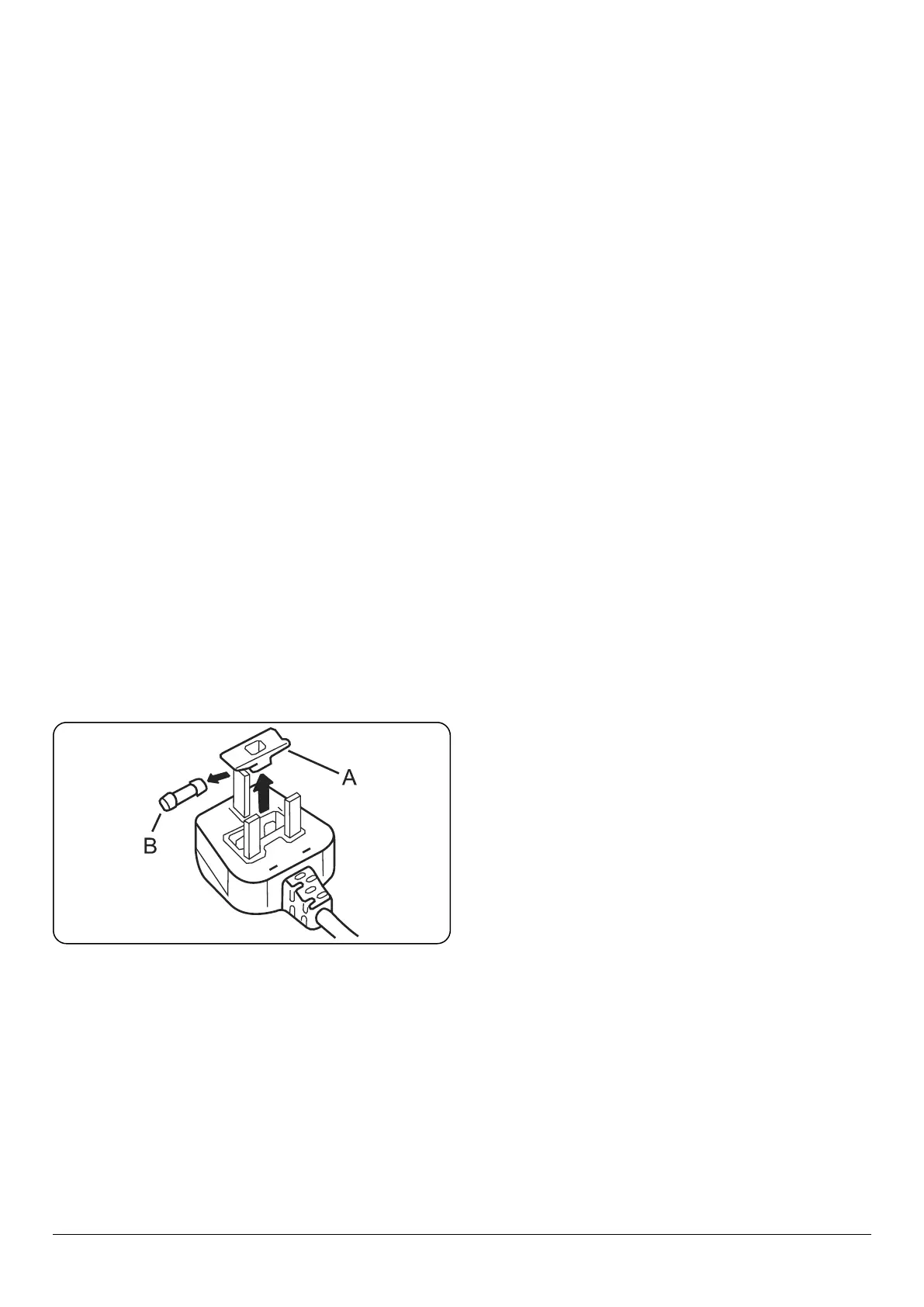
The mains lead of this appliance has been tted with a BS
1363A 13A fused plug. To change a fuse in this type of plug,
follow the steps below:
1. Remove the fuse cover and fuse.
2. Fit replacement 13A fuse, ASTA approved to BS 1362
type, into the fuse cover.
3. Replace fuse cover.
During Usage
• Do not connect your fridge freezer to the mains
electricity supply using an extension lead.
• Do not use damaged, torn or old plugs.
• Do not pull, bend or damage the cord.
• This appliance is designed for use by adults. Do not
allow children to play with the appliance or hang off the
door.
• Never touch the power cord/plug with wet hands. This
may cause a short circuit or electric shock.
• Do not place glass bottles or cans in the ice-making
compartment as they will burst when the contents
freeze.
• Do not place explosive or flammable material in your
fridge. Place drinks with high alcohol content vertically
in the fridge compartment and make sure their tops are
tightly closed.
• When removing ice from the icemaking compartment,
do not touch it. Ice may cause frost burns and/or cuts.
• Do not touch frozen goods with wet hands. Do not
eat ice-cream or ice cubes immediately after they are
removed from the ice-making compartment.
• Do not re-freeze thawed frozen food. This may cause
health issues such as food poisoning. Old and Out-of-
order Fridges
• If your old fridge or freezer has a lock, break or remove
the lock before discarding it, because children may get
trapped inside it and may cause an accident.
• Old fridges and freezers contain isolation material and
refrigerant with CFC. Therefore, take care not to harm
environment when you are discarding your old fridges.
Fig. 8.3


 To Next Page