EasyManua.ls Logo

AGCO Gleaner S67 - User Manual

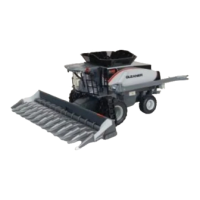
AGCO Gleaner S67
40 pages
Print Icon
To Next Page IconTo Next Page
Loading...
Quick Reference Guide
S67/S68/S96 S77/S78/S97 S88/S98 Models
It is YOUR responsibility to read and understand the safety section in your
Operator’s Manual and the manual for all attachments before operating your
machine. Remember YOU are the key to safety. Good safety practices not only
protect you, but also the people around you.
Study the features in your Operator’s Manual and make them a working part of
your safety program. Keep in mind that the safety section in your Operator’s
Manual is written only for this type of machine. Practice all other usual and
customary safe working precautions, and above all REMEMBER - SAFETY IS
YOUR RESPONSIBILITY. YOU CAN PREVENT SERIOUS INJURY OR
DEATH.

Questions and Answers

  • T
    Trevor RobinsonAug 21, 2025
    Why is there foreign material in the clean grain of my AGCO Farm Equipment?
    • T
      Tommy KochAug 21, 2025
      Foreign material in clean grain may be caused by several factors. The engine may not be running at the correct speed, so adjust the engine high idle to the proper speed. Check for slipping belts in the separator drive, fan drive, or cleaning shoe drive; inspect the drives, replace any damaged belts, and adjust idlers as needed. Ensure the fan inlet screen is clean and properly installed. Other causes include uneven feed to the cylinder, insufficient material entering the cylinder, using the incorrect chaffer for the crop, insufficient air blast from the cleaning fan (increase the fan choke setting), sieve or chaffer openings that are too wide or uneven, the need for a finishing sieve, excessive tailings, or an overloaded cleaning shoe due to over threshing.
  • J
    John HendersonAug 26, 2025
    Why are sieves plugging with straw and chaff in my AGCO Gleaner S67?
    • M
      mirandanavarroAug 26, 2025
      Sieves plugging with straw and chaff can be due to insufficient air blast from the cleaning fan, so increase the fan choke setting. The sieve opening may be too wide, so consider increasing air, then decrease the sieve opening in 0.06” (1.6 mm) increments. Decrease the chaffer opening in 0.06” (1.6 mm) increments. Ensure all fan inlet screens are properly installed. Allow crop to pass through and clear the machine before disengaging the separator. The incorrect chaffer may be used for the crop being harvested. Inspect the fan, fan choke, shoe air duct, and splitter location to ensure correct air pattern.
  • M
    Michael LeeAug 28, 2025
    What causes grain loss from the cylinder in AGCO Farm Equipment and how to prevent it?
    • F
      fieldsmarissaAug 28, 2025
      Grain loss from the cylinder can be caused by the engine not running at the correct speed, so adjust the engine high idle to the proper speed. There may be insufficient material entering the cylinder, so increase ground speed for more intake of material (corn only). Cylinder speed may be too high or too low; try various cylinder speeds to determine the optimal speed for threshing and separating. There may be insufficient threshing at the concave, so decrease concave clearance. If grain is not coming out of the cage, install two extra reverse cylinder bars. Excessive loss out of the discharge can be resolved by removing helicals bolted to the rear separator door (milo & high moisture corn).
  • D
    David LewisAug 31, 2025
    Why is my AGCO Farm Equipment cylinder vibrating and how can I fix it?
    • A
      Abigail WilsonAug 31, 2025
      Cylinder vibration can be caused by dirt and material stuck to the inside of the cylinder bars, so clean the material from inside of the cylinder bars. Vibration can also be caused by the cylinder drive. Place the cylinder drive gearbox in neutral and operate the cylinder drive through its variable speed range to determine if the vibration is still present. Check the V/S drive and driven sheaves for condition and balance, the V/S cylinder drive belt, the cylinder drive torque sensor, and the cylinder drive gearbox bearings and gears.
  • M
    margaretdickersonSep 1, 2025
    What causes crop bunching on the cutter bar of AGCO Farm Equipment?
    • L
      Lindsey AlexanderSep 1, 2025
      Crop bunching on the cutter bar can occur if the reel is too high, so lower the reel. The reel may be too far forward, so set the reel back. If the reel speed is too slow, increase the reel speed. Remove dirt, gum, or rust from a sticky header pan. The conveyor may be too high, so lower the header conveyor. Replace worn conveyor flighting. Adjust conveyor fingers as close to the header bottom as possible if they are retracting too early. Check the header drive if the conveyor is not operating at the recommended speed.
  • P
    Paula AlvarezSep 5, 2025
    How to address shattering of grain ahead of cutter bar with AGCO Farm Equipment?
    • A
      Autumn FisherSep 5, 2025
      Shattering of grain ahead of the cutter bar may occur if the reel speed is not coordinated with the ground speed, so change the reel speed to coordinate with the ground speed. Decrease ground speed if it is too fast for the condition of the crop. Raise the reel if it is too low.
  • C
    Christian NelsonSep 6, 2025
    What causes excessive tailings in AGCO Gleaner S67?
    • D
      Derek SchneiderSep 7, 2025
      Excessive tailings can be caused by insufficient sieve opening, so increase the sieve opening in 0.06” (1.6 mm) increments. Increase the fan choke setting if there is insufficient air blast from the cleaning fan. Consider increasing air, then decrease the chaffer opening in 0.06” (1.6 mm) increments if the chaffer opening is too wide. Refer to remedies listed under MATERIAL LODGING OUTSIDE OF CAGE condition if the cleaning shoe is overloaded due to over threshing.
  • F
    Faith RobertsSep 10, 2025
    What can cause loss of grain heads and cut crop at the cutter bar of AGCO Farm Equipment?
    • K
      Kevin HarrisSep 10, 2025
      Loss of grain heads and cut crop at the cutter bar can be due to the reel not being low enough, so lower the reel. The conveyor clearance may be too high from the header bottom, so lower the conveyor. Adjust the fingers close to the header bottom if the conveyor fingers are retracting too early. Lower the header if cutting with the header is too high, resulting in cutting stalks too short for proper delivery. Increase the speed of the reel if the reel speed is too low. Position the reel closer to the header conveyor if the reel is incorrectly positioned on the reel arms. Replace conveyor flighting if the conveyor flights are worn.
  • A
    Amanda ThompsonSep 12, 2025
    Why is my AGCO Farm Equipment reel wrapping in tangled and weedy crops, and how can I prevent it?
    • S
      Stephanie CortezSep 12, 2025
      Reel wrapping in tangled and weedy crops can be caused by an incorrect location of the pickup reel, so place the reel ahead and down. Reduce the speed of the reel if the reel speed is too fast. Adjust the tine pitch if the pickup reel tines are pitched too much to the rear. Replace or straighten tines if the pickup reel tines are bent. Install or adjust long dividers if the crop is not divided at the header ends. Install reel end shields (Flex header). Install Reel Divider Kit #700962402 (Dynaflex). Raise the reel to reduce the amount of straw gathered by the reel if the reel ends are wrapping.
  • M
    Michael StanleySep 13, 2025
    What causes crop wrapping on the header conveyor of my AGCO Flex Header Farm Equipment?
    • R
      Robert KellySep 13, 2025
      Crop wrapping on the header conveyor can be caused by the conveyor being too high or too low, so adjust the conveyor height. Adjust reel speed and/or location if there is uneven feed to the conveyor. Adjust the position of the conveyor fingers if the conveyor fingers are retracting too early or too late.

Summary

Combine Setup

Cereal Grain - Wheat, Oats, Barley

Combine setup for wheat, oats, and barley, including rotor RPM, settings, and fan.

Milo - Grain Sorghum

Combine setup for milo and grain sorghum with specific settings.

Dry Corn (< 20% moisture)

Combine setup for dry corn (< 20% moisture) with recommended operational parameters.

High Moisture Corn (> 24% moisture)

Combine setup for high moisture corn (> 24% moisture) with specific adjustments.

Soybeans

Combine setup guidelines for soybeans, including operational settings and tips.

Canola;Rapeseed

Combine setup for canola and rapeseed, detailing operational parameters and tips.

Millet

Combine setup for millet, including initial parameters and required blanks.

Troubleshooting

Header Issues

Troubleshooting common issues with the combine header, like ragged cutting and wrapping.

Processor Adjustments

Troubleshooting cylinder slugging, overloading, vibration, and grain loss.

Loss Calculation Methods

Advanced Grain Loss Calculation Procedure

AGCO Gleaner S67 Specifications

General IconGeneral
Grain Tank Capacity300 bushels
TransmissionHydrostatic
Header WidthUp to 40 ft
Drive2WD
Engine TypeDiesel
Cutting WidthUp to 40 ft

Related product manuals