Need help?
Do you have a question about the AIC NESTA 300 and is the answer not in the manual?
Explains responsibilities and liabilities of parties involved in installation and use.
Details manufacturer's responsibilities, product quality, and right to modify.
Defines installer's responsibilities for correct installation, commissioning, and user guidance.
Outlines user's responsibilities for safe operation, maintenance, and documentation.
Information about the manual's purpose and importance for safe operation.
Explains safety and information symbols used within the manual for clear understanding.
Shows and describes symbols found on the appliance itself for safety and identification.
Displays and explains symbols found on the product packaging for handling and transport.
Details information found on the boiler's data plate and conversion sticker for identification.
Lists the items included in the product package for the user and installer.
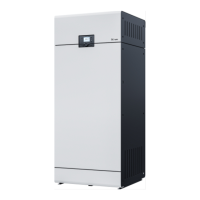
Describes the boiler's construction, burner, heat exchanger, and capabilities.
Explains the built-in anti-frost feature that protects the boiler from freezing.
Lists the safety sensors and switches integrated into the boiler for operational safety.
Details optional accessories that can enhance the boiler's functionality and system integration.
Explains the meaning of symbols and messages displayed on the boiler's control panel.
Lists the physical dimensions and required clearance space for boiler installation.
Details the types and sizes of connections for the boiler's various inputs and outputs.
Presents data on the boiler's heat input, output, and efficiency ratings for different gas types.
Provides Energy-related Products (ErP) data, including boiler type, heat output, efficiency, and consumption.
Details combustion parameters like flue gas temperature, pressure, CO2, O2, and NOx levels.
Specifies the boiler's electrical supply voltage, frequency, and protection class.
Lists gas types, pressures, flow rates, and country-specific gas categories supported by the boiler.
Provides hydraulic specifications like water content, pressure drop, and operating pressures.
Visualizes the relationship between flow rate and pressure drop in the system.
States the minimum water flow rate required for the boiler's operation.
Crucial safety instructions for users, covering gas leaks, electrical safety, and general operation.
Outlines regular checks users should perform to ensure safe and efficient boiler operation.
Instructions on how to properly dispose of the product at its end of service life.
Step-by-step instructions for safely starting the boiler after installation and commissioning.
Instructions on how to properly stop the boiler and completely cut off power supply.
Guides users on how to address common problems like the boiler not starting or error codes displayed.
Instructions for programming the start and end times for comfort mode operation.
Guide on how to set the correct date and time for the boiler's control system.
How to select the preferred language for the boiler's display and interface.
How to choose between metric (°C, bar) and imperial (°F, PSI) units for display.
Instructions on how to turn the Domestic Hot Water (DHW) function on or off.
Critical safety precautions for electrical, hydraulic, and flue connections during installation.
Guidance on safe and proper methods for moving and handling the heavy boiler unit.
Steps for safely removing the boiler from its packaging and preparing it for installation.
Instructions for positioning the boiler and making initial preparations before final connections.
Procedures for removing and reinstalling the boiler's access panels for maintenance or setup.
Details essential requirements for safety groups, expansion vessels, and water quality.
Guidelines for maintaining water quality to prevent scaling and corrosion in the heating system.
Information on checking specific water parameters like conductivity, pH, and oxygen for treatment needs.
Shows hydraulic connections for cascaded boilers with external DHW tanks and plate heat exchangers.
Illustrates hydraulic connections for cascaded boilers with external DHW tanks and low loss headers.
Safety guidelines for ensuring proper and safe flue gas and combustion air piping installation.
General principles and recommendations for installing flue and air intake piping correctly.
Describes different closed chimney connection types (C43, C53, C63, C83) and their requirements.
Explains open chimney connection types (B23, B23P) and air intake grid installation.
Emphasizes the need for professional design of the chimney system according to regulations.
Information on optional accessories like flue gas dampers and condensate neutralisation systems.
Safety guidelines for gas type compatibility, pressure, and leak checks during connection.
Steps to prepare the boiler, including accessing the gas valve and adjusting shutter position.
Table of combustion parameters (CO2, O2) and gas values for reference during adjustment.
Critical safety rules for electrical work, including earthing, fuses, and avoiding wet conditions.
Details on wire cross-sections, sleeve usage, and terminal connections for electrical wiring.
Instructions for safely accessing the high voltage terminal strip.
Guidance on properly routing electrical cables through the appliance's panels.
Essential safety checks and precautions to be taken before starting the boiler for the first time.
Step-by-step guide on how to fill the heating system with water and bleed air.
Critical safety precautions for performing maintenance, including electrical isolation and component replacement.
A table outlining required inspection and maintenance tasks for yearly and bi-yearly intervals.
Procedure for safely shutting down the boiler before performing maintenance tasks.
Steps for safely draining the water from the boiler's heating circuit.
Detailed procedure for cleaning the condensate pipe and trap to prevent blockages.
Step-by-step instructions for removing and reinstalling the fan and air adapter assembly.
Procedure for removing and reinstalling the air-gas mixer component.
Instructions for removing and reinstalling the ignition and ionization electrodes.
Procedure for removing and reinstalling the boiler's burner assembly.
Steps for inspecting and cleaning the combustion chamber for optimal performance.
Procedure for replacing the filter in the gas valve.
Instructions for testing the operation of the flue gas and air pressure switches.
Information on optional modules like Extension Modules, Cable Hub, Web Server, and Cascading Module.
Explanation of how to connect multiple boilers in a cascade for increased heating power.
Explanation of the different access levels (EU, C, E) available for boiler settings.
Information on the initial commissioning screen and its function.
Table detailing menus, submenus, and default settings for installer configuration.
Specific settings related to heating circuits, including setpoints, curve slopes, and pump operation.
Settings related to boiler faults, service functions, and diagnostic data.
Lists maintenance messages, their meaning, and the required actions.
Checklist items related to the controller, optional modules, and end-user documentation.
Form for recording water parameters, system pressure, and treatment details.
Log for recording details of gas conversion procedures performed on the appliance.

 To Next Page
 General