Need help?
Do you have a question about the Aiper P1111 and is the answer not in the manual?
Instructions for safe indoor use of the provided charger, handling, and charging procedures.
Guidelines for proper disposal of the lithium battery, including safety precautions.
Procedure for connecting the charger to check its quality and initiate charging.
Instructions for assembling the cleaner components, including body, filters, and handle attachments.
Guidance on choosing, assembling, and cleaning the filter bags and the front filter.
Step-by-step instructions with diagrams for removing and inserting the batteries.
Addresses issues like jammed or broken impellers and full filter bags.
Solutions for debris flowing backward and unsecured handle/pole connectors.
Troubleshooting dead batteries or chargers that are out of order.
Information on proper disposal of electrical equipment and batteries.
Details of the 12-month Aiper warranty and how to initiate service.
The AIPER Handheld Pool Vacuum (P1111) is designed to provide convenient and efficient cleaning for swimming pools and spas. This user manual outlines the operation, maintenance, and safety guidelines to ensure optimal performance and longevity of the device.
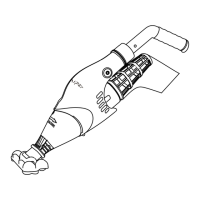
The AIPER Handheld Pool Vacuum is a specialized cleaning tool for pools and spas. It operates using a lithium battery and is designed to remove debris from the water. The vacuum head is equipped to capture various types of rubbish, from fine particles to larger debris, making it suitable for different cleaning needs, such as initial season clean-ups or post-storm maintenance. The device features a suction mechanism that draws water and debris through a filter system, trapping the unwanted particles while returning clean water to the pool. Its handheld design allows for targeted cleaning in areas that might be difficult for larger, automated cleaners to reach. The vacuum can be used with either a portable handle for close-up cleaning or a standard telescopic pole (purchased separately) for extended reach, providing flexibility in its application.
Before using the cleaner, it is crucial to ensure the battery is fully charged. The device is charged via a dedicated charger, and an indicator light signals the charging status (red for charging, green for fully charged). A full charge typically takes about 3 hours and allows for approximately 60 minutes of operation.
Assembly of the cleaner involves several key components: the vac head, front filter, cleaner body, filter basket, and a large mesh filter bag. Users must follow the assembly instructions carefully, paying attention to directional arrows and "ON/OFF," "OPEN/CLOSE" markings on the body. The front filter and vacuum head must be assembled correctly to ensure efficient operation.
The cleaner offers flexibility in how it is handled. It can be connected to a portable handle for direct, close-range cleaning or attached to a standard telescopic pole (sold separately) for extended reach, which is useful for larger pools or hard-to-reach areas.
For debris collection, the device uses a large mesh filter bag. This bag is particularly effective for dirty pools or situations with a significant amount of rubbish, such as at the beginning of the swimming season or after heavy rain. The filter bag assembly process involves a series of steps, as indicated by arrows in the manual, ensuring it is correctly installed to maximize debris capture.
The cleaner is designed for use within specific environmental conditions: water depth between 30cm and 300cm, and water temperature ranging from 4°C (39.2°F) to 35°C (95°F). It is important not to operate the cleaner out of water. During operation, users should avoid getting too close to the vacuum head due to its suction power, especially concerning body parts, animals, hair, or clothing.
Regular maintenance is essential to keep the AIPER Handheld Pool Vacuum performing at its best. The primary maintenance tasks involve cleaning the filters and ensuring the battery is properly managed.
The cleaner features both a front filter and a back filter, both of which require regular cleaning. The manual provides detailed instructions, including visual aids, on how to open the cleaner body and remove the filters for washing. Users should pay close attention to the "OPEN/CLOSE" markings on the machine when disassembling and reassembling the filters. Proper cleaning of these filters is crucial for maintaining the vacuum's suction efficiency and preventing debris from re-entering the pool.
Battery management is another key aspect of maintenance. The device uses a lithium battery, which should only be charged with the original charger provided. Charging should always occur when the cleaner is powered off, and in a clean, dry place, away from direct sunlight or explosive materials. It is important to ensure both the cleaner and charger are completely dry before connecting them for charging. If the charger wire is damaged, it must be replaced with a new, original charger to prevent hazards.
For battery disposal, users are advised to contact their local authority for proper disposal procedures, as the lithium battery must be handled correctly. Users should never attempt to disassemble the lithium battery. When unwiring the battery from the vacuum unit, it is recommended to remove all personal metal items like rings, bracelets, necklaces, and watches to prevent short circuits and potential burns. Complete eye protection, gloves, and protective clothing should be worn during battery removal. Smoking or open flames should be avoided near the cleaner during this process. In case of acid contact with skin or clothing, immediate washing with soap and water is necessary. If acid contacts the eyes, immediate flushing with cool water for at least 15 minutes and seeking medical attention is required.
The manual also includes a troubleshooting guide to address common issues such as the battery running out, impeller jamming, the cleaner not capturing debris, garbage flowing out of the suction head or rear filter bag, handle/pole connector issues, and recharging problems. This guide provides possible causes and corresponding actions, including instructions for cleaning, replacing parts, or contacting customer service. For instance, if the impeller is jammed, users are instructed to power off the cleaner, visually inspect the gap, and gently rotate the impeller to loosen it. If the filter bag is full, it should be detached and cleaned. For issues like a dead battery or a faulty charger, contacting the dealer for original replacement parts is recommended, as using incorrect components can damage the cleaner and void the warranty.
Overall, the AIPER Handheld Pool Vacuum is designed for user-friendly operation and straightforward maintenance, ensuring a clean pool environment with proper care.
 General
| Type | Robotic Pool Cleaner |
|---|---|
| App Control | No |
| Pool Type | In-ground and above-ground pools |
| Waterproof Rating | IPX8 |
| Runtime | Up to 110 minutes |

 To Next Page