Diagnosis Chart -
Adjustable Height Table Base
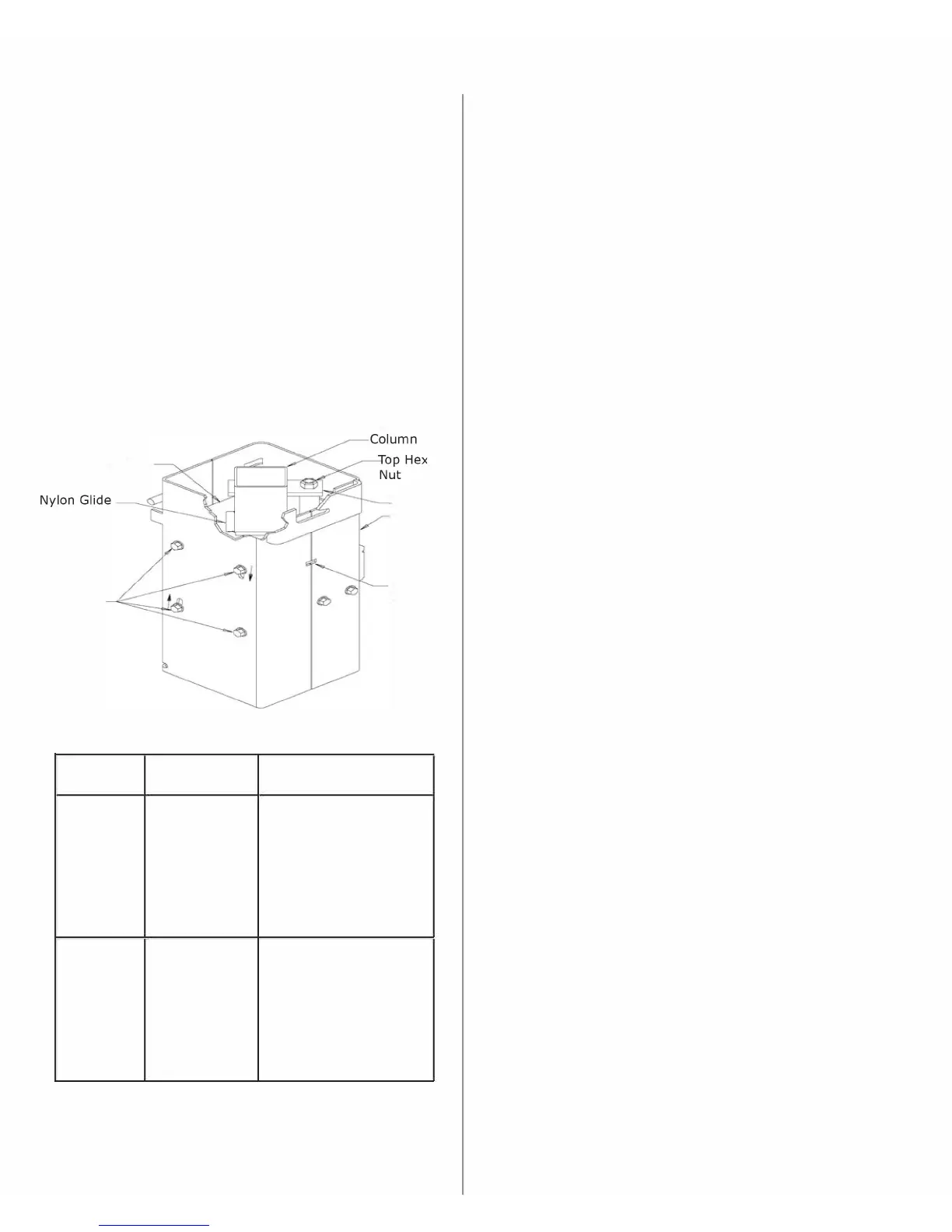
The close sliding fit of the Hi-Lo housing of the Hi-Lo
column is controlled by the upper and lower diamond
sh
aped guide plates that are lined with nylon glides. This
close fit is maintained by tilting the guide plates.
Symptom
Ta ble
wobbles
Ta ble
does not
elevate
when
crank is
turned
Possible
Cause
Excessive
movement
between Hi-
Lo housing
and center
column of
table base
Hex nut that
locks the
acme screw
to the top
plate is too
loose
Procedure
1. Remove table top.
2.
Check for excessive
movement between
inner column and
housing. Adjust
guide plates if
needed.
3. Re-attach table top.
1. Release latch and
tilt table top to
vertical position.
2.
Use 1/2" socket
wrench to tighten
the top hex nut
while holding the
crank.
The Right Height adjustable base also oers
outstanding rigidity. The outer housing, which travels
over the large square inner column, is split vertically
and contains a pair of guide plates lined with nylon
slides to engage and slide the inner column. The zero
clearance fit required for table rigidity is maintained
by tilting the guide plates. The guide plates have
been adjusted to provide maximum table rigidity
and minimum operating effort of the Right Height
mechanism.
Tools required: 3/8" wrench and flat head
screwdriver
1. Remove table top.
2.
Using a 3/8" wrench loosen the guide plate
screws (4 each for top and bottom guide plates).
Insert the screwdriver into the alignment slot
and pry the guide plates until they are snug
against the inner column while still allowing the
Hi-Lo mechanism to crank relatively freely. Re
tighten the guide plate screws.
3. Re-attach table top.
4. Adjust Right Height to near mid-travel and check
table rigidity by pushing up and down on the
edge pedestal. Go back to Step 1 and re-adjust
guide plates.


 To Next Page