Need help?
Do you have a question about the Alber e-fix eco and is the answer not in the manual?
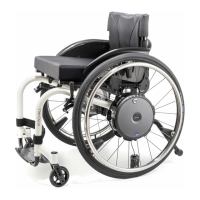
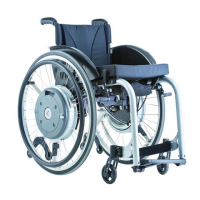
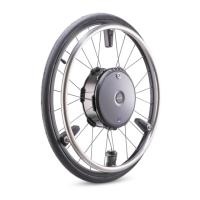
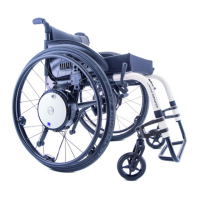
Describes the primary function of the e-fix as an add-on drive for wheelchairs.
Crucial safety guidelines for operating the e-fix, including user prerequisites and handling.
Details on the correct application and attachment of e-fix wheels to specific wheelchairs.
Guidelines for proper handling, including modifications, approved accessories, and user qualifications.
Explanation of various symbols used throughout the manual and on the device.
Specifies the acceptable environments and conditions for operating the e-fix.
Lists the components included in the standard delivery package of the e-fix system.
Information regarding optional accessories available for the e-fix system.
An overview identifying and labeling the primary components of the e-fix and wheelchair.
Step-by-step guide for attaching the e-fix wheels to the wheelchair, including engagement.
Instructions for powering on the e-fix system via the control unit and initial setup.
Procedure for safely shutting down the e-fix system to conserve energy and prevent accidental activation.
Steps for detaching the e-fix wheels from the wheelchair, specifying conditions and precautions.
Guidelines for safely transporting and storing the e-fix wheels as vehicle luggage.
Further guidance on different travel modes, including manual and push modes.
Information on using the wheelchair's original manual wheels alongside the e-fix.
How to operate the e-fix wheels manually with assistance from an attendant.
Instructions for operating the e-fix wheels in powered, motorised mode for efficient travel.
Details on the e-fix's travel range and factors affecting it, such as terrain and battery status.
General safety advice, including checking parking brakes and user training recommendations.
Emphasizes the importance of user training and provides guidance for initial driving attempts.
Critical safety rules for operation, checks before trips, and handling potential hazards like fire.
Guidance on navigating obstacles, including using reverse mode and specific caution with anti-tippers.
Identifies specific hazardous environments and situations requiring extra caution and user judgment.
Instructions on how to safely detach the battery pack from the wheelchair for transport or other purposes.
Steps for correctly re-inserting the battery pack into its bag and connecting the interface.
Detailed procedure for recharging the battery pack, including indicators and essential precautions.
Explains how to check the remaining battery capacity using the control unit display.
Information on how the e-fix recovers energy during braking and downhill travel.
Instructions for replacing fuses in the battery pack in case of overload or component issues.
General advice on battery maintenance, deep discharge prevention, and optimal charging practices.
Crucial safety guidelines and precautions for using the e-fix charger and the charging process itself.
Safety rules specific to the battery pack, covering temperature, heat exposure, and handling.
Guidelines for proper storage of the battery pack to maintain its service life and capacity.
Information and recommendations for safely transporting and shipping the battery pack.
Instructions for attaching and detaching the control unit for maintenance or adjustments.
Overview of the control unit's features and how to operate them.
Guide to powering on the e-fix system using the control unit and initial display.
Steps to turn off the control unit, saving energy and preventing accidental movement.
How to control the e-fix's movement and speed using the joystick for precise navigation.
Description of the spotlight function on the control unit for illuminating the immediate area.
How to activate the audible warning signal on the control unit for alerts.
Instructions on how to adjust and limit the maximum speed settings for various travel situations.
Explanation of the immobiliser function to prevent unauthorized use of the e-fix.
Overview of the control unit's menu structure for accessing various settings and functions.
Explanation of the various symbols and information displayed on the control unit's user screen.
Procedure for navigating through and accessing different menus and submenus on the control unit.
Guide to selecting and configuring different travel modes (Tour, Eco, Sport) for the e-fix.
Instructions for customizing display settings such as kilometres, range, time, and date.
How to reset the daily kilometre counter displayed on the control unit.
Accessing and adjusting various settings like screen brightness, language, and signal tones.
A comprehensive table detailing error codes, their meanings, and recommended solutions for troubleshooting.
Guidelines for storing the wheelchair and e-fix components to protect them from damage and environmental factors.
Instructions on how to clean the e-fix components safely, emphasizing avoiding water ingress.
Information on returning the e-fix for reuse and necessary maintenance before redeployment.
Details on required maintenance schedules, inspections, and servicing for continued safe operation.
Guidance on the proper and environmentally sound disposal of the e-fix and its components.
Details on the warranty period for manufacturing defects and coverage limitations.
Information on the durability warranty for the e-fix and exclusions such as wear and tear.
Alber GmbH's liability limitations concerning improper handling, maintenance, or modifications.
Explains the system label on the interface, providing key technical data and traceability information.
Describes the maintenance label indicating the timing for the next scheduled service.
Information about labels on e-fix components for identification and replacement purposes.
Details on the labels affixed to the battery pack, providing technical specifications and warnings.
Important notices regarding the battery pack, particularly its charging requirements and compatibility.
Steps to connect the attendant control to the e-fix system for remote operation.
Procedure for activating and initiating the attendant control for wheelchair operation.
How to select travel direction and speed using the attendant control for safe maneuvering.
Instructions for safely disengaging and switching off the attendant control.
Details on how to control travel speed and direction using the attendant control.
Explanation of the panic function for immediate emergency stops with the attendant control.
Steps for detaching the attendant control from the wheelchair after use.
Guide on how to attach and detach Alber's optional anti-tipper accessories.
Instructions on how to engage and disengage the Alber anti-tippers for safe operation.
 General
| Motor power | 250W |
|---|---|
| Battery Voltage | 24 V |
| Max speed | 6 km/h |
| Battery | Lithium-ion |
| Total weight | 26 kg |

 To Next Page