The ALIARO AL-4010 is a 6-cell Battery Cell Emulator Board designed for use with the National Instruments SLSC-12001 chassis. This document serves as a quick start guide for industry professionals, providing an overview of its use, required software/hardware, and practical steps for engineers. It is not a comprehensive list of all product features, which are detailed in the device's specification sheet, nor is it a software guide for controlling the board.
Function Description
The AL-4010 is an SLSC module that provides 6 channels capable of emulating 6 battery cells. It supports fault insertion capabilities for all channels, including open circuit, short circuit, and reverse polarity, allowing for the simulation of various failure modes to understand the Device Under Test's (DUT) reaction. The board can sink and source current in all quadrants, with variable positive and negative operating voltages dependent on the output voltage to minimize internal power losses. The AL-4010 is isolated to maintain high signal integrity and minimize interference between the test system and the DUT. It uses the SLSC interface (Ethernet) for setting and reading its status and a SPI bus through the Rear Transitional Interface (RTI) backplane for deterministic and fast setting and reading of desired cell voltages, sense voltages, and currents. Future revisions may incorporate EtherCAT functionality via the front RJ45 connectors. The module also offers bipolar operation, enabling it to output and measure both positive and negative voltages, thus supporting reverse polarity on all cells.
Important Technical Specifications
- Cell Voltage Range: 0-7V
- Cell Voltage Accuracy: ±1mV
- Current Load Range: ±2A
- Current Load Accuracy: 2mA
- Power: ±14W
- Short Circuit Handling: 5A (10A peak for 100ms)
- Dielectric Strength: 60V between channels, 1500V between board and NI SLSC chassis.
- Sensing Voltage Range: ±8V
- Sensing Voltage Accuracy: ±1mV
- Sensing Current Range (Low): ±10mA
- Sensing Current Accuracy (Low): ±10µA
- Sensing Current Range (High): ±2200mA
- Sensing Current Accuracy (High): ±2mA
- Coulomb Measurement Samples/Calculation: 100, 250, 500, or 1000 samples (accuracy needs to be calculated and verified).
- Synchronization between cells: <50µs
- Control Interface: SPI (EtherCAT support to be added in the future).
- Voltage Supply, Range: 0-7V
- Voltage Supply, Accuracy: ±1mV
- Voltage Supply, Ripple: 2mVrms
- Voltage, Step Response 1-4V: 0.1ms
- Voltage, Step Response 4-1V: <1ms (dependent on load)
- Maximum External Load: 2000mA
- Current Load, Range: 0-2000mA
- Current Load, Accuracy: 2mA
- Operating Temperature: 10°C to 35°C
- Storage Temperature Range: -40°C to 85°C
- Operating Relative Humidity Range: 10% to 90%, noncondensing
- Storage Relative Humidity Range: 5% to 95%, noncondensing
- Module Dimensions (Excluding front handle): 144.32mm (H) x 30.48mm (W) x 281mm (D)
- Front Panel Connectors: 1 x female Weidmüller 24 (2x12) high density, 2 x RJ45
Usage Features
The AL-4010 is designed for easy integration into test systems. It uses standard industry connectors on both the front and back. For setup, users need an SLSC-12001 chassis, AL-4010 module(s), RTI-12344 for AO 37DSUB (P/N 785376-01), a Cell Power Rear Connector, and a Cell Communication Rear Connector. Software control is primarily achieved through NI VeriStand, with an ALIARO SLSC Plugin, and optionally with xMove Configurator for efficient system definition file management.
The board features two LEDs on the front panel:
- Power LED: Solid Green indicates module powered, Solid Red indicates module fault, Off indicates no power.
- Ready LED: Solid Green indicates module is ready to be used, Solid Red indicates module fault, Off indicates module is not powered.
The J1 - DUT Connector (Front) provides access to cell outputs and sensing lines for each of the 6 cells, with dedicated pins for Sense +/- and Out +/- for each cell. The J2 and J3 - DUT Connectors (Front) are RJ45 Ethernet ports, currently unused but prepared for EtherCAT slave functionality. The XJ1 - SLSC Interface Connector (Rear) connects to the SLSC Chassis, and it is highly recommended to use an RTI backplane like the RTI-12344 for AO 37DSUB for this connection. The XJ2 - DUT Connector (Rear) and XJ3 - DUT Connector (Rear) are I/O connectors, also recommended to be connected via an RTI backplane to avoid damage. XJ2 handles SPI communication signals (SPI_MOSI, SPI_CSn, SPI_Clk, SPI_MISO), while XJ3 provides supply and load capabilities (Positive and Negative Voltages 1-4).
Maintenance Features
- Calibration: A recommended warm-up time of 30 minutes is advised before use. The calibration interval is 1 year. ALIARO offers calibration services and systems for purchase or rent.
- System Check: LabVIEW provides basic VI scripts (e.g., "Configuration.vi") to check for inserted and properly working SLSC cards in the chassis.
- ESD Protection: The AL-4010 board ships in an antistatic box. Users should be familiar with ESD prevention steps, including grounding themselves with a strap or by touching a grounded object, and never touching exposed pins of connectors.
- Hardware Installation: The SLSC chassis and AL-4010 do not support hot plug-in; the entire chassis must be powered off when inserting or removing modules.
- Cleaning: Periodic cleaning of dust from the chassis exterior and interior is recommended using a dry, low-velocity stream of air and a soft-bristle brush.
- Safety Guidelines:
- Hazardous voltage wiring must be performed by qualified personnel adhering to local electrical standards.
- Do not mix hazardous voltage circuits and human-accessible circuits on the same module.
- Ensure proper insulation of devices and circuits connected to the AL-4010 when terminals are hazardous voltage LIVE.
- The emulated cells and the Battery Management System (BMS) are not grounded; neither system should be connected to earth during operation at high voltages to avoid severe hazards.
- Running the system without an earth leakage monitor (or Bender – Isometer) or with bridged functionality is not allowed, as its purpose is to verify galvanic isolation.
- For systems with more than 120 cells, limit output voltage per cell to 5V and ensure the system is used in secured and safe areas inaccessible to humans.
- Do not operate the device in a manner not specified in this document, as misuse can compromise safety protection.
- Do not substitute parts or modify the device except as described in this document.
- Do not operate the device in an explosive atmosphere or where flammable gases or fumes may be present, unless in a suitably rated enclosure.
- To ensure specified EMC performance, operate the product only with shielded cables and accessories.
- All devices must be powered off and users and systems safely grounded during setup.
- Do not touch contacts or remove I/O boards or cables while the system is energized.
- Environmental Management: ALIARO is committed to environmentally responsible design and manufacturing, eliminating hazardous substances. Information on environmental regulations and WEEE recycling is available on ALIARO's website.

 Need help?
 General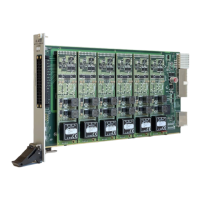

 To Next Page