ALIARO reserve the right to vary from the description given in this data sheet and shall not be liable for any errors.
www.aliaro.com
Overview
This document is a quick start guide on how to use the AL-4010 Battery Cell Emulator / Battery
Cell Simulator board from ALIARO. It is intended to be used by industry professionals to:
- Understand what steps need to be taken when purchasing an AL-4010 board
- Provide an overview of what software/hardware is required for the AL-4010 board
- Be a practical step-by-step guide for engineers working with the AL-4010 board
This document is not intended to provide a list of all the product features (this is provided by the
device’s specification sheet). It is also not a software guide for controlling the board (this is
provided by specific software manuals or help documentation).
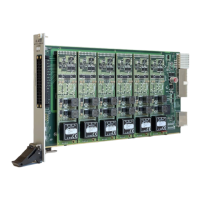
The AL-4010 is a SLSC module designed to be used with a NI SLSC chassis (SLSC-12001). It
provides a total of 6 channels that are capable of emulating 6 battery cells and the dielectric
strength between the channels is 60V and the dielectric strength between the board and the NI
SLSC chassis is 1500V, so the number of cells connected in series is therefore only limited by
the sum of single cell voltages.
The AL-4010 can sink and source in all quadrants and to minimize internal power losses the
positive and negative operation voltages are variable and operating dependent on the output
voltage.
Table 1 - Cell Output Specifications
- In the case of short circuit, the board can handle 5A (10A peak for 100ms).
- In the case when the voltage from external source / BMS is higher than the voltage
output in the cell that results in that the current will flow from the external source / BMS
to the AL-4010 current sink.
- In the case when the voltage in AL-4010 is higher than the voltage from the external
source / BMS that results in that the current will flow from the AL-4010 into the external
source / BMS.
It is possible to calibrate the system and calibration and adjustment are both possible without
removing the system from its installation. Measurement accuracy is guaranteed within the
specified operating- and temperature range. All system channels, referring to cell voltages, and
sensing channels (cell voltage and cell current) are synchronized.


 To Next Page