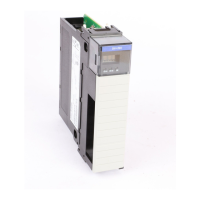
The FLEX 5000 Analog 8-channel Current/Voltage/RTD/Thermocouple Input Modules, specifically models 5094-IY8 and 5094-IY8XT, are universal input modules designed for industrial automation applications. These modules offer single-ended differential, non-isolated input channels and support various sensor types including Thermocouple and RTD input channels. They are designed to operate in a wide range of applications and are capable of handling different input types that can be configured to the module.
Function Description
The FLEX 5000 I/O modules are designed to integrate with the FLEX 5000 EtherNet/IP adapter and, if used, field-side power to the terminal bases. They function as input modules, converting analog signals from various sensors into digital data for processing by a control system. The 8-channel design allows for multiple sensor inputs per module, enhancing system efficiency and reducing the need for numerous individual modules. The modules support different wiring diagrams for current, voltage, RTD, and thermocouple inputs, including 2-wire, 3-wire, and 4-wire configurations for RTD, and thermocouple mode with a cold junction compensation (CJC) input.
Important Technical Specifications
The modules operate within a temperature range of -40 °C to +70 °C (-40 °F to +158 °F) for operating dry heat and -40 °C to +70 °C (-40 °F to +158 °F) for operating wet heat (IEC 60068-2-1 Test Ad, Operating Dry Heat). The enclosure type rating is "none (open-style)."
Input ranges include:
- Voltage: ±10V, 0…10V, 0…5V, 0…20 mV, 0…50 mV, 0…100 mV, 0…200 mV, 0…500 mV, 0…1V, 0…2V, 0…5V, 0…10V.
- Current: 0…20 mA, 4…20 mA.
- Resistive Input: 0…500 Ω, 0…1000 Ω, 0…2000 Ω, 0…4000 Ω.
Power specifications:
- Backplane Power (BP) voltage: 15V DC.
- Backplane Power (BP) current, max: 75 mA.
- Sensor Actuator Power (SA) voltage range: 10…32V DC.
- Sensor Actuator Power (SA) current, max: 480 mA (includes SSV 200 mA).
The modules provide 250V (continuous) basic insulation type, System to Field, and no isolation between individual input ports. The TB keying is 3 (2)(3)9.
Wiring specifications:
- Wire size: 0.34…2.5 mm² (22…14 AWG) solid or stranded copper wire rated at 105 °C (221 °F), or greater, 12 mm (3/64 in.) insulation max. Ferrule according to DIN 46 228/1.
- Insulation stripping length: 0.34…1.5 mm² (22…14 AWG) = 12 mm ± 1 mm (0.47 ± 0.04 in.) for screw-type TB, and 0.34…1.5 mm² (22…14 AWG) = 10 mm ± 1 mm (0.39 ± 0.04 in.) for spring-type TB.
- TB torque specifications: Screw-type TB: 0.4 N•m (3.5 lb•in). Spring-type TB: Not applicable.
The modules are compliant with various standards, including IEC 60068-2-1 (Test Ad, Operating Dry Heat), IEC 60068-2-2 (Test Bd, Operating Dry Heat), and IEC 60068-2-14 (Test Nb, Operating Thermal Shock). They are also certified for use in hazardous locations, including Class I Division 2, Groups A, B, C, D environments, and Zone 2, Groups IIC environments, as defined in EN/IEC 60079-0 and EN/IEC 60079-15.
Usage Features
- Installation: The module requires installation onto a FLEX 5000 terminal base assembly. The installation process involves rotating the left keyswitch to position 3, the right keyswitch to position 3, and positioning the module in front of the terminal base before pressing it firmly to seat the module. The end cap must be installed on the last mounting base on the DIN rail.
- Wiring: The modules support various wiring configurations depending on the input type. For current and voltage inputs, 2-wire, 3-wire, and 4-wire RTD modes, and thermocouple mode, specific wiring diagrams are provided. Shielding is crucial for proper operation and immunity to electrical noise, and the 5094-STB shield bar accessory is recommended for wiring the shields.
- Power: The FLEX 5000 EtherNet/IP adapter provides power to the terminal base. The RTB also provides module power through the backplane to operate the FLEX 5000 I/O modules. The total module power bus current draw in the system must not exceed 5 A. SELV-listed power supplies are required for module power if there are functional safety modules that are connected to the FLEX 5000 I/O system.
- Grounding: Proper grounding is essential for safe and reliable operation. The product is grounded through the DIN rail to the chassis ground. Zinc-plated chromate-passivated steel DIN rail is recommended.
- Electromagnetic Compatibility: The modules are designed to operate in industrial environments and are compliant with relevant EMC standards.
- Safety: The device is intended for use in a Pollution Degree 2 industrial environment. It is designed to provide adequate protection to radio communication services in such environments. The module is suitable for indoor use.
- Preventing Electrostatic Discharge: To prevent damage from electrostatic discharge, users should touch a grounded object, use a static-safe workstation, and store the equipment in appropriate static-safe packaging.
Maintenance Features
- Module Replacement: To replace a module, the release lever on top of the module must be pressed to release it from the terminal base. The new module can then be installed by following the installation steps.
- Troubleshooting: The manual provides warnings and cautions regarding potential issues such as incorrect wiring, power removal, and electrostatic discharge. These warnings guide users in preventing damage and ensuring safe operation.
- Additional Resources: The manual refers to various Rockwell Automation publications for detailed specifications, installation instructions for terminal base assemblies, user manuals for FLEX 5000 analog I/O modules, industrial automation wiring and grounding guidelines, and product certifications. These resources provide comprehensive information for maintenance and troubleshooting.
- Firmware Updates: Firmware updates are available through the Product Compatibility and Download Center (PCDC).
- Repair: The module should be returned to the manufacturer for repair if it is damaged or malfunctioning. It is not designed for user repair.
- Cleaning: Only a soft dry anti-static cloth should be used to wipe down the equipment. No cleaning agents should be used.

 Need help?
 General

 To Next Page