18 ALLMAND.COM
Engine Fails to Start
1. If the engine fails to start after performing starting
procedure, steps 1 - 4, do not keep the starter
running.
2. Set the starter switch to STOP, wait
approximately 2 minutes, then repeat the startup
procedure.
3. If the repeated startup procedure does not allow
the engine to run, check for the following causes:
• No fuel
• Clogged fuel filter
• Discharge of battery or low cranking speed
• Ambient temperature is too low
Starting the Compressor at Low Temperature
NOTICE When operating compressor under cold
weather conditions below
23°F (-5°C):
• Use SAE10W-30 (CJ-4) for the engine oil.
• When the unit is used in a cold region and
possible freezing is expected, it is recommended
to use LLC (Antifreeze) for the coolant.
• Adjust mixing ratio of LLC (Antifreeze) with water
according to the temperature.
• Use LLC (Antifreeze) within the range of its
mixing ratio between 35 and 60%.
• If LLC (Antifreeze) in the water exceeds more
than 60%, it may decrease its antifreezing effect.
(Upon delivery from the works, LLC density is
55%).
• Use LLC (anti-freeze) which conforms to one
of such standards: SAE JB13, SAE J1034 and
ASTEM D3306.
• Battery should always be fully charged.
• Follow the designated regulations to dispose of
LLC (Antifreeze).
When it is difficult to start engine in cold weather,
complete the following steps:
1. Fully close the service valves.
2. Start engine by following steps 1 - 6 in Starting
the Compressor.
CAUTION When operating the unit in
a low temperature, change engine oil, compressor
oil, LLC , and diesel fuel according to the ambient
temperature.
Gauge Indication While Operating Compressor
NOTICE Minimum discharge air pressure is 58 psi (4
bar) during operation. Continuing equipment operation
at a lower pressure than the above pressure may
cause overheating, since it affects the separation of
lubricating oil inside the oil separator and reduces
the oil flow to the compressor air-end, resulting in
temperature rise.
• Make sure to check that gauges or each
component of the compressor are properly
working, or if there is any air-leak, oil-leak, water-
leak or fuel-leak etc.
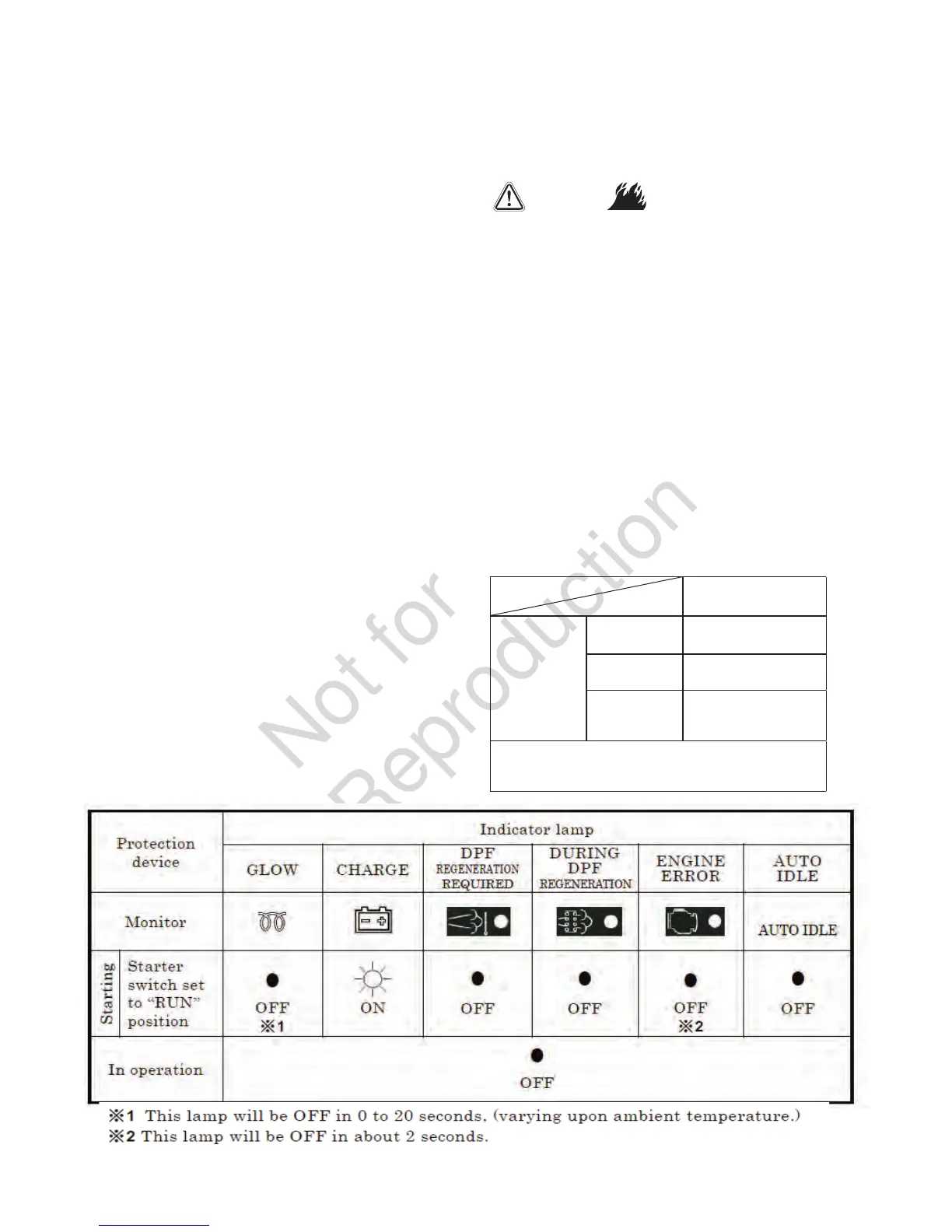
• During normal operation, each indication of
instruments is shown in the table below. Refer to
the table for daily checks.
Discharge
Pressure Gauge
In Operation
Full Load
* 58 to 100 psi
(4 to 6.9 bar)
No Load
(Unload)
* 116 to 131 psi
( 8 to 9 bar)
At purge
control
(AUTO IDLE)
* 36 to 58 psi
( 2.5 to 4bar)
* Values may vary slightly depending on the operating conditions and
other factors.


 To Next Page