The provided document is an operating manual for the Alpha Innotec Hydraulic Tower HT 7, an accessory designed for heat pumps. This device integrates a domestic hot water tank and a buffer tank, serving as a central hydraulic module for heating, domestic hot water preparation, and potentially cooling and swimming pool heating when combined with a heat pump.
Function Description:
The Hydraulic Tower HT 7 acts as a compact indoor unit that connects to an external heat pump. It manages the distribution of heat for various applications within a household. Its primary functions include:
- Heating: Distributes heated water to the building's heating circuit.
- Domestic Hot Water (DHW) Preparation: Heats and stores domestic hot water in an integrated tank.
- Cooling (optional): Can support cooling functions with a flow temperature down to 18°C.
- Swimming Pool Heating (optional): Integrates with accessories for heating swimming pools.
- Photovoltaic System Integration (optional): Allows for connection with photovoltaic systems to optimize energy use.
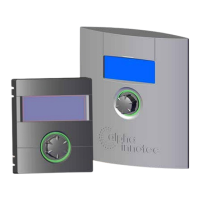
The unit is controlled via the control panel of the heating and heat pump controller HPC, which is supplied separately. It includes a circulation pump for the heating circuit, a switching valve for domestic hot water, and an electric heating element for auxiliary heating. An integrated volumetric flow meter/heat meter measures the heat quantity generated and distributed.
Important Technical Specifications:
- Installation Location: Indoor only, in a frost-free and dry area.
- Dimensions: Approximately 600 mm (diameter) x 1651 mm (height) for the main tank, with additional space required for connections and maintenance.
- Weight: Total weight is 150 kg.
- Domestic Hot Water Tank: Net volume of 180 liters.
- Buffer Tank: Volume of 62 liters.
- Heating Circuit:
- Minimum flow rate: 350 l/h.
- Maximum flow rate: 1400 l/h.
- Max. allowable operating pressure: 3 bar.
- Safety valve response pressure: 3 bar.
- Electrical Connections:
- Control voltage fuse protection: 1~N/PE/230V/50Hz | B10.
- Electric heating element fuse protection: 1 phase (1~N/PE/230V/50Hz | B32) or 3 phases (3~N/PE/400V/50Hz | B10).
- Electric heating element output: 6 kW, 4 kW, or 2 kW (depending on configuration).
- Circulation pump power consumption: 4-75 W.
- Sound Levels (inside):
- Sound pressure level at 1 m distance: 35 dB(A).
- Sound power level: 40 dB(A).
- Water Quality (Heating Water):
- Required pH value: 8.2-10 (8.2-8.5 for aluminum materials).
- Demineralized heating water or VDI 2035 equivalent water is recommended for low-salt operation to prevent scale and corrosion.
- Domestic Hot Water Electrical Conductivity: Must be > 100 µS/cm and of drinking water quality.
- Expansion Vessel: Integrated for the heating circuit, but its size should be checked for system adequacy; additional expansion vessels may be required on-site.
Usage Features:
- Integrated Design: Combines DHW and buffer tanks in a single compact unit, saving space.
- User Interface: Controlled through the HPC heat pump controller, offering comprehensive system management.
- Energy Efficiency: Designed for energy-conscious operation, recommending measures like avoiding unnecessarily high flow/DHW temperatures and proper ventilation.
- Safety Features: Includes a safety temperature limiter in the electrical switch box to protect against overheating or freezing. It also has a safety assembly for the heating circuit.
- Emergency Operation: Features an electric heating element with an adjustable thermostat (40-80°C) for emergency heating, providing up to 2 kW of heating capacity.
- Monitoring: Integrated volumetric flow meter/heat meter allows for monitoring of heat quantity and temperature differences in the charging circuit.
- Remote Control (optional): Can be connected to a computer or network for remote control via a shielded network cable.
- Outdoor Sensor: Requires an outdoor temperature sensor (BT1) for optimal control, ideally installed on the north or north-east side of the building, protected from direct sunlight and rain.
- Room Temperature Sensor (optional): Can be installed for display and control of room temperature, but the system can operate without it.
Maintenance Features:
- Product Care: External surfaces should be cleaned with a damp cloth and mild detergent; harsh or abrasive cleaners are to be avoided.
- Water Quality Management: Emphasizes the importance of proper heating water quality (demineralized or VDI 2035 equivalent) to prevent damage and ensure system longevity. Regular servicing and maintenance are recommended.
- Flushing and Filling: Detailed procedures for flushing, filling, and venting both the heating and domestic hot water charging circuits, including specific steps for operating valves and ensuring air discharge.
- Overflow Valve Adjustment: Procedure for adjusting the overflow valve during system startup to achieve the desired temperature difference and flow rate.
- Safety Temperature Limiter Reset: Instructions for resetting the safety temperature limiter if it trips, requiring a small screwdriver.
- Accessibility: The entire hydraulic system, including the controller and switch box, can be unscrewed from the front to facilitate transport and maintenance.
- Insulation: Hydraulic lines should be insulated according to local regulations after installation and pressure testing.
- Dirt Separator: Installation of a dirt separator in the hydraulic system is crucial to prevent damage from dirt and deposits.

 Need help?
 General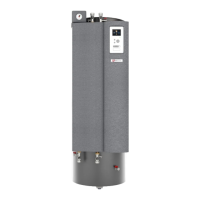

 To Next Page